





Xi, Putin meet in Beijing on energy
 2026-05-20
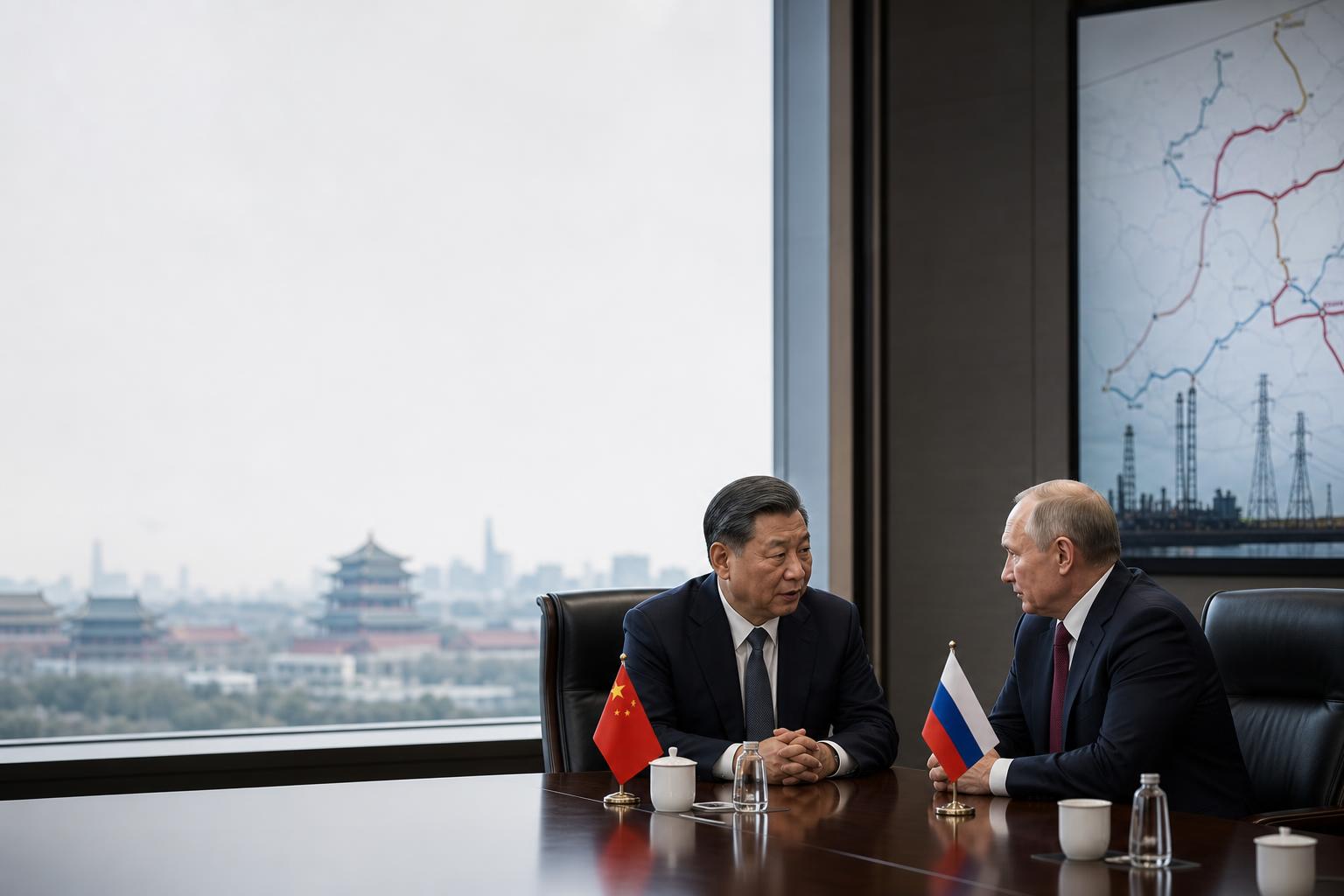
China's President Xi Jinping will meet Russian President Vladimir Putin in Beijing on the 20th, in a summit five days after US President Donald Trump's visit to China, as the two powers seek to project their global standing.
Growing entourage
Putin arrived in Beijing on the evening of the 19th and was welcomed at the airport by Wang Yi, a member of the Communist Party's Politburo and China's foreign minister. The Russian presidency said his delegation numbers about 40 people. It includes five deputy prime ministers, including Manturov, as well as eight ministers such as Foreign Minister Sergei Lavrov and Economic Development Minister Maxim Reshetnikov, presidential aide Yuri Ushakov, who oversees foreign policy, and Central Bank Governor Elvira Nabiullina.
On the business side, energy executives led by Rosneft CEO Igor Sechin and Gazprom CEO Alexei Miller form the core of the delegation. Heads of state nuclear firm Rosatom and space company Roscosmos are also accompanying him.
Energy in focus
A smaller session of the summit is expected to include deputy prime ministers, some ministers and representatives of major companies from the Russian side. A subsequent expanded meeting is expected to include 39 Russian participants.
The unusual schedule will see the leaders of the US and Russia visit Beijing in quick succession within a week. Xi is expected to brief Putin on his talks with Trump held on the 14th and 15th.
China and Russia are expected to issue a joint declaration and a joint statement, and sign about 40 bilateral documents. A key focus will be progress on energy cooperation, including talks on construction of the Power of Siberia 2 pipeline, which would send gas from Russia to China via Mongolia. The project is said to take about 10 years to complete.
China has long avoided relying too heavily on any one country for fossil-fuel supplies in the name of energy security. Russia, meanwhile, is seeking to accelerate cooperation with China as its exports to Europe weaken. At present, China also retains the upper hand in price negotiations.
Alignment against the US
Since Russia's invasion of Ukraine, Moscow's economic dependence on China has deepened further. After the invasion, Russia's fossil-fuel exports to the European Union slumped sharply, and the EU has banned tanker shipments of Russian oil and decided to phase out imports of natural gas, including LNG.
China, by contrast, has kept buying Russian fossil fuels. According to the Russian presidency, crude oil exports from Russia to China in January-March rose 35% from a year earlier.
Talks may also cover Power of Siberia 2, which would carry gas from Russia to China via Mongolia, as well as tensions in the Strait of Hormuz and trends in the oil market. China is largely unable to buy Middle Eastern crude shipped through the strait, giving Russia an opening to expand exports to the Chinese market.
A temporary easing of US sanctions is also supporting Russia. US Treasury Secretary Scott Bessent said on the 18th that permission for countries to buy Russian crude would be extended by 30 days. The US has made similar month-by-month moves in March and April to ease pressure from higher oil prices linked to tensions involving Iran.
Taiwan, Iran and Russia's invasion of Ukraine are also expected to be on the agenda. Putin has voiced support for China's position on reunification with Taiwan. With the Trump administration backing Taiwan, the meeting is likely to serve as a chance to reaffirm China-Russia solidarity. The two sides may also discuss building a coalition to counter the US through frameworks such as the Shanghai Cooperation Organization and BRICS.
Enjoyed this article? Share it with your network!