





Drone attacks rattle Russia, Victory Day scaled back
 2026-05-19
In early May, a surge in drone attacks in Russia darkened civilian life and Victory Day events during a period meant to mark the spring holiday season. In central Cheboksary on the 5th, several Ukrainian attack drones crashed into an apartment complex near a military-related factory, damaging 28 buildings, killing at least two people and injuring 35.
Range nears 2,000 kilometers
Cheboksary is at least about 1,000 kilometers from the Ukrainian border. On April 25, industrial cities in the Ural region such as Chelyabinsk, more than 1,500 kilometers away, also came under their first large-scale attack. President Volodymyr Zelenskiy said the strikes showed drones had reached a range of up to about 2,000 kilometers.
According to Bloomberg News, Ukrainian drones can reach a quarter of Russia's territory, putting regions where 70% of the total population lives within danger range. The main long-range drone, Liutyi, began development in late 2022 and entered combat use in 2023. Its initial range was thought to be about 1,000 kilometers, but later improvements extended it by 1.5 to 2 times.
Impact reaches Victory Day
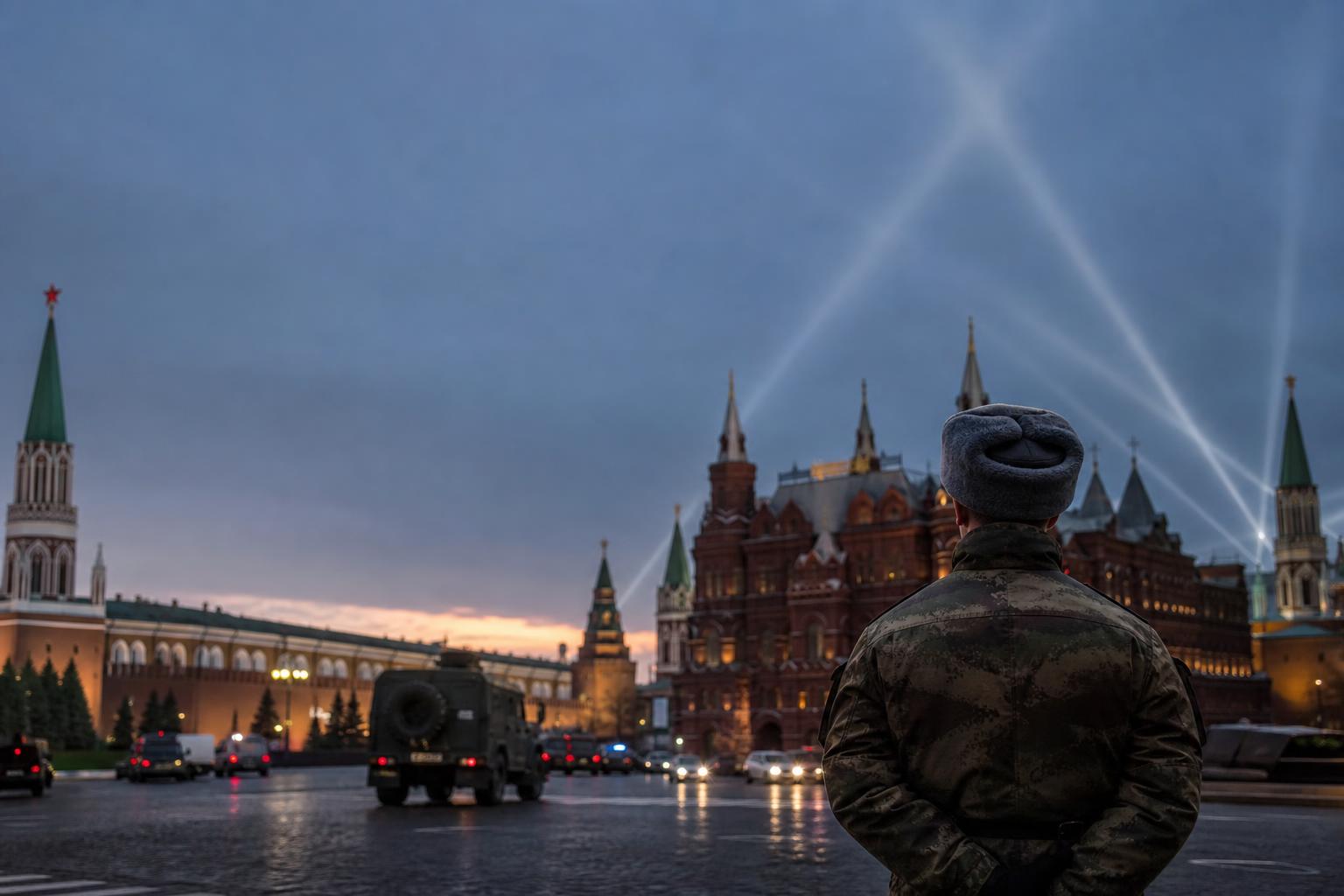
The attacks also affected the military parade for Victory Day on the 9th, marking the defeat of Nazi Germany. For security reasons, at least seven regions in the west and south, in addition to Crimea, cancelled events. In Moscow, the parade did not include columns of tanks, missiles and other ground weapons, an unusual step not seen since 2007. Similar cutbacks followed in regional cities.
Drones have been arriving in Moscow daily, and city authorities said more than 100 were shot down over just two days on the 7th and 8th. In the early hours of the 16th and 17th, the city suffered one of the biggest attacks this year, killing three people, including two women, near Moscow. Political commentator Alexei Mukhin said on Telegram that security must come first but added that 'the enemy must not be allowed to symbolically lock us out of Victory Day', saying the decision on whether to hold celebrations has become difficult for central and local authorities.
Also heightening concern among Moscow residents are strict communications restrictions. On the 9th, mobile service was cut until the end of the celebrations, disrupting payments and bank transfers. The restrictions were apparently introduced as a response to Ukrainian drone attacks, with the aim of blocking mobile communications used for remote control and guidance. The outages have continued intermittently in major cities, affecting not only internet access and calls but also economic activity.
Social contract frays
At a government meeting on April 23, President Vladimir Putin said priority is always to ensure people's safety, signaling support for the restrictions from the standpoint of counterterrorism. However, public concern is growing over tighter information controls and suppression of speech, while some also see signs the authorities may be preparing unpopular policies or additional mobilization.
Since the start of the full-scale invasion in February 2022, daily life in Russia has remained largely close to prewar normal outside border areas. In return, Putin has sought support for himself and the war, but that social contract is showing cracks. According to the Kremlin-friendly All-Russia Public Opinion Research Center, the share saying they trust Putin fell to 71% in mid-April from more than 80% in December 2024.
In a separate April survey by the Levada Center, more than 60% said peace talks should begin. After the May 9 events, Putin told reporters that the war is 'moving toward an end', seeking to ease public anxiety.
Enjoyed this article? Share it with your network!