





Sumitomo Metal Mining and Sojitz Strengthen Rare Earth Supply Chains in Southeast Asia to Reduce China Dependence
 2026-05-17
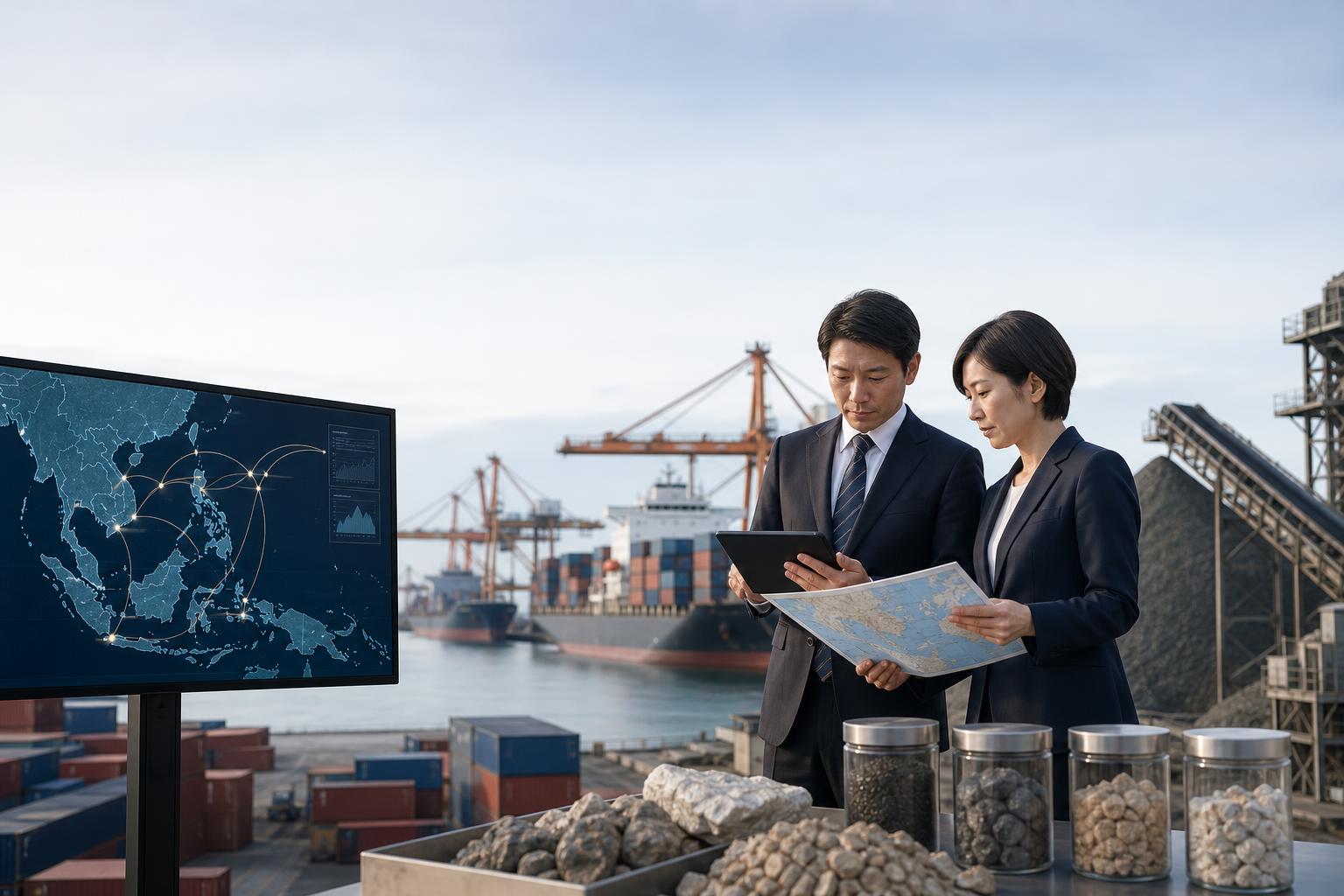
Japanese companies are expanding rare earth supply chains in Southeast Asia to reduce dependence on China. Sumitomo Metal Mining will increase production of rare earths for fuel cells by 20% using raw materials from the Philippines. Sojitz is also teaming up with an Australian resources giant to develop new mines in Vietnam, Malaysia, and other countries.
Speeding Up Supplier Diversification
Japan’s move away from China in its supply chains has so far centered on Australia. By adding Southeast Asia, the goal is to further diversify sourcing. This will strengthen the foundation for stable supply and support the competitiveness of Japan’s manufacturing industry.
Fuel Cell Demand Is Growing
Sumitomo Metal Mining will boost production of scandium, one of the rare earths used in fuel cells, by 20% by fiscal 2026. Ore mined from a Philippine mine in which it has invested will be processed into products at its Harima facility in Harima, Hyogo Prefecture. The company will also increase staffing at the site.
Using scandium in fuel cells can lower operating temperatures and improve durability. As interest in fuel cells grows as a power source for artificial intelligence (AI) data centers, global demand for scandium doubled in 2025.
China accounts for 80% of global supply, while Japan produces only 10%. Russia and Canada also produce it. In Japan, only Sumitomo Metal Mining can supply scandium on a large scale, and it is exploring room to increase output while also targeting demand from Western companies seeking to avoid reliance on China.
Avoiding China Dependence Is Urgent
Rare earth deposits with large reserves are concentrated in China, which accounts for about 70% of global production. For years, countries including Japan have relied on imports from China for most of their demand. Against this backdrop, the Chinese government has used rare earths as a tool of external pressure.
In April 2025, as U.S.-China relations deteriorated, China began export controls on seven types of rare earths, including scandium. Then in January 2026, China announced tighter controls on exports to Japan under dual-use regulations. It appears that important minerals used for high-performance magnets, such as dysprosium, were also included.
Mining development in Australia is progressing, but dependence on China has still not been eliminated. In this context, Southeast Asia is drawing attention as a new source of supply. It is said to have many promising undeveloped deposits, and in October 2025 the U.S. government also signed memorandums of understanding with Thailand and Malaysia on critical mineral supply chains.
A JOGMEC official said Southeast Asia is promising because, in addition to rare earth supply chain and logistics conditions, it has potential reserves and long-standing ties with Japan through Official Development Assistance (ODA).
Sojitz and Lynas Develop a New Mine
Sojitz will jointly develop new rare earth mines in Vietnam, Malaysia, and other countries with Australian resources giant Lynas. The agreement was reached in March through Japan Australia Rare Earths, a company jointly established by Sojitz and JOGMEC. The two sides will now jointly conduct geological surveys for mine development.
For smelting, Lynas will also use its Malaysian facilities. Construction to expand production capacity is currently underway and is expected to be completed in 2027.
Since 2011, Sojitz has invested in Lynas multiple times together with JOGMEC. It has been importing Australian rare earths such as neodymium, which is used in high-performance magnets, and the range of imported materials is now expanding. Lynas is also considering expanding another mine in the future.
Enjoyed this article? Share it with your network!