





G7 Finance Chiefs to Align on AI Attacks and Oil Stability
 2026-05-16
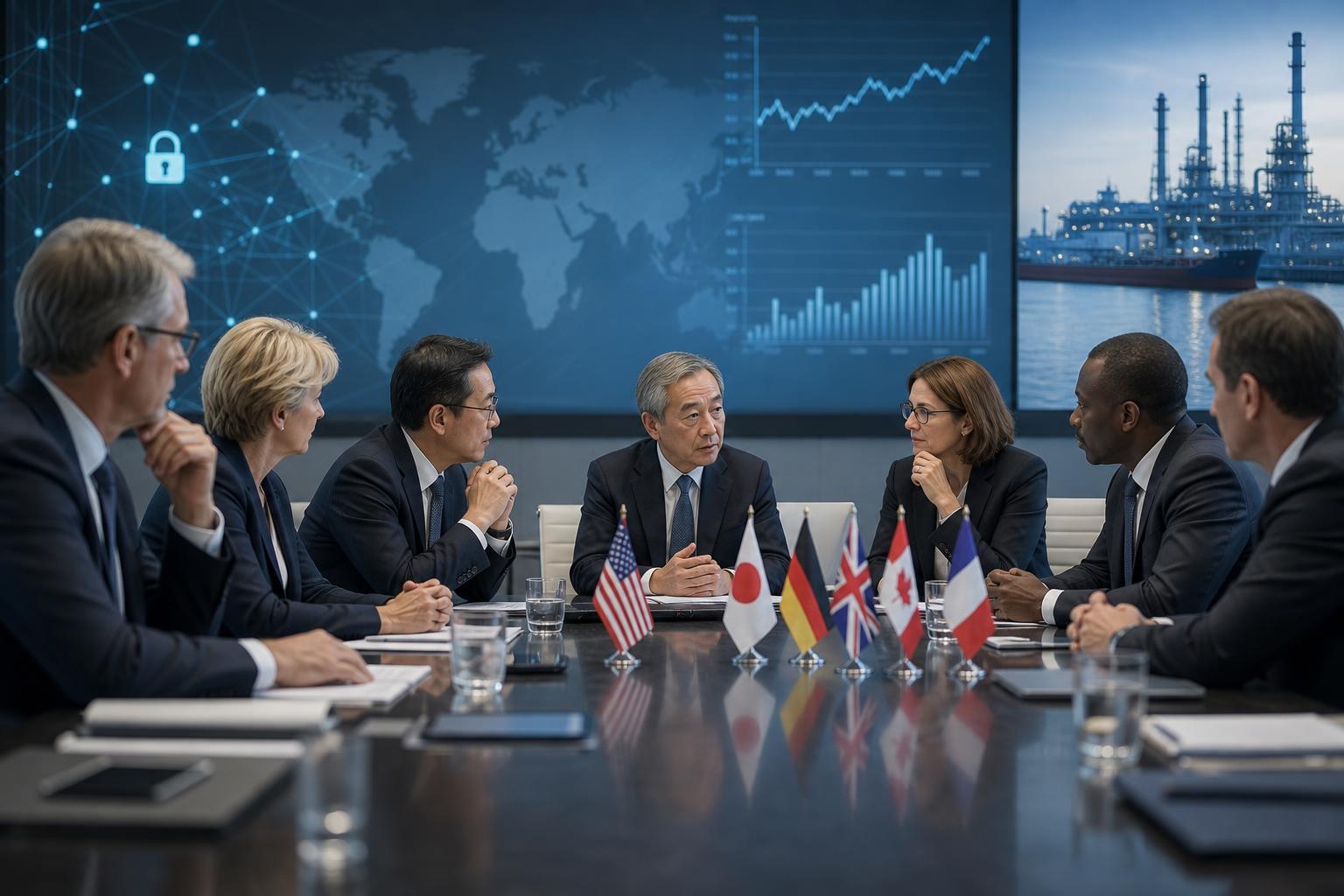
The Group of Seven (G7) will hold a meeting of finance ministers and central bank governors in Paris on the 18th and 19th. They are expected to confirm cooperation on countermeasures against cyberattacks on financial systems using artificial intelligence (AI) and on steps to stabilize oil prices in response to the Middle East crisis.
Focus of the Meeting
From Japan, Finance Minister Satsuki Katayama and Bank of Japan Governor Kazuo Ueda will attend. Ahead of the leaders' summit to be held in mid-June in Evian, France, the aim is to align the G7's stance. At the finance ministers' meeting held in Washington in April, no joint statement was issued, but this time they are aiming to put one together.
Middle East Situation and Oil
A key theme will be the impact of worsening conditions in the Middle East on the global economy and financial markets. The de facto closure of the Strait of Hormuz has dragged on, keeping crude oil prices elevated. The global economy faces the risk of stagflation, where inflation and economic slowdown proceed at the same time.
In addition to coordination on alternative procurement to secure stable oil supplies, they are expected to discuss policy coordination in the financial sector as well. Rapidly growing concern is the response to cyberattacks that exploit AI. With the U.S. startup Anthropic's "Claude Mythos" in mind, participants will discuss sharing countermeasures and cooperation frameworks in the event of an attack. They are coordinating a direction to include concerns about next-generation AI in the joint statement.
Mythos is said to have far greater ability than conventional models to find system weaknesses, raising fears it could be misused for cyberattacks. If payment and accounting systems at banks and other institutions are attacked, the impact could spread across the entire financial system. On the 7th, the International Monetary Fund (IMF) warned that Mythos could threaten financial stability and urged officials to call on financial institutions to create comprehensive plans, including safety measures and recovery in the event of damage.
Enjoyed this article? Share it with your network!