





Memory Giants Seen Posting Sharp Profit Gains; Kioxia Results Due on the 15th
 2026-05-15
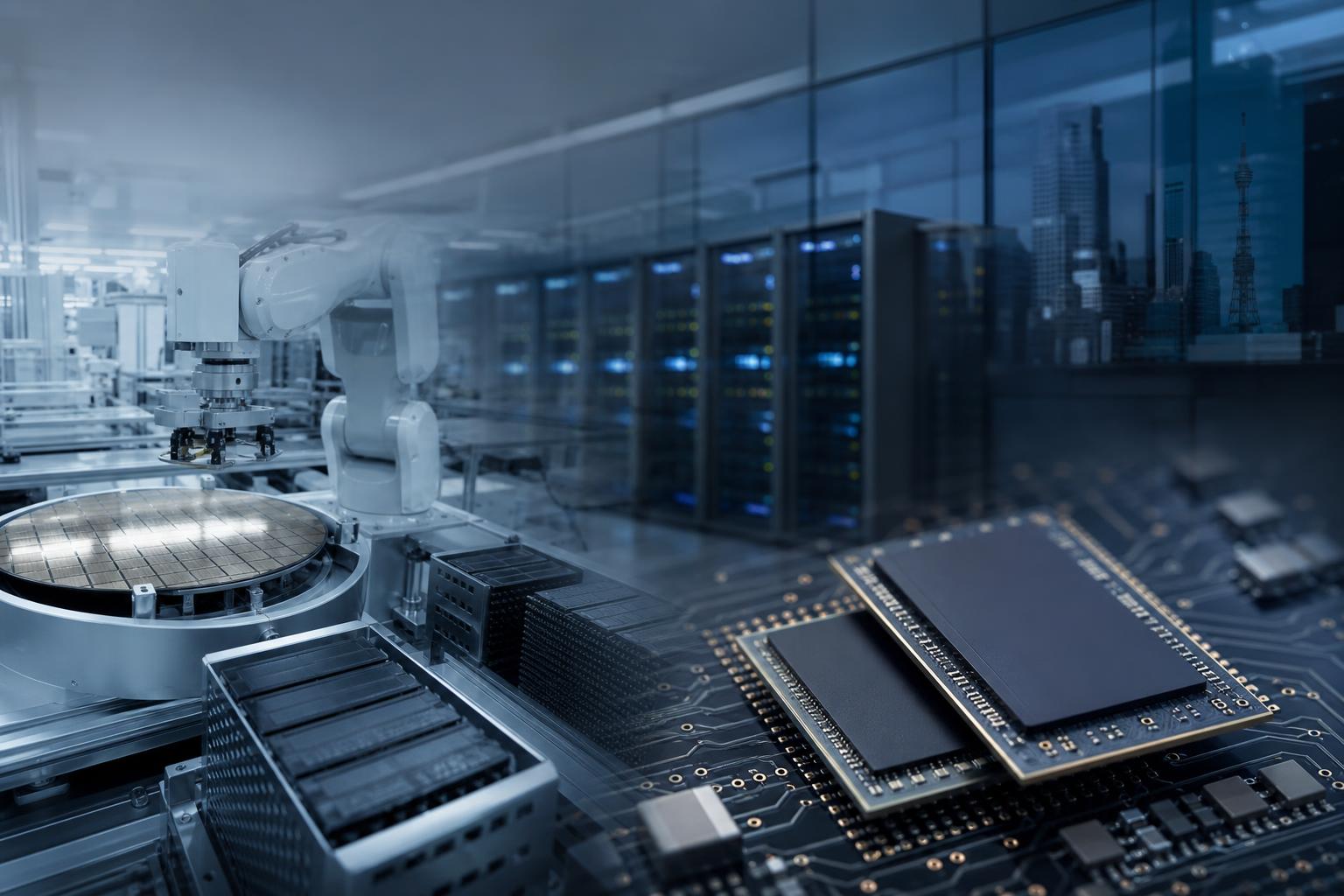
In the stock market, expectations are growing that the generative AI boom will deliver huge profits for major semiconductor memory makers. Market forecasts put the combined net profit of the world’s five largest players for this fiscal year at 63 trillion yen, six times the previous year. As a clue to the unprecedented demand for memory, global attention is turning to Kioxia Holdings’ earnings, due out on the 15th.
Earnings disclosure on the 15th in focus
Kioxia will disclose its fiscal 2026 results at 3:30 p.m. on the 15th and hold an earnings briefing from 4:00 p.m. President Hiroo Ota, Vice President Yoshihiko Kawamura, and others are expected to attend. Along with results for the January–March quarter, the company’s outlook based on demand trends will be the key focus. For the fiscal year ending March 2027, it may present an outlook for only the April–June quarter.
AI investment boosts profits
Semiconductor memory is broadly divided into DRAM for short-term memory and NAND for data storage. The world’s major players are Samsung Electronics of South Korea, SK Hynix of South Korea, and Micron Technology of the U.S., which dominate both fields, plus NAND makers Kioxia and U.S.-based SanDisk.
Companies’ earnings reports have already been coming in above market expectations. Samsung Electronics’ operating profit from its semiconductor division jumped to 53.7 trillion won, or about 5.7 trillion yen, in the January–March quarter, 49 times the level a year earlier. SK Hynix’s consolidated net profit also quintupled over the same period.
According to QUICK and FactSet, which compile analyst forecasts, the combined net profit of the five memory makers for this fiscal year is expected to reach 63 trillion yen, about six times the 11 trillion yen of the previous year. Because each company has a different fiscal year, the figures are aggregated using each company’s current fiscal period. The 63 trillion yen total is equivalent to just under 70% of the 94 trillion yen in net profit expected this year for GAFAM. Some also see it rising to 87 trillion yen next year, approaching GAFAM’s 103 trillion yen. On an individual basis, Samsung Electronics’ forecast net profit for this fiscal year is expected to exceed Alphabet’s.
Capital is flowing into DRAM and NAND
The surge in profits is being driven by expanding investment in generative AI. As major U.S. tech companies and others rush to build data centers, memory demand is swelling rapidly. In AI semiconductors, attention initially centered on Nvidia’s graphics processing units (GPUs), which offer high computing performance, but as AI has spread, the importance of data storage has increased and memory has gained greater weight.
DRAM handles short-term memory and affects things like the response speed of generative AI. Samsung Electronics, SK Hynix, and Micron together hold 90% of the global DRAM market, and HBM, which is made by stacking DRAM, has become the leading AI product. NAND supports the storage of training data as long-term memory. In global market share, Kioxia ranks third, behind the South Korean companies.
Market capitalization also surges
The five major memory makers are at the center of the stock market’s AI frenzy. Their combined market capitalization has risen by about 350 trillion yen since the start of the year, surpassing the roughly 210 trillion yen increase for GAFAM and the roughly 160 trillion yen for the entire Tokyo Stock Exchange Prime market.
Kioxia’s P/E ratio stands at a high 60 times based on the previous year’s earnings. However, based on this fiscal year’s market forecasts, it falls to around 10 times, below the high-teens average for the Tokyo Stock Exchange Prime market. If profit forecasts materialize, investors are likely to see further upside in the stock price.
What the market is watching most closely is whether the emergence of generative AI will lead to a prolonged period of strong memory demand, or whether this is merely one phase of the cyclical boom-and-bust pattern known as the silicon cycle. Investors will look to the 15th’s earnings reports for clues.
Enjoyed this article? Share it with your network!