





U.S. Firms Become Diplomatic Cards as Semiconductors and Aircraft Take Center Stage
 2026-05-15
Corporate Chiefs Take Center Stage
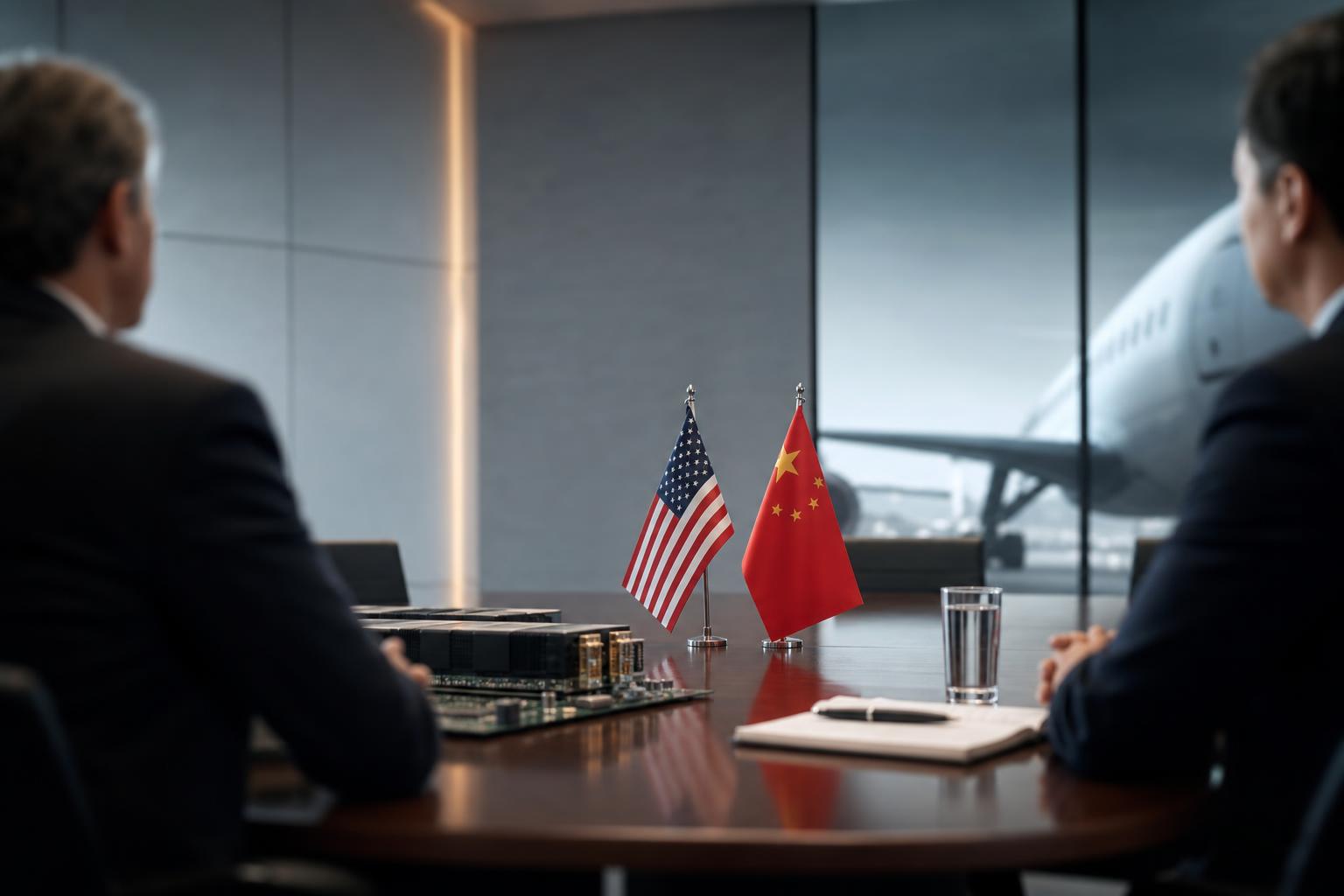
At the U.S.-China summit, the U.S. government brought corporate chiefs along and is using American products and technology as bargaining chips in talks with China. Supplies of semiconductors for artificial intelligence (AI) and aircraft are creating business opportunities for U.S. companies as ties ease.
On President Donald Trump's trip to China, more than a dozen U.S. business executives from sectors including semiconductors, aircraft, finance, and agriculture accompanied him, including Nvidia CEO Jensen Huang. Trump has framed this visit as an effort to "open" the Chinese market.
Reuters reported on the 14th that the U.S. government approved exports of Nvidia's high-performance H200 chips to about 10 Chinese companies, including Alibaba Group, Tencent Holdings, and ByteDance. U.S. exports of semiconductors, which are central to AI, are moving toward approval.
Rising Hopes for Stocks and Orders
On expectations of expanding business in China, Nvidia shares rose as much as 5% intraday on the 14th from the previous close.
Deals also advanced in aircraft. In an interview with Fox News released on the 14th, Trump said he had agreed to an order for 200 Boeing planes from China.
Boeing aircraft have been used as diplomatic leverage before. During Trump's first visit to China in 17, China agreed to order 300 aircraft. By contrast, in 25, when ties cooled and tariff hikes escalated, China reportedly ordered a halt to Boeing purchases as retaliation.
China Wary of Dependence
The U.S. side believes that by continuing to supply China with critical technology and strategic materials, it can tighten its grip on the other side's supply chains. But from China's perspective, dependence on the U.S. could be used as leverage in a crisis, and it is hard to tell whether Beijing truly wants that "poisoned bun."
Ali Wyne of the think tank International Crisis Group notes, "China is trying to accelerate self-reliance in technology. Tariffs and export controls under the Trump administration made it clear to China that dependence on the U.S. threatens security."
In April, on Nvidia's H200, U.S. Commerce Secretary Howard Lutnick acknowledged in testimony before Congress that exports to China had not materialized. The Chinese government is said to be urging domestic companies not to buy the H200.
Beyond technology, soybeans were once a U.S. diplomatic card against China, but amid tariff disputes China has shifted to substitute imports from Brazil.
China Also Jolts with Regulations
According to China's state-run Xinhua News Agency, President Xi Jinping met with executives from U.S. companies and said, "China's door to opening will open even wider."
Still, the expansion of U.S. companies in China can also be used as leverage by Beijing. The visiting business delegation included executives from U.S. tech firms that manufacture products in China, such as Tesla CEO Elon Musk and Apple CEO Tim Cook. All of them cannot ignore China on either the sales or production side.
The Chinese government has room to shake up the expansion of such companies through regulation. It can be seen as a strategy of encouraging an open market tied to dependence, while holding businesses hostage.
For example, in 23, the Chinese government banned purchases of products from U.S. Micron Technology for critical information infrastructure, saying they had "relatively serious problems" for internet security. In 25, it pressured Nvidia by claiming its AI chips posed security concerns it called a backdoor.
In China, cases are increasing where U.S. brands no longer carry the same weight as before in competition with local firms, with Starbucks and Nike struggling. In autos as well, foreign players such as Tesla and Germany's Volkswagen are struggling against the rise of local electric vehicle (EV) makers. Across all industries, building ties with the Chinese government is becoming a condition for doing business.
China treated Trump as a state guest and gave him a warm reception, upgrading the officials who greeted him on arrival at the airport on the night of the 13th compared with his 17 visit. Beneath the atmosphere of easing tensions, a shrewd contest over future hegemony continues.
Enjoyed this article? Share it with your network!