





Trump and Xi Hold Talks in Beijing as Trade and Taiwan Draw Attention
 2026-05-14
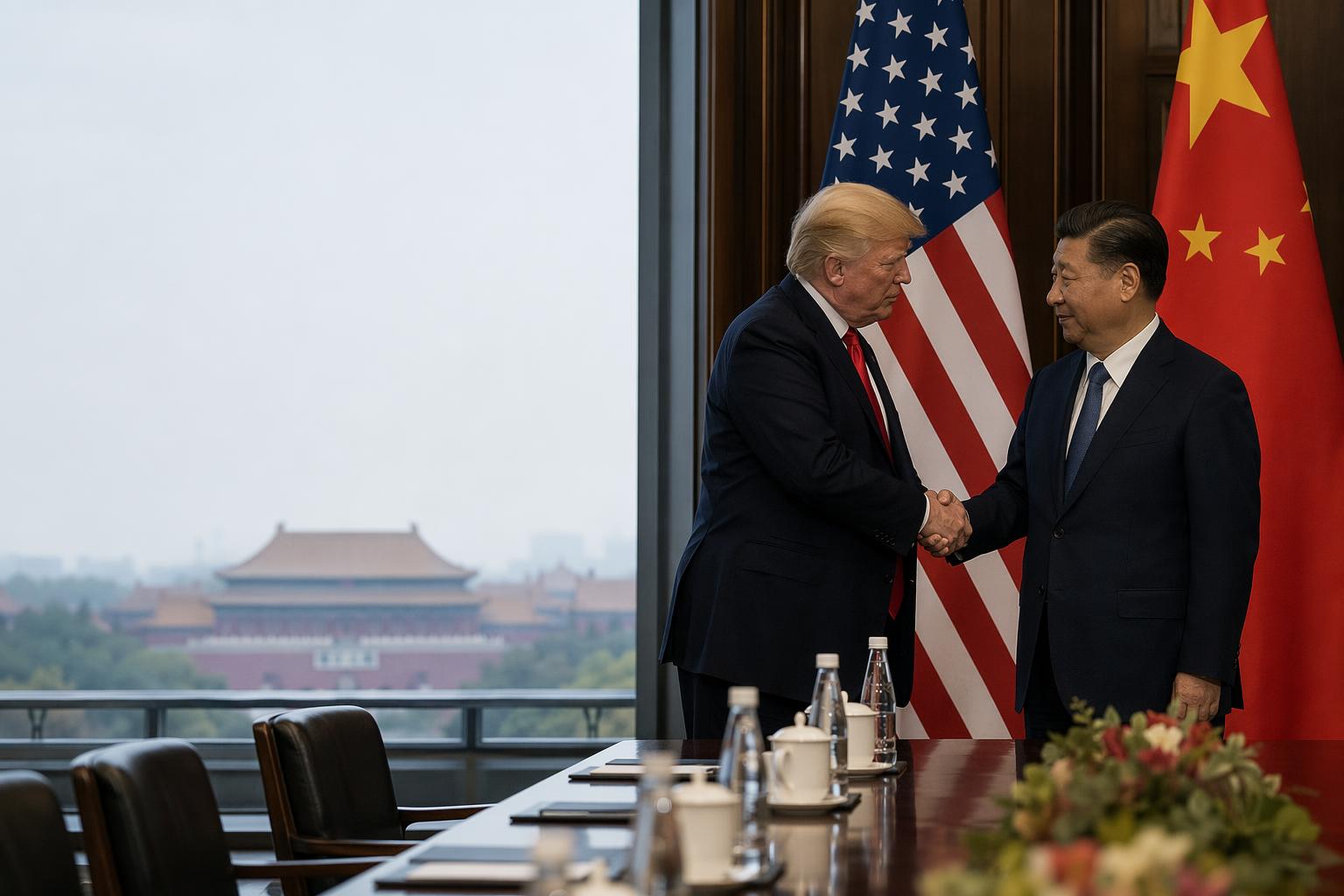
Trade Talks and Taiwan Take Center Stage
U.S. President Donald Trump and Chinese President Xi Jinping held their first summit in Beijing in nine years on the 14th. With trade as the main topic, Taiwan and the situation in Iran are also expected to be on the agenda, and attention is on whether Trump, eager to secure results from the trade talks, will press for concessions on Taiwan.
At the start of the meeting, Xi said, "Each side's success is an opportunity for the other, and a stable China-U.S. relationship is a positive for the world," adding, "If both sides cooperate, both benefit; if they confront each other, both are hurt." Trump replied, "We have known each other longer than any other two national leaders in history," and praised Xi, saying, "You are a great leader."
Resetting U.S.-China Relations
The two leaders held a welcome ceremony and talks on the morning of the 14th. In the afternoon, they are scheduled to visit the Temple of Heaven Park, once used by emperors of the Ming and Qing dynasties for rituals, and attend a dinner in the evening. A "tea" meeting and a "working lunch" are planned for the morning of the 15th.
Trump aims to showcase trade deal results ahead of the U.S.-China midterm elections in November. He is seeking agreements that include increased purchases of U.S. soybeans and Boeing aircraft. According to the White House, the two sides will also discuss creating trade and investment committees to expand trade and investment. China’s state-run Xinhua News Agency said Xi described the ministerial-level talks on the 13th as having reached "balanced and positive results."
The Taiwan Arms Sale Issue
Arms sales to Taiwan will also be on the table at this summit. On the 11th, Trump told reporters, "It seems Xi would prefer that we not sell. I’m going to talk about it." Under the "Six Assurances," which form the basis of U.S. policy toward Taiwan, the U.S. is not supposed to consult China in advance on arms sales, making any public mention of such talks unusual.
In December 2025, the second Trump administration approved a record $11.1 billion arms sale package. The Biden administration’s total over four years was about $8.4 billion. Reuters reported in March that the Trump administration may approve another $14 billion in arms sales. Some also believe Trump may delay the sale timing out of consideration for Xi.
While the U.S. does not challenge China’s position that the mainland and Taiwan are inseparable, it has maintained the "One China" policy, which involves engagement in Taiwan’s security. It prioritizes the status quo and says it "opposes any unilateral changes to the status quo from either side and does not support Taiwan independence." Some believe China may ask in the meeting for this wording to be changed to "oppose independence," but many U.S. experts think that even if Washington accepted, it would not amount to a major policy shift. Still, concerns that the U.S. is effectively handing Taiwan over in exchange for a trade deal are likely to grow.
The summit was originally scheduled for the end of March but was postponed for U.S. reasons. It was delayed because U.S. attacks on Iran began on February 28, and although the Trump administration had hoped to end the fighting before the China visit, that did not happen. Trump told reporters that he did not need "any help at all" from China to end the fighting, but the possibility remains that he may seek Xi’s help on Iran.
Enjoyed this article? Share it with your network!