





Nvidia CEO Makes Last-Minute Appearance at U.S.-China Summit to Discuss China Exports
 2026-05-14
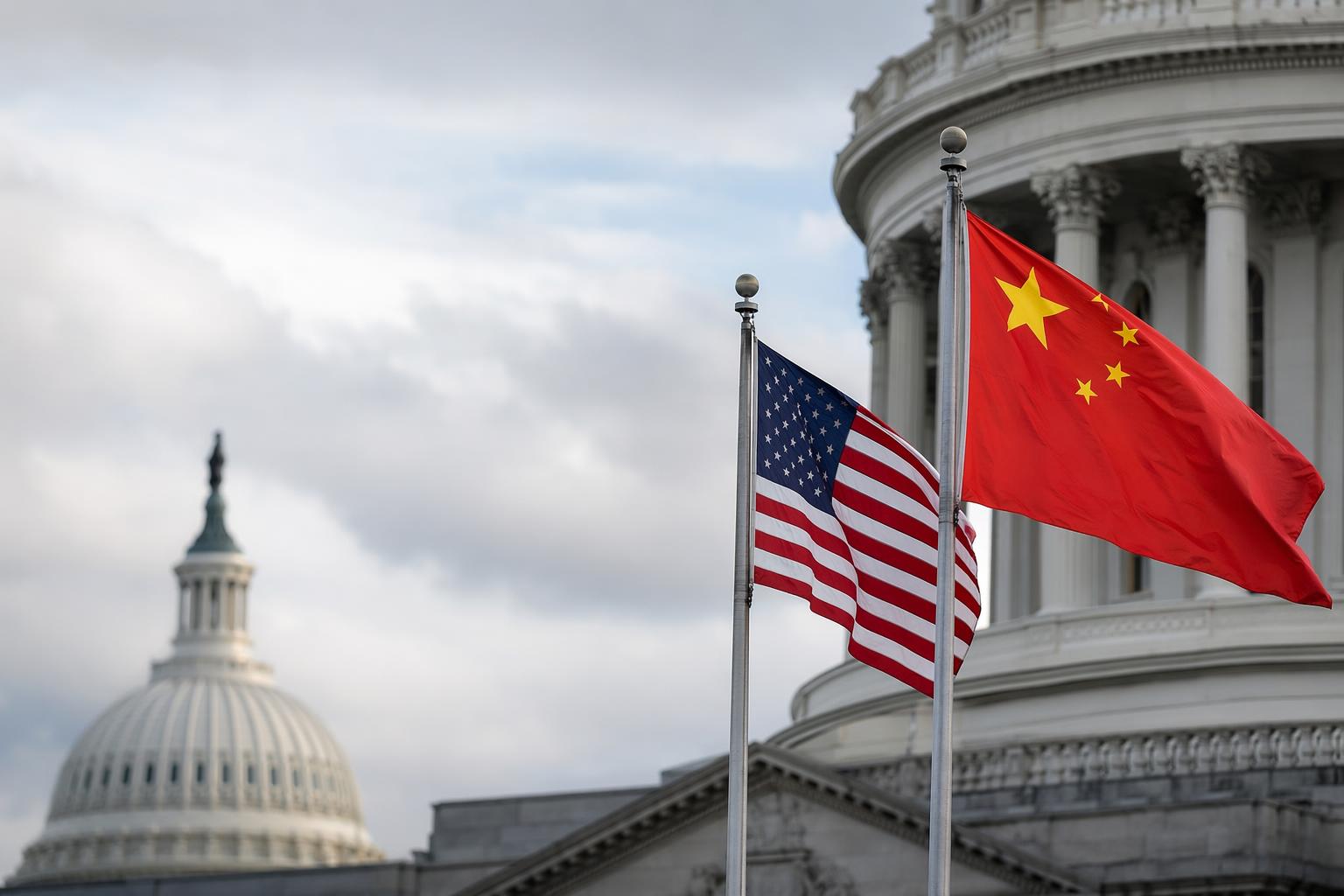
Nvidia CEO Joins U.S.-China Summit at the Last Minute, Eyes China Exports
Jensen Huang, CEO of U.S. chipmaker Nvidia, suddenly joined President Donald Trump on his trip to China. Even as U.S.-China relations show some signs of easing, the split in the artificial intelligence (AI) supply chain remains deep, and Nvidia is looking for room to resume chip exports to China.
A Sudden Trip to China
Trump arrived in Beijing on the 13th with Huang and others in tow. It is his first trip to China in about nine years. He will stay until the 15th and meet with President Xi Jinping. The agenda is expected to include the economy, Iran, and Taiwan.
The delegation also includes more than a dozen executives from U.S. companies with strong ties to China, such as Tesla CEO Elon Musk. At one point, Huang was not expected to join, but on the 12th it was suddenly announced that he would be traveling with the group.
A Deepening AI Divide
According to several U.S. media reports, after seeing news that Huang would not attend, Trump called him on the morning of the 12th and invited him on the spot. Huang reportedly boarded Air Force One in Alaska and joined the Beijing trip at the last minute.
The delegation also includes executives from companies like Boeing and Blackstone, all aiming to revive business in China. By contrast, it does not include leaders from U.S. AI startups such as OpenAI and Anthropic, underscoring the depth of decoupling in the AI sector.
Another factor is the emergence of powerful AI that can also be used for cyberattacks, turning it into a national security issue. Nvidia was not initially invited either, but China, where AI and robotics are booming, is an essential market for the company’s future growth.
The Battle Over the China Market
The U.S. government has blocked exports of Nvidia’s most advanced chips to China over concerns they could be used for military purposes. In China, companies such as HiSilicon, a unit of Huawei Technologies, are gaining strength, and continued exclusion could cost Nvidia the Chinese market.
The Chinese government is also promoting “de-Nvidia-fication” so domestic firms such as Alibaba, the up-and-coming DeepSeek, and Moonshot AI can develop cutting-edge models using Chinese AI chips. China is the world’s second-largest AI power after the U.S. and is expanding its influence around open models.
Huang has been trying to open a path for exports to China through close ties with Trump and lobbying efforts. He has also aligned with the U.S. push to bring supply chains back home, including outsourcing production to Taiwan Semiconductor Manufacturing Co. (TSMC) in Arizona and investing in U.S. Intel, in which the U.S. government is the largest shareholder.
In February, the U.S. government approved limited exports to China of the high-performance H200 chip, which is not among the most advanced products, subject to pre-shipment inspections and other conditions. At a company event in March, Huang said Nvidia was taking orders from many customers for AI chip exports to China.
But actual shipments have not gone as planned. In April, U.S. Commerce Secretary Howard Lutnick told a Senate hearing, when asked about H200 exports, that Nvidia had “not sold to China yet.” He said Chinese firms have demand, but Beijing is prioritizing domestic industry development and has not allowed purchases.
Tighter China Restrictions
Even as Nvidia struggles to move exports forward, tensions between the U.S. and China over the AI supply chain continue to rise.
In April, bipartisan lawmakers in the U.S. House of Representatives introduced a new bill to expand export controls on lithography equipment, which is essential for forming semiconductor circuits. The U.S. has worked with the Dutch government to keep ASML Holding’s most advanced machines out of China, but it now wants controls expanded to older-generation tools as well, urging allies to maintain the China containment effort.
China has developed the ability to produce advanced chips without ASML’s latest equipment by repeatedly using older-generation machines in multiple exposure steps. The U.S. tightening of controls is aimed at such workarounds. Once again, it shows Washington’s unwillingness to make concessions to China over the AI supply chain.
Nvidia’s exports to China have become a difficult negotiation, requiring close attention to the intentions of both the U.S. and Chinese governments. This U.S.-China summit is an important milestone that could shape Nvidia’s future in China.
Enjoyed this article? Share it with your network!