


Dollar Rebounds as U.S. Rate Expectations Overtake Energy Prices as Key Driver

 July 28, 2026

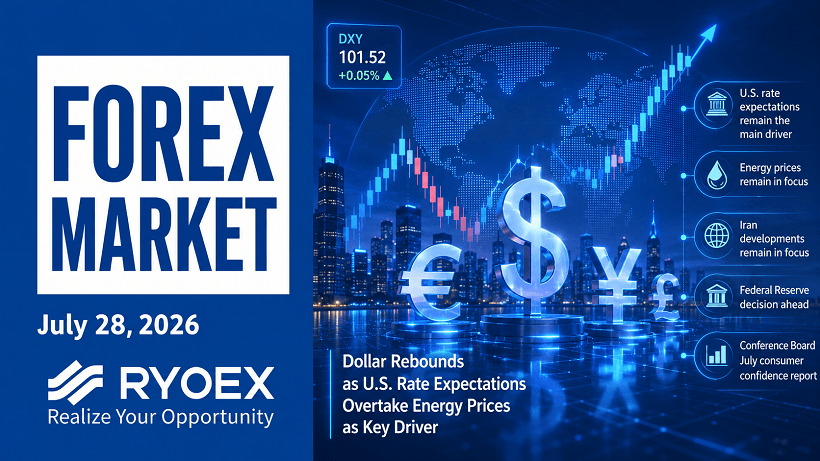
The U.S. Dollar Index erased all of Monday’s intraday losses and closed 0.05% higher at 101.52 as U.S. interest-rate expectations remained the currency’s main driver. Elevated energy prices, geopolitical developments involving Iran and the upcoming Federal Reserve decision remain in focus, alongside the U.S. Conference Board’s July consumer confidence report.
Forex Market Overview
Dollar Recovers as Treasury Yields Remain Elevated
The U.S. Dollar Index staged a sharp V-shaped reversal on Monday, recovering all its earlier losses to finish 0.05% higher at 101.52. The benchmark 10-year U.S. Treasury yield ended at 4.652%, while the policy-sensitive two-year yield closed at 4.331%.
Changes in U.S. rate expectations, particularly at the front end of the Treasury yield curve, have maintained a strong positive correlation with the Dollar Index. By contrast, the relationship between the dollar and energy prices has weakened considerably since oil prices played a major role early in the war involving Iran.
Interest-rate swaps currently price in more than two 25-basis-point Federal Reserve rate increases by the middle of next year, with a September increase fully priced in. Markets also assign a 38.3% implied probability to a cumulative 50-basis-point increase by the end of this year. These expectations have persisted despite President Donald Trump’s public pressure on the Fed and his statement that the United States should have the world’s lowest interest rates.
Trump also said he believed Warsh would do the right thing and that he knew what Warsh wanted. The key question for markets is whether Warsh will maintain his hawkish stance if equities begin to weaken. A continued hawkish message could support the dollar, but it could also add pressure ahead of the following day’s Bank of Japan decision and increase the risk of Japanese foreign-exchange intervention if USD/JPY approaches 165.
Euro Remains Closely Tied to Broad Dollar Moves
The euro has continued to trade largely as the inverse of the broader dollar. Its correlation with the U.S. currency has been unusually tight in recent months and stronger than that of other G10 currencies against the dollar, partly because euro-area economic data and policy have generated relatively little independent volatility.
Germany’s fiscal policy implementation is progressing steadily, but the expected benefit to broader euro-area growth has been overshadowed by the global energy shock. European natural gas prices have also responded more strongly to the latest energy disruption than they did in March and April.
European Central Bank policy has generally been well communicated in advance. This includes expectations that rates will remain unchanged at this week’s meeting and the widely anticipated September increase already reflected in market pricing. Current ECB tightening expectations exceed Goldman Sachs economists’ baseline forecast for one final increase in September, although similar pricing is visible across most G10 markets.
The euro remains adversely exposed to two broader global trends: the terms-of-trade shock and the relative strength of higher-yielding currencies over lower-yielding ones. These themes may continue to weigh on EUR/USD in the coming months and support the euro’s use as a funding currency for carry trades.
Yen Faces Near-Term Pressure and Intervention Risk
The near-term outlook remains unfavorable for the yen. Expectations that the Fed will avoid an immediate rate increase, combined with positive risk sentiment, are seen as factors that could continue pushing USD/JPY higher. Japanese fiscal risks may also weigh on Japanese government bonds and the yen, particularly if the government advances a consumption-tax reduction before early August as part of a looser and less constrained near-term fiscal framework.
Investors nevertheless remain alert to the risk of carry-trade unwinding. Foreign-exchange intervention can substantially reduce speculative positions, although previous yen-buying operations have generally had only temporary effects when the broader macroeconomic trend has moved in the opposite direction.
Policies that successfully encourage capital to return to Japan could offer a more credible and sustainable approach. Such measures might gradually correct the yen’s severe undervaluation, particularly if the U.S. economic outlook weakens. The Japanese government appears closer to adopting this type of policy than previously expected, although the process could begin slowly and discreetly.
If capital flows begin to signal asset rotation, longer-term positions may be entering an unwinding phase that was largely absent during the volatility of August 2024. A faster and more disorderly decline in the yen would further increase intervention risks and could prompt the Japanese government to adopt a more credible approach capable of affecting the currency’s longer-term direction.
Geopolitical Developments and Upcoming Events
Trump said he had sufficient patience to reach a new agreement with Iran and that negotiations were underway, although the window for talks was limited. He said military action would resume if negotiations failed. According to Trump, strikes against Iran were suspended after mediating countries requested another opportunity for negotiations, and he believed Iran was interested in reaching an agreement.
Iran said its talks with Oman concerning the Strait of Hormuz were unrelated to the United States and denied requesting renewed negotiations with Washington. The Houthis said they had attacked Saudi crude-oil transportation infrastructure, while Saudi Arabia said it had intercepted and destroyed a drone launched from Iraqi territory.
Markets continue to monitor developments involving the United States, Israel and Iran. A meeting between Israeli Prime Minister Benjamin Netanyahu and Trump is pending. The U.S. Conference Board’s July consumer confidence index is scheduled for 2:00 p.m. UTC.
Forex Outlook: Global Market Views
This section reviews the main views on the foreign exchange market from global financial institutions and market participants. Each view has been summarized and restructured by the RYOEX Research Team based on publicly available information. References to any institution or individual do not imply endorsement of RYOEX or its views.
Goldman Sachs | Dollar Performance May Diverge Across G10 Currencies
Goldman Sachs said the dollar’s relatively modest response to the energy shock reflected both its stronger starting position and weaker safe-haven demand than in March. If oil prices remain elevated, the firm expects the Fed’s upcoming decision to have a limited effect on cumulative interest-rate pricing, even though markets see a meaningful possibility of a rate increase next week. The dollar’s reaction may therefore also be limited.
Over the medium term, Goldman’s economists expect the Fed to leave rates unchanged through the end of the year. The firm said this would create a modest but manageable headwind for the dollar against other G10 currencies. Carry returns, terms of trade and the related relative-return outlook remain central to its baseline expectation that the dollar’s performance will vary across currencies over the next several months.
Goldman expects the euro to remain closely linked to broad dollar movements. It said terms-of-trade pressure and the relative advantage of higher-yielding currencies could continue to weigh on EUR/USD and support euro-funded carry trades. The threshold for ECB-driven changes in rate differentials to materially affect the euro remains high.
For the yen, Goldman sees continued near-term pressure but acknowledges the risk of intervention and carry-trade unwinding. It said policies that encourage capital repatriation could prove more credible and sustainable than direct yen-buying operations, particularly if the U.S. economic outlook weakens.
David Scutt | A Fed Rate Increase Could Trigger Broader Repricing
Market analyst David Scutt said historical experience could indicate where the largest adjustment would occur if markets have underestimated the risk of a rate increase this week. Changes in U.S. rate expectations, particularly at the front end of the Treasury curve, have shown a strong positive correlation with the Dollar Index in recent weeks. Although correlations change over time, the main pattern has held: more hawkish Fed pricing has generally coincided with a stronger dollar.
Markets have already made a substantial hawkish adjustment since the June Federal Open Market Committee meeting. Interest-rate swaps now price in more than two 25-basis-point increases by the middle of next year, including a fully priced September increase.
If the Fed raises rates this week, Scutt said the adjustment might extend beyond pricing a single 25-basis-point move. Investors could be forced to reassess the Fed’s reaction function and the future policy-rate path. Markets might also stop assuming that the Fed would act only at meetings accompanied by quarterly economic projections and instead conclude that tightening could occur whenever the committee considers it necessary.
Such a shift could trigger sharp repricing at the front end of the Treasury curve and another dollar rally. Scutt also noted that U.S. rate expectations have displaced energy prices as the dominant influence on the dollar in recent months.
Capital Economics | Transatlantic Policy Paths May Diverge
Neil Shearing of Capital Economics said markets are pricing slightly more than 50 basis points of tightening by the Fed, the Bank of England and the ECB through the middle of 2027. However, their policy paths could diverge by next year if the war involving Iran ends and energy prices fall, allowing domestic economic fundamentals to regain their influence over monetary policy.
Under that scenario, underlying inflationary pressure would be weaker in the United Kingdom and the euro area, while U.S. fiscal policy would remain relatively loose. Shearing therefore said market expectations for ECB and Bank of England tightening were becoming increasingly difficult to justify. By comparison, the Fed could resume tightening in the near future, reinforcing the prospect of transatlantic policy divergence.
James Stanley | Fed Communication Will Determine the Dollar’s Next Move
Analyst James Stanley said the euro would need to participate for the dollar to establish a clear direction because it accounts for 57.6% of the DXY basket, compared with 13.6% for the yen. Capital flows can sometimes disrupt that relationship. During the summer of 2024, weak European growth and preparations for Fed rate cuts led to large-scale carry-trade unwinding, weakening the dollar and helping EUR/USD rebound and hold above 1.1200. Stanley said a repeat would require the right conditions.
The FOMC meeting is the central focus this week. Stanley said Warsh has maintained a hawkish stance since taking control of the Fed, despite Trump’s earlier suggestion during the nomination process that willingness to cut rates would be a key test. With inflation elevated when Warsh took over, Stanley said he needed to remain at least verbally open to rate increases to prevent markets from assuming the currency would continue to depreciate.
Stanley argued that cutting rates during a period of high inflation could lift inflation expectations, long-term bond yields and mortgage rates. Lower policy rates do not necessarily bring down the entire yield curve and can sometimes push longer-term rates higher.
The immediate question is whether Warsh will remain hawkish on Wednesday as equities begin to weaken. If he does, dollar strength could add pressure ahead of the Bank of Japan’s decision the following day. Stanley said USD/JPY approaching 165 could trigger intervention, potentially resembling the market environment of July 2024.
Markets are increasingly considering the possibility that the Fed may raise rates in response to persistent inflation. Stanley said this narrative has dominated since the June 17 FOMC meeting and contributed to a break lower in EUR/USD. He added that a hawkish Fed could make a move toward the previous EUR/USD low of 1.1325 reasonable. If Warsh softens his position under pressure from equities, however, the basis for further dollar gains would be challenged. The FOMC statement and Warsh’s Wednesday press conference are expected to provide direction.
Key Forex Market Charts
This section highlights charts that help explain recent moves in the foreign exchange market, with a focus on changes in monetary policy expectations, interest-rate differentials, economic data and market sentiment. The charts and data are based on third-party information and do not represent RYOEX's views or indicate future exchange-rate movements. Given the risk of sudden market swings, appropriate risk management remains essential.
U.S. Durable Goods Orders Miss Market Expectations in June
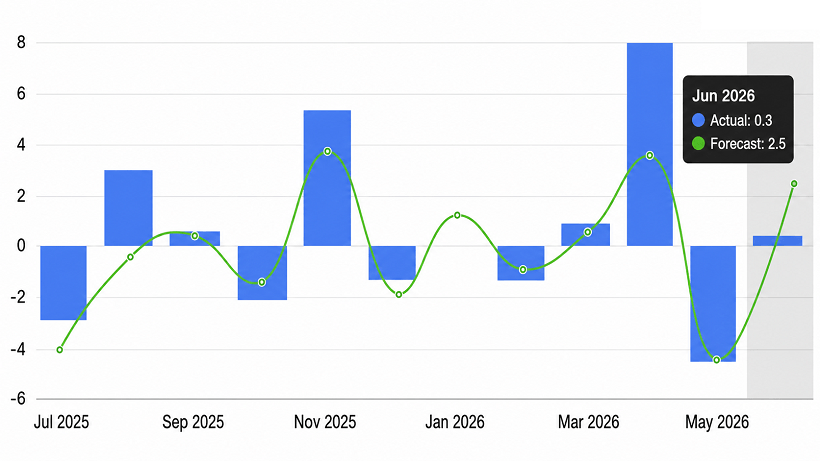
U.S. durable goods orders increased just 0.3% month over month in June, well below market expectations and indicating considerably weaker-than-anticipated headline demand.
Core Capital Goods Orders Rise 0.9% in June
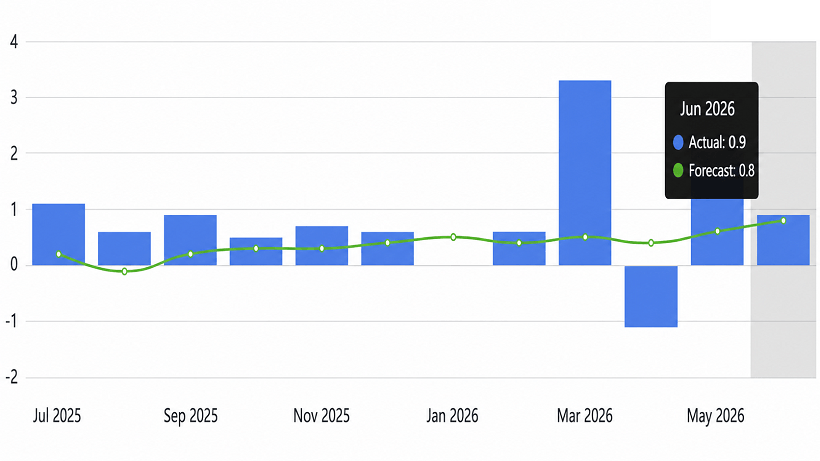
Core capital goods orders excluding aircraft rose 0.9% in June, exceeding market expectations. Shipments climbed 1.9%, their largest increase since late 2021, indicating that business investment remained strong, supported by artificial-intelligence-related activity and defense spending. Trump’s tariff policies and developments in the Middle East remain potential constraints.
Markets Continue to Price Fed Tightening by Year-End
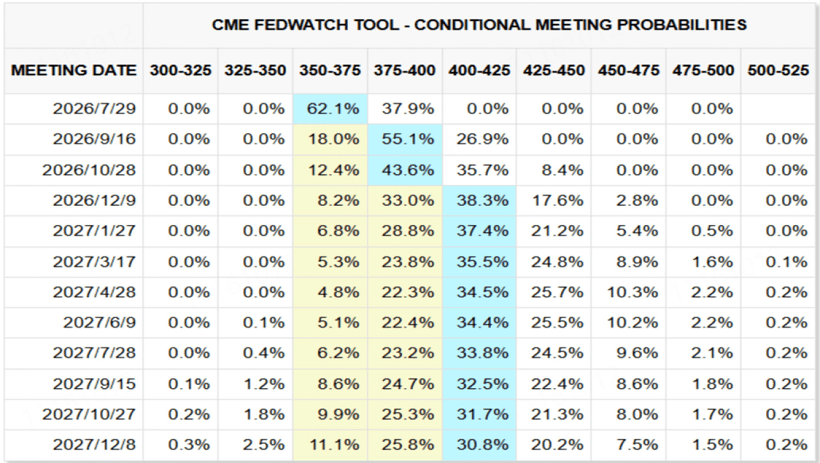
Interest-rate markets continued to assign a 38.3% implied probability to a cumulative 50-basis-point Fed increase by the end of the year. Markets showed little response to Trump’s call for the United States to have the world’s lowest interest rates, particularly while oil and gasoline prices remained elevated. These rate expectations are expected to continue supporting the Dollar Index and U.S. Treasury yields.
Summary
The dollar recovered on Monday as U.S. interest-rate expectations remained more influential than energy prices, with markets focused on whether the Fed will maintain a hawkish stance or raise rates. The euro remains closely tied to broad dollar moves, while the yen faces near-term pressure and growing intervention risk if its decline becomes faster or more disorderly. Developments involving the United States, Israel and Iran remain unresolved. The next catalysts include the FOMC decision, the Bank of Japan meeting and the U.S. Conference Board’s July consumer confidence index.
Enjoyed this article? Share it with your network!


RYOEX Official Media is an information platform created specifically for traders, offering the latest news, analysis, guides, and more. From beginners to experienced traders, we provide useful content to help you stay informed and succeed in your trading endeavors.


