


Oil Surges as Hormuz, Red Sea, and CPC Risks Threaten Supply

 July 24, 2026

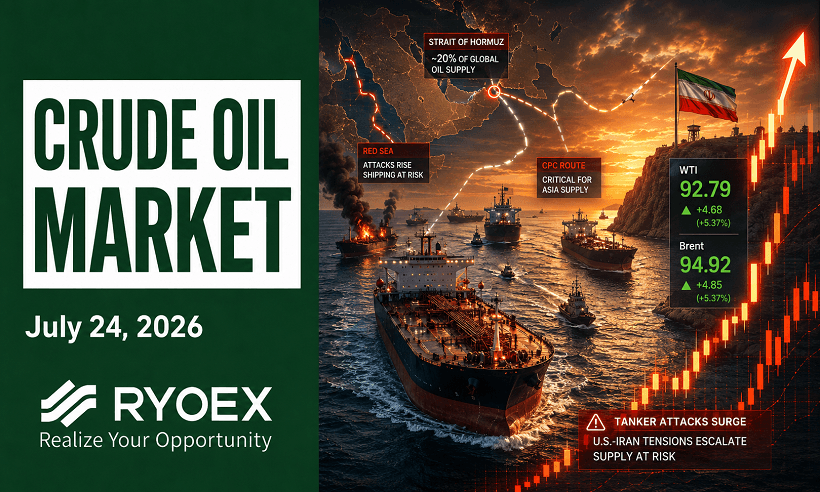
International crude prices surged on Thursday after an attack on a tanker in the Red Sea and a 12th consecutive night of U.S. strikes on Iran intensified concerns about disruptions along major oil transit routes. WTI settled 6.78% higher at $92.79 a barrel, while Brent gained 4.7% to $94.92. Attention now turns to preliminary U.S. business activity data and the weekly oil rig count.
Crude Oil Market Overview
Crude Prices Jump as Middle East Conflict Escalates
WTI crude advanced steadily after the open, breaking above $90 a barrel and gaining as much as 8% intraday before settling at $92.79, up 6.78%. Brent crude closed 4.7% higher at $94.92 a barrel, while September-delivery Brent futures finished above $100.
The rally followed an attack on a tanker in the Red Sea and continued U.S. military action against Iran. The United States deployed B-1 bombers as it intensified its attacks. President Donald Trump said he was “seriously considering” restarting large-scale military operations against Iran and was close to making a decision. Trump said Iran wanted negotiations but was not yet ready and had not suffered enough. He also warned that the United States would hold Iran responsible if the Houthis attacked vessels again.
Diplomatic developments offered little indication of an immediate de-escalation. During a visit to Iran, Iraq’s prime minister said Iraq would not allow its territory to be used to launch actions threatening Iran. The United States also pressed Saudi Arabia to sign the Abraham Accords, warning that otherwise a nuclear agreement would be void.
Hormuz and Red Sea Disruptions Raise Shipping Risks
The immediate supply concern is that crude flows through the Strait of Hormuz and the Bab el-Mandeb Strait could come under pressure simultaneously. Restrictions at either passage could delay tanker shipments, raise insurance premiums and freight costs, tighten prompt physical supply, and increase energy costs for transportation, manufacturing, and consumers.
Traffic through the Strait of Hormuz has recently fallen to levels last recorded in April and May. On some days, vessel transits dropped to single digits, about 90% below normal. Liquid energy flows through the strait totaled less than 2 million barrels per day over the past six days, compared with more than 6 million bpd in June and more than 10 million bpd in early July.
Saudi Arabia has increased shipments from the Red Sea port of Yanbu to about 4.5 million bpd as it seeks to bypass Hormuz. Including southbound flows through the Suez Canal, around 7 million bpd of oil is now moving through Bab el-Mandeb each day. A further deterioration in Red Sea security could prompt more vessels to reroute around the Cape of Good Hope, lengthening voyages, increasing fuel consumption, reducing effective tanker capacity, delaying arrivals, and pushing freight rates higher.
Regional pipeline projects designed to bypass Hormuz are being accelerated, but existing and planned capacity totals no more than about 11 million bpd. That would still be insufficient to replace the 19 million to 20 million bpd normally transported through the strait.
CPC Disruptions and Tight Fuel Markets Add Supply Pressure
Supply risks are also increasing outside the Middle East. Kazakhstan’s CPC Blend exports average about 1.7 million bpd and account for nearly 15% of European Union crude imports. Those flows have been disrupted as security concerns related to the Russia-Ukraine drone conflict deter shipowners from calling at Russia’s Novorossiysk port. Loadings have stalled, and alternative routes cannot make up the shortfall.
Upstream production has also been affected. Output at the Tengiz field has nearly halved, while Kazakhstan’s nationwide production fell from 2.07 million bpd to 1.63 million bpd as of July 22. The decline has lifted Mediterranean crude differentials, although Kazakhstan has struggled to benefit because it cannot export the affected barrels.
Tight refined-product markets are providing additional support to crude. The U.S. 3:2:1 crack spread reached a record $70 a barrel on July 22 and, despite a modest pullback, remained near historic highs. AAA data showed U.S. diesel prices had climbed to $5.209 a gallon as of July 23. The data indicate tightness in both crude and refined products, with refineries already operating near their physical limits.
A potential increase in OPEC+ production could provide a counterweight. Sources said the group may decide at its August 2 meeting to raise September production quotas by about 188,000 bpd. European Union representatives also agreed under the bloc’s 21st sanctions package against Russia to leave the oil price cap unchanged for 12 months.
U.S. PMIs and Rig Count Are the Next Catalysts
The United States is scheduled to release preliminary July S&P Global manufacturing and services purchasing managers’ indexes at 9:45 a.m. ET. The U.S. oil rig count for the week through July 24 is due at 1:00 p.m. ET.
Crude Oil Outlook: Global Market Views
This section reviews the main views on crude oil from global financial institutions and market participants. Each view has been summarized and restructured by the RYOEX Research Team based on publicly available information. References to any institution or individual do not imply endorsement of RYOEX or its views.
Christopher Lewis | Supply Disruption Risks Outweigh Overbought Conditions
Analyst Christopher Lewis said the Middle East conflict showed no sign of easing and that oil prices remained at risk of further sharp gains as long as the situation persisted. He described the market as highly sensitive to each new development, with most recent news offering little prospect of peace. The possibility of a blockade of the Strait of Hormuz remained the main focus.
Lewis said Brent was rapidly approaching the psychologically important $100-a-barrel level. Options barriers, market psychology, and the price level’s history as a major area of support and resistance could generate selling pressure, making a modest pullback during consolidation unsurprising.
Although the market was already overbought, Lewis said that condition carried less weight when oil supply faced the possibility of extensive disruption. An overbought market could become even more overbought, while short-term pullbacks would likely be widely viewed as potential buying opportunities if the conflict failed to ease. In his view, the market was signaling expectations of a supply shortage.
Zaye Capital Markets | Geopolitical Premiums, Not Demand, Are Driving the Rally
Naeem Aslam, chief investment officer at Zaye Capital Markets, said the rally was driven primarily by a larger geopolitical supply premium rather than a sudden improvement in global fuel consumption. Trump’s warnings of strikes against Iranian nuclear facilities, continued U.S. military involvement, the possibility of retaliation following Red Sea disruptions, and expectations of further action involving Iran had raised concerns that crude shipments through Hormuz and Bab el-Mandeb could come under simultaneous pressure.
Aslam said oil could continue moving toward $100 a barrel if military escalation materially disrupted exports or shipping lanes. Conversely, signs of negotiations, uninterrupted Iranian production, improved maritime security, or weaker global demand could remove part of the geopolitical premium and pull prices lower. Current price strength was therefore highly sensitive to changes in military activity, diplomacy, and tanker movements.
He identified OPEC’s latest outlook as a bearish counterweight to the conflict-driven rally. OPEC lowered its forecast for global oil demand growth in 2026 to about 780,000 bpd, while producers participating in supply cuts planned to raise output by 188,000 bpd. The International Energy Agency reported that global supply rebounded by 4.1 million bpd in June to 98.8 million bpd, although production remained about 9.4 million bpd below pre-conflict levels.
HSBC | Reduced Hormuz Traffic Creates Upside Risk to Brent Forecasts
Kim Fustier, HSBC’s senior global oil and gas analyst, said the brief calm following the mid-June U.S.-Iran memorandum of understanding had ended, leaving the oil market to face another test of resilience. Brent had moved back above $90 after falling close to $70 several weeks earlier.
Iranian attacks on vessels transiting Hormuz since July 7-8 prompted retaliatory U.S. strikes and gradually undermined the ceasefire arrangement. Fustier said the main questions were who would manage passage through the strait and whether predictable shipping conditions could be restored within the 60-day negotiating window ending in mid-August.
HSBC said the threat of a Houthi blockade of Saudi Red Sea exports may be overstated. Even if Bab el-Mandeb came under pressure, some crude could still move north through the Suez Canal and the SUMED pipeline, which retained spare capacity. Such movements would nevertheless lengthen voyages to Asia and require more ship-to-ship transfers, greater use of smaller tankers, and higher freight costs.
If diplomacy failed to restore normal traffic, HSBC said both oil prices and its Brent forecast would face clear upside risks.
Standard Chartered | Dual Chokepoint Risk Could Lead to Actual Supply Cuts
Emily Ashford, head of energy research at Standard Chartered, said Middle East crude shipping risks had evolved from a single problem centered on Hormuz into a dual chokepoint threat involving both Hormuz and Bab el-Mandeb.
The Houthis’ threat to prevent Saudi-linked vessels from passing through Bab el-Mandeb meant that Saudi Arabia’s main eastbound and westbound export routes could both be affected. The consequences would extend beyond Saudi exports because the Red Sea, Suez Canal, and SUMED pipeline form the shortest maritime route between Europe and Asia.
Fully laden very large crude carriers cannot pass directly through the Suez Canal. They generally must transfer cargoes to Suezmax tankers or discharge at Ain Sokhna in Egypt for transportation through the SUMED pipeline. Ashford said crude transportation costs would continue rising as long as shipping risks persisted. If export capacity became severely restricted, Saudi Arabia might ultimately have to cut production again, turning a shipping disruption into an actual contraction in supply.
Key Crude Oil Market Charts
This section highlights charts that help explain recent moves in the crude oil market, with a focus on changes in supply and demand conditions and market sentiment. The charts and data are based on third-party information and do not represent RYOEX's views or indicate future price movements. Given the risk of sudden market swings, appropriate risk management remains essential.
Brent Futures-Spot Spread Reaches Its Highest Level Since the War Began
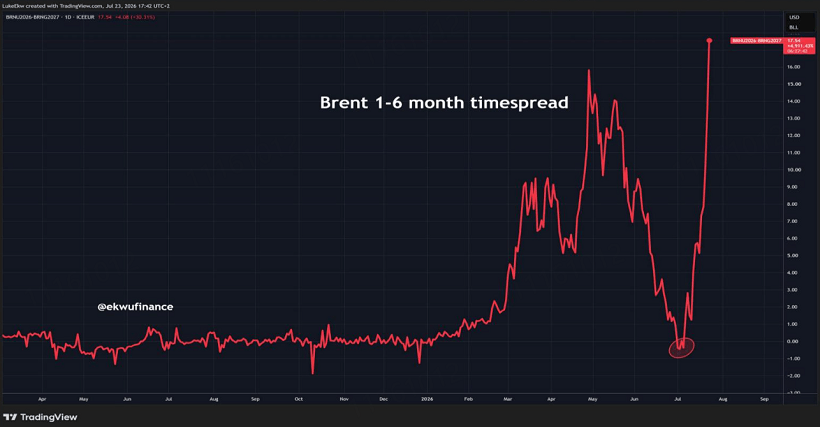
Brent futures rose rapidly during Thursday’s U.S. trading session and broke above $100 a barrel. The Brent futures-spot spread widened at the same time, reaching its highest level since the outbreak of the U.S.-Iran war and indicating that current market tightness had surpassed the level recorded in May.
CPC Blend Exports Fall as Loading Disruptions Intensify
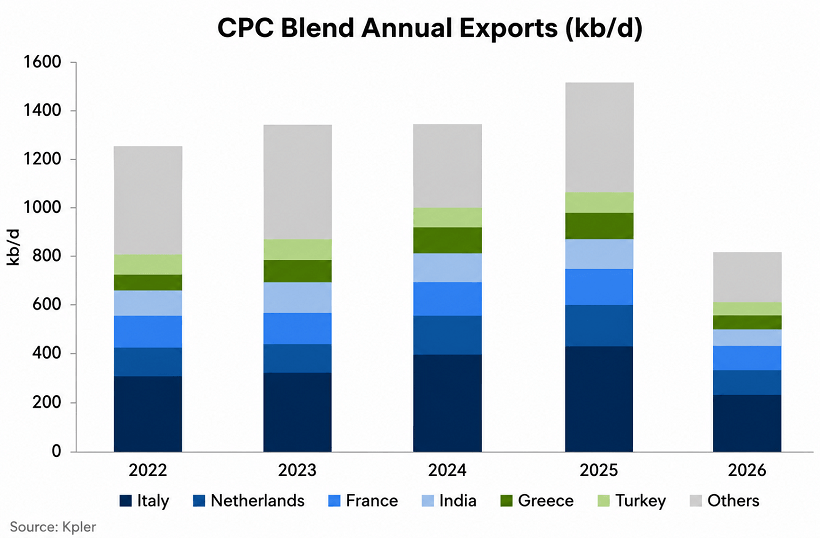
CPC Blend exports average about 1.7 million bpd and account for nearly 15% of EU crude imports. Security risks at Novorossiysk have deterred shipowners from calling at the port, stalling loadings, while alternative export routes cannot offset the shortfall. Kazakhstan’s production fell from 2.07 million bpd to 1.63 million bpd by July 22, with output at the Tengiz field nearly halving.
U.S. 3:2:1 Crack Spread Reaches a Record High
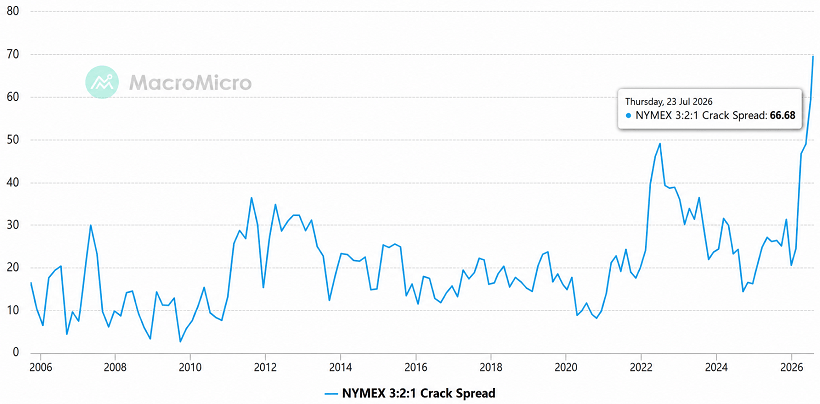
The U.S. 3:2:1 crack spread reached a record $70 a barrel on July 22. Although it subsequently eased slightly, it remained near historic highs. The move suggests tightness has spread beyond crude to refined products, with refineries already operating near their physical limits.
U.S. Diesel Prices Rise Sharply
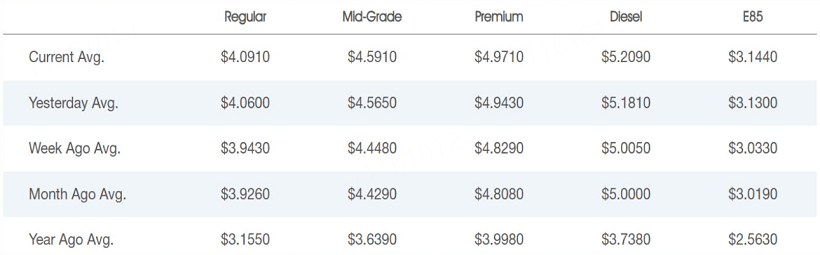
AAA data showed U.S. diesel prices had risen to $5.209 a gallon as of July 23. Persistently elevated crack spreads indicate that refined products are leading the market higher. Unless refining bottlenecks ease, diesel prices and crack spreads may remain elevated and continue supporting crude prices through higher processing margins and fuel costs.
Summary
Crude prices surged as attacks in the Red Sea, continued U.S. military action against Iran, and sharply reduced Hormuz traffic raised the risk of simultaneous disruptions at two major Middle East chokepoints. Falling CPC exports and record U.S. refining margins added further supply pressure, while possible OPEC+ output increases and weaker demand-growth expectations provided bearish counterweights. The next catalysts are the preliminary U.S. manufacturing and services PMIs at 9:45 a.m. ET and the weekly oil rig count at 1:00 p.m. ET. Shipping conditions, diplomatic developments, and the August 2 OPEC+ meeting remain central to the broader outlook.
Enjoyed this article? Share it with your network!


RYOEX Official Media is an information platform created specifically for traders, offering the latest news, analysis, guides, and more. From beginners to experienced traders, we provide useful content to help you stay informed and succeed in your trading endeavors.


