


Oil Surges on U.S.-Iran Escalation, but Prolonged High Prices Could Curb Demand

 July 20, 2026


WTI and Brent crude rallied sharply on Friday as intensified attacks between the United States and Iran, restrictions on traffic through the Strait of Hormuz, and broader threats to regional shipping heightened supply concerns. Prices opened substantially higher in the latest session, with Brent breaking above $90 a barrel and WTI exceeding $85. While immediate supply disruptions support further near-term gains, sustained high fuel prices could eventually weaken demand. The next scheduled U.S. catalyst is the Conference Board’s June Leading Economic Index at 10:00 a.m. ET on July 20.
Crude Oil Market Overview
Crude Rallies as Regional Attacks Threaten Energy Flows
International crude prices rose sharply on Friday after the United States and Iran intensified attacks in the Gulf, traffic through the Strait of Hormuz was restricted, and concerns emerged that the Red Sea could be closed. WTI climbed throughout the session, moved back above $80, and settled 3.61% higher at $82.33 a barrel. Brent gained 3.13% to close at $86.75 a barrel.
The conflict showed further signs of escalation after the close. Iran’s deputy foreign minister said Tehran had stopped complying with its memorandum of understanding with the United States, a development that U.S. President Donald Trump said he did not care about. An adviser to Iran’s supreme leader said Iran could enter a full-scale offensive phase if U.S. military operations continued. U.S. media also reported that the Pentagon was accelerating the deployment of F-16 and F-35 fighter aircraft to the Middle East.
Iran said it struck U.S. military targets in Kuwait, Bahrain, and Jordan, while the Islamic Revolutionary Guard Corps claimed it had killed a large number of U.S. personnel in Syria. The U.S. military said two U.S. soldiers were killed in an Iranian attack in Jordan and one was missing. Another U.S. service member died in Iraq while handling an unexploded Iranian drone.
Hormuz Disruption and Infrastructure Attacks Keep Supply Risks Elevated
Iranian media reported that traffic through the Strait of Hormuz had fallen to zero on July 20. The Islamic Revolutionary Guard Corps reiterated that not a drop of oil would leave the Middle East for as long as U.S. operations continued. Iraq was reportedly using a route through Syria to bypass the strait for oil exports.
The threat extended beyond tanker traffic. Iran said it attacked U.S. facilities in Bahrain and warned that U.S. artificial intelligence assets in the Middle East could become targets. Israeli media reported that Trump had warned Gulf states that the situation would escalate significantly without a ceasefire. An Iranian official also warned that airports in Dubai and Abu Dhabi, along with the ports of Fujairah and Jebel Ali, should prepare for evacuation if the United States attacked Iranian infrastructure.
Power and desalination facilities in the Jask area of Iran’s Hormozgan province were attacked, while a desalination and power facility in Kuwait was again damaged by the effects of an Iranian strike. The Houthis said they would issue a statement on July 20 announcing an important position.
The latest escalation pushed Brent futures above $90 and WTI above $85. Prediction-market data showed that the probability of the United States and Iran signing a final agreement by year-end was below 30%, while the probability of an agreement by the end of August was under 10%. Those odds suggest that disruption through the Strait of Hormuz could persist.
Product Shortages Support Crude, but High Prices Could Eventually Weaken Demand
Damage to oil-producing and refining facilities means crude and refined-product balances may not normalize immediately, even if an agreement is reached. U.S. refined-product prices have already rebounded substantially, with diesel reaching $5.10 a gallon as of July 19. Gains in gasoline and diesel have been more than twice the rise in crude prices, adding to signs of structural tightness.
In the short term, the effective closure of the Strait of Hormuz supports a firm outlook for crude prices, while refined-product shortages add to the pressure. Over the medium term, persistently high prices could suppress end-user demand. Refineries could then reduce crude purchases and throughput if product inventories build or margins narrow.
Higher oil prices could therefore eventually create downward pressure on crude. The analysis indicates that this would require prices to remain above $120 a barrel for an extended period. The adjustment would also take time, and the marginal weakening in demand is not yet sufficient to reverse the upward price trend given the current scale of supply disruption.
The Conference Board is scheduled to release its U.S. Leading Economic Index for June at 10:00 a.m. ET on July 20.
Crude Oil Outlook: Global Market Views
This section reviews the main views on crude oil from global financial institutions and market participants. Each view has been summarized and restructured by the RYOEX Research Team based on publicly available information. References to any institution or individual do not imply endorsement of RYOEX or its views.
Saxo Bank | Backwardation Boosts Total Returns in Crude and Product Markets
Saxo Bank said Bloomberg energy total-return gauges excluding natural gas have risen about 54% this year. Brent and WTI have each gained about 65%, while refined products have performed even more strongly. European diesel has risen more than 130%, and U.S. ultra-low-sulfur diesel has gained 124%. Gasoline has also advanced sharply, supported by low inventories, refinery disruptions, and higher crude and transportation costs.
Natural gas has been the main exception, with its total return down nearly 20% this year and more than 41% over the past 12 months. Ample U.S. supply, inventories above seasonal levels, and intermittent reductions in LNG export capacity have continued to weigh on the market.
According to Saxo Bank, futures-curve structures have widened the gap between spot-price performance and total returns. Crude and refined-product markets are in pronounced backwardation, with prompt contracts trading above deferred contracts. Investors rolling expiring long positions into cheaper later-dated contracts therefore earn a positive roll yield.
The implied 12-month carry return is about 10% for Brent and WTI and exceeds 20% for some refined products, substantially increasing total returns for passive long strategies. Natural gas remains in contango, requiring investors to sell cheaper prompt contracts and buy more expensive deferred contracts. This generates a negative roll return even if spot prices remain broadly unchanged.
Carlyle’s Jeff Currie | Apparent Abundance Is Giving Way to Structural Energy Shortages
Jeff Currie, chief strategy officer at Carlyle, said the appearance of ample global oil supply has broken down and the market is moving rapidly toward a structural energy shortage. Refined products provide the clearest indication of the supply-demand gap, he said, with crack spreads surging to a record $70 a barrel—close to the price of crude itself.
Currie attributed the earlier perception of abundant supply largely to continued releases from strategic reserves held by the International Energy Agency’s 32 member countries. The United States released a cumulative 172 million barrels from the Strategic Petroleum Reserve. As these inventory buffers have declined, the market’s ability to absorb supply shocks has weakened substantially.
Crude shipments through the Strait of Hormuz remain highly unstable. U.S. military activity and Iranian retaliatory strikes caused vessel traffic to fall sharply again after a brief recovery. Damage to several Russian refineries has further tightened global fuel supplies. Russian crude processing has fallen to its lowest level since 2005, with more than 1.4 million bpd of refining capacity taken out of the market.
Russia subsequently restricted exports of gasoline, diesel, and jet fuel. Those measures lifted global diesel margins and forced importing countries to seek alternative supplies.
Currie also cited an IEA warning that global oil inventories could fall to record lows before the Northern Hemisphere’s summer travel season because of an unprecedented supply shock. Observable global oil inventories declined by more than 250 million barrels from March through May. Since the outbreak of the Middle East conflict, inventories have fallen at an average rate of 3.8 million bpd. Government-held stocks in OECD countries are at their lowest since December 1990, while the U.S. Strategic Petroleum Reserve has fallen to about 316 million barrels following large-scale releases.
Stephen Innes | Physical Supply Losses, Not Price Thresholds, Will Determine the Severity of the Shock
Market analyst Stephen Innes said the U.S.-Iran conflict continued to escalate as the United States expanded strikes in southern Iran and Iranian retaliation reached Kuwait, Bahrain, and Jordan. Some civilian power and desalination facilities were targeted.
Global markets nevertheless remained relatively restrained. Oil prices rose, the dollar strengthened, and Gulf assets came under pressure, but U.S. equity futures did not experience clear panic selling. Innes said markets were still treating the conflict as an energy, inflation, and regional-risk event rather than a systemic financial crisis.
Brent’s rise toward $90 is increasing pressure on transportation costs, corporate margins, and inflation. Innes argued that the decisive factor is not whether oil breaks a specific round-number price level, but whether physical energy supplies continue to decline. Markets can absorb shipping delays, higher insurance costs, and sporadic tanker transits. A prolonged inability to move crude, refined products, and LNG through the Strait of Hormuz would instead turn a war premium into a genuine global supply shock.
The lack of a more severe market response may also reflect substantial earlier deleveraging in the technology sector. Semiconductors have entered a bear market, and investors have begun reassessing whether artificial intelligence capital spending can translate into revenue, profit, and cash flow. AI demand has not disappeared, but markets are no longer willing to assign high valuations indiscriminately to spending on chips, data centers, and power infrastructure. The emergence of lower-cost Chinese models has also raised questions about whether chipmakers, cloud-computing companies, or model developers will capture the largest economic returns.
Innes said the dollar and U.S. Treasury markets now warrant particular attention. A moderate rise in the dollar indicates that capital remains defensively positioned. A simultaneous surge in the dollar, short-term Treasury yields, and credit spreads would signal that the Middle East conflict was beginning to tighten global financial conditions.
Higher oil prices could lift inflation expectations and increase the risk of renewed Federal Reserve tightening. Higher real interest rates could then put further pressure on highly valued technology stocks, creating a cycle in which the energy shock and the AI-sector adjustment reinforce each other.
Innes identified two material escalation risks: a sustained physical interruption of flows through the Strait of Hormuz, and an expansion of the conflict to major Gulf energy facilities in countries such as Saudi Arabia or to prolonged attacks on civilian infrastructure. Until then, markets may continue to view the situation as dangerous but manageable.
Market Analysis | Failure to Reach a Substantive U.S.-Iran Agreement Carries a 55% Probability
The scenario outlook was revised after security conditions around the Strait of Hormuz deteriorated again. Following the resumption of maritime attacks and the renewed U.S. naval blockade of Iranian ports, Brent rose rapidly from about $72 a barrel in early July to above $85.
The combined probability that the two sides fail to reach a substantive agreement has increased to 55%. The 60-day memorandum-of-understanding negotiation window expires on August 16, 2026, making that date a critical near-term milestone for the oil market.
A comprehensive settlement has been assigned a probability of 5%. Under this scenario, the two sides would resolve their main disputes, tensions would ease substantially, and most of the geopolitical risk premium would disappear, leaving only about $0 to $2 a barrel.
A limited agreement is the base case, with a probability of 40%. The two sides would reach a narrower, face-saving arrangement without resolving the core issues. The United States would seek to restore shipping through the strait, reduce direct military involvement, and secure a diplomatic result before the November midterm elections. Iran could receive phased asset unfreezing, exemptions for oil exports, and a path toward further sanctions relief.
Under the limited-agreement scenario, the intensity of attacks would decline and an interim deal could be reached around August 16. The United States would gradually ease its naval blockade. Oil shipments through the Strait of Hormuz could recover to about 10 million bpd by mid-August, rise to approximately 14 million bpd by October, and then stabilize. Oil would retain a risk premium of $5 to $10 a barrel.
A stalemate has been assigned a probability of 35%. Negotiations would continue, but neither side would compromise on nuclear restrictions, sanctions relief, or control over shipping through the strait. Both could maintain limited military pressure while avoiding the most severe escalation, with a fragile ceasefire repeatedly extended and sporadic incidents continuing.
Market participants would gradually adapt through limited enforcement, bilateral security guarantees, and escort arrangements. Strait shipments are projected to rise from about 2.5 million bpd in August to approximately 8 million bpd in November, with another 7 million bpd moving through alternative routes. The oil-price risk premium could remain at $10 to $15 a barrel.
Renewed warfare has been assigned a probability of 20%. Negotiations would collapse, direct U.S.-Iran military activity would continue and expand, and the conflict could reach energy facilities across the Gulf. Iran would restrict commercial vessel movements more aggressively, while the United States would maintain its strictest sanctions and a comprehensive blockade of Iranian ports.
Some shipments could still move through the shadow fleet, vessels associated with countries friendly to Iran, and periods of reduced military activity. Even so, Strait volumes might recover to only about 3.5 million bpd by November. This scenario corresponds to a risk premium of $15 to $20 a barrel.
Key Crude Oil Market Charts
This section highlights charts that help explain recent moves in the crude oil market, with a focus on changes in supply and demand conditions and market sentiment. The charts and data are based on third-party information and do not represent RYOEX's views or indicate future price movements. Given the risk of sudden market swings, appropriate risk management remains essential.
U.S. Frac Spread Count Edges Lower Despite an Increase in Oil Rigs
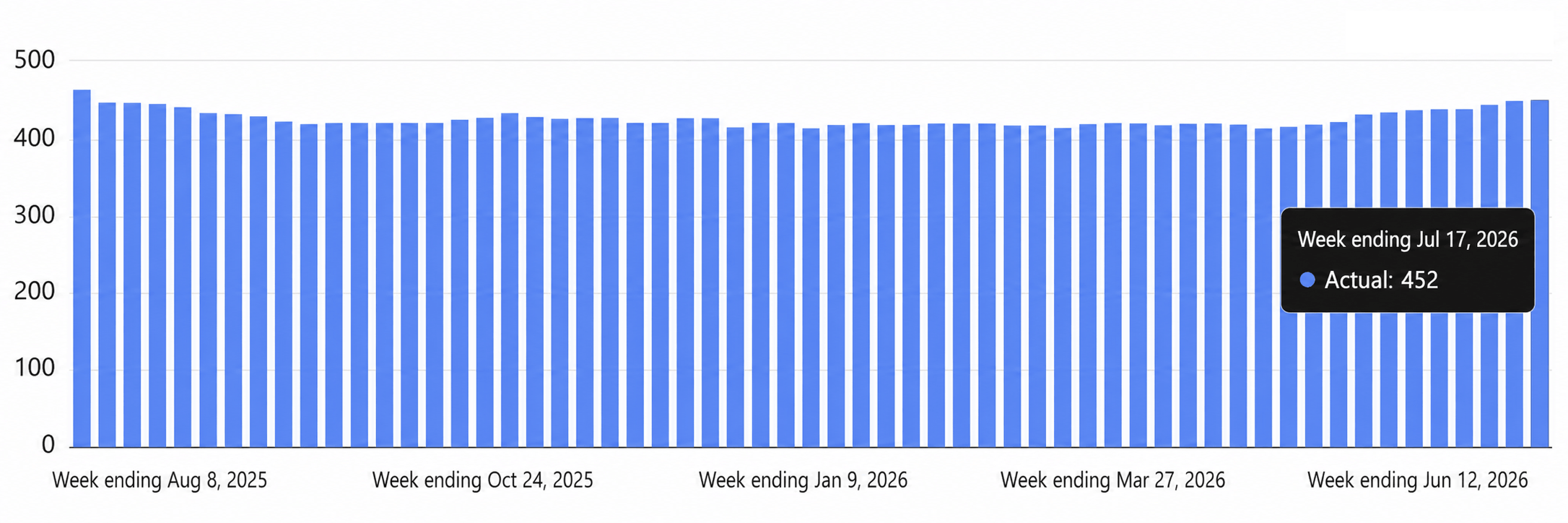
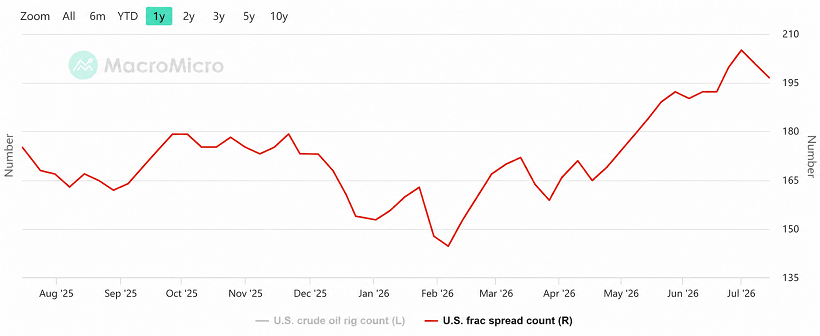
The U.S. oil-rig count rose by seven to 452 in the week ended July 17, from 445 previously, reaching its highest level since June 2026. The increase indicates that producers have become more willing to expand output as crude supply-demand conditions tighten.
The frac spread count, a measure of future production activity, declined for a second consecutive week to 196. Additional rigs may partially ease tight supply conditions, but their near-term impact is limited. Daily output from new wells is only 400 to 600 barrels, compared with 50 to 150 barrels from older wells, and several months typically pass between drilling and production. A sustained high rig count could nevertheless limit further upside in oil prices.
Brent Futures Gap Higher and Break Above $90
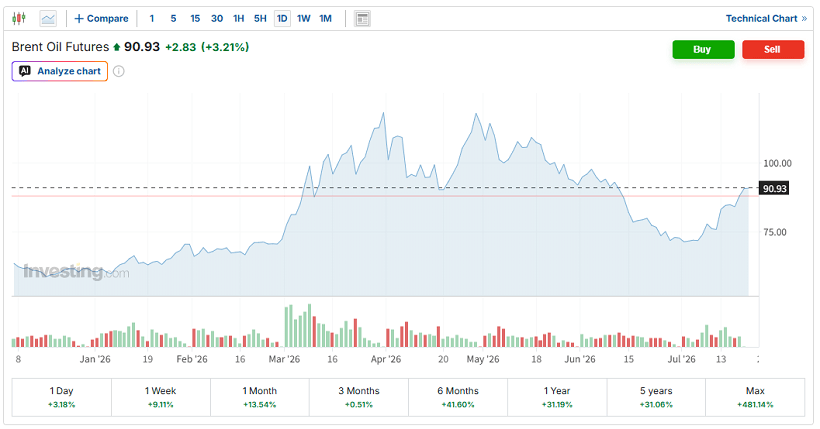
Brent futures opened sharply higher and moved above $90 as the latest U.S.-Iran escalation and the effective interruption of traffic through the Strait of Hormuz increased the geopolitical risk premium.
Probability of a Final U.S.-Iran Agreement Remains Below 30%
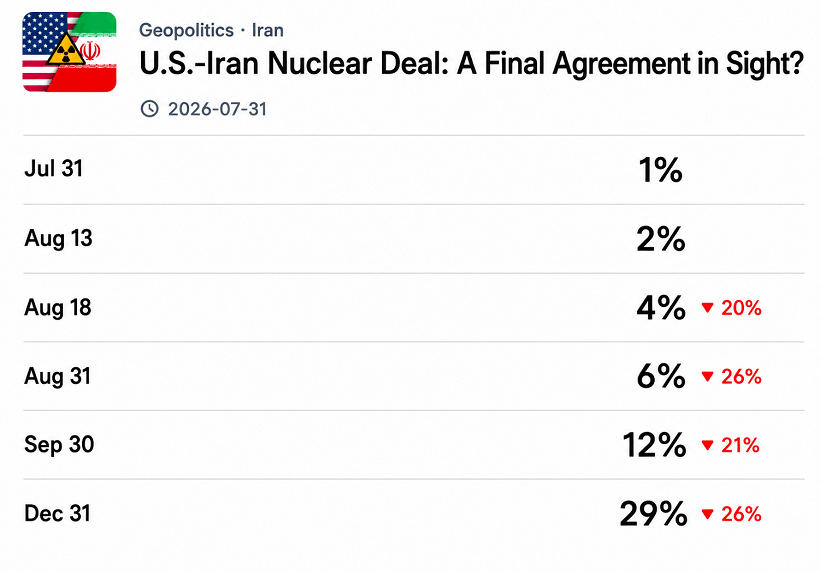
Prediction-market data indicate that the probability of a final U.S.-Iran agreement by year-end is below 30%, while the probability of an agreement by the end of August is under 10%. The low implied odds point to a risk of prolonged disruption around the Strait of Hormuz.
U.S. Refined-Product Prices Rebound Sharply
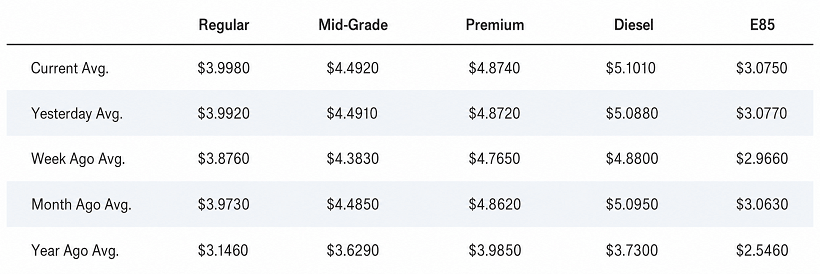
U.S. refined-product prices have risen substantially amid damage to production and refining facilities and tight fuel supplies. Diesel reached $5.10 a gallon as of July 19. If fuel prices remain elevated for an extended period, weaker end-user demand could eventually prompt refineries to reduce crude purchases.
Summary
Crude prices remain supported by escalating U.S.-Iran hostilities, the effective closure of the Strait of Hormuz, and growing threats to Gulf shipping and energy infrastructure. Refined-product shortages and sharply higher fuel prices are reinforcing near-term tightness, while low probabilities of a final U.S.-Iran agreement suggest that disruption could persist. Over time, oil prices remaining above $120 a barrel for an extended period could weaken demand and reduce refinery crude purchases, but the current supply loss remains too large for that effect to reverse the upward trend immediately. Markets are monitoring physical flows through Hormuz, attacks on regional infrastructure, the August 16 expiration of the negotiation window, and the Conference Board’s June Leading Economic Index at 10:00 a.m. ET on July 20.
Enjoyed this article? Share it with your network!


RYOEX Official Media is an information platform created specifically for traders, offering the latest news, analysis, guides, and more. From beginners to experienced traders, we provide useful content to help you stay informed and succeed in your trading endeavors.


