





SHEIN growth cools as U.S., Europe end duty breaks before listing
 2026-08-17
Regulation and fines weigh on growth
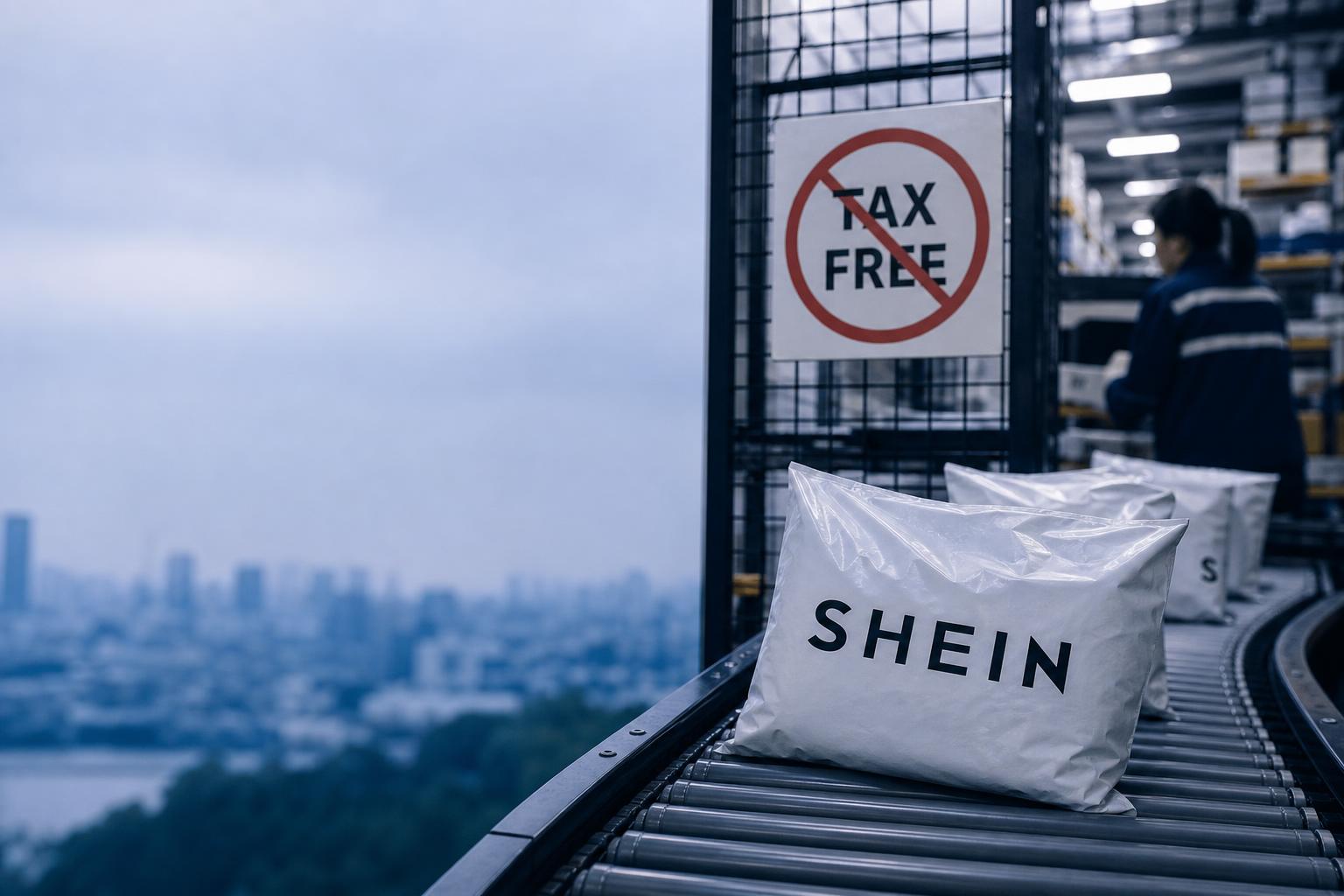
Growth at Chinese e-commerce giant SHEIN is slowing as duty exemptions for low-value imports have ended one after another in the United States and Europe, easing the pace of revenue growth. The company also faces the risk of hefty fines linked to regulatory breaches.
An area in Guangzhou, Guangdong province, where many small and midsize garment factories are clustered, is known locally as 'SHEIN Village'. When visited in mid-August, workers there repeatedly described a tough order environment.
'There were more than 30 people on the team after the Lunar New Year, but now it is less than half that,' said a man working at a subcontracted factory for SHEIN. Both order volumes and unit prices have fallen, and many colleagues have left, he said. The pay for sewing one T-shirt is 2 to 3 yuan, or about 50 to 70 yen, down 1 yuan from last year.
Lawsuits and fines mount
SHEIN won over young consumers with low prices and fashion-forward clothing, expanding its global user base to 270 million. The source of its competitiveness is a production model known in Chinese as 'small order, quick response'. The company gives specifications and delivery schedules to more than 7,500 partner factories, collects finished goods and ships them overseas. It produces in small lots of 100 to 200 items, and if sales are strong, it orders additional production in as little as five days.
But while the model has supported rapid growth, it has also drawn criticism over mass waste, poor working conditions and intellectual property infringement. France will also implement rules in September that impose fines on 'ultra-fast fashion' on a per-item basis.
Bloomberg reported on the 13th that SHEIN is expected to list on the Hong Kong Stock Exchange around the 28th. Its prospectus disclosed on July 26, meanwhile, lists multiple legal cases. It also said for the first time that it is under investigation by the U.S. Federal Trade Commission, warning that it could be forced to pay substantial fines that would have a material impact on operations.
The identified fine exposure alone totals 3 billion yen. France's CNIL, the national data protection authority, imposed a 150 million euro penalty in September 2025 for improperly collecting website browsing data. Another French authority has also issued a fine.
SHEIN says it will contest the actions, but the European Commission, the EU's executive arm, and Ireland's Data Protection Commission are also pursuing separate investigations.
Limits to a low-margin, high-volume model
According to the prospectus, SHEIN has expanded on the back of extremely thin margins and high volumes. Its operating margin was 4% in 2025, far below Inditex, which operates ZARA, at 20% for the fiscal year ending January 2026, and Fast Retailing at 17% for the fiscal year ended August 2025.
Operating margin for the January to March 2026 quarter fell further to 3%, and the bottom line was a loss of 99 million dollars, or about 15.7 billion yen, partly due to losses tied to the revaluation of outstanding preferred shares.
One reason for the turning point is the repeal of the de minimis rule, which exempted small import shipments from tariffs. SHEIN used the rule to expand exports to the U.S. and Europe, which account for 60% of sales, but it was scrapped in the U.S. and Europe one after another from August 2025.
The impact has been significant. In the U.S., where the de minimis rule ended first, revenue in 2025 fell 3% from 2024, and in January to March 2026 it fell 14% from a year earlier. Tariffs had to be passed on to selling prices, and demand weakened.
Headwinds to expansion strategy
SHEIN is adjusting. As an e-commerce platform, it is expanding a business that sells third-party products such as household goods and earns commissions, which carries higher margins than apparel sales. The share of revenue from that segment rose from 3% in 2023 to 14% in January to March 2026.
Even so, investors remain skeptical. Bloomberg reported on the 10th that analysts value SHEIN at 22 billion to 25 billion dollars. The company is targeting 30 billion dollars, but has not reached that level. The figure is also well below 98 billion dollars in 2022 and 64 billion dollars in 2023. The gap is wide versus Inditex's market capitalization of 210 billion dollars and Fast Retailing's 160 billion dollars.
In November 2025, SHEIN also decided to withdraw from a store it opened at BHV, a long-established department store in Paris. Leading brands that objected to SHEIN's opening pulled out one after another, worsening the department store's business, and the operating company gave up its lease rights.
Outside the U.S. and Europe, pressure is also intensifying on Chinese e-commerce companies that use low prices as a weapon. Even if SHEIN achieves its long-sought listing, it remains unclear whether it can sustain growth.
Enjoyed this article? Share it with your network!