





Kumamoto blast shakes Aeon's disaster hub role
 2026-08-15
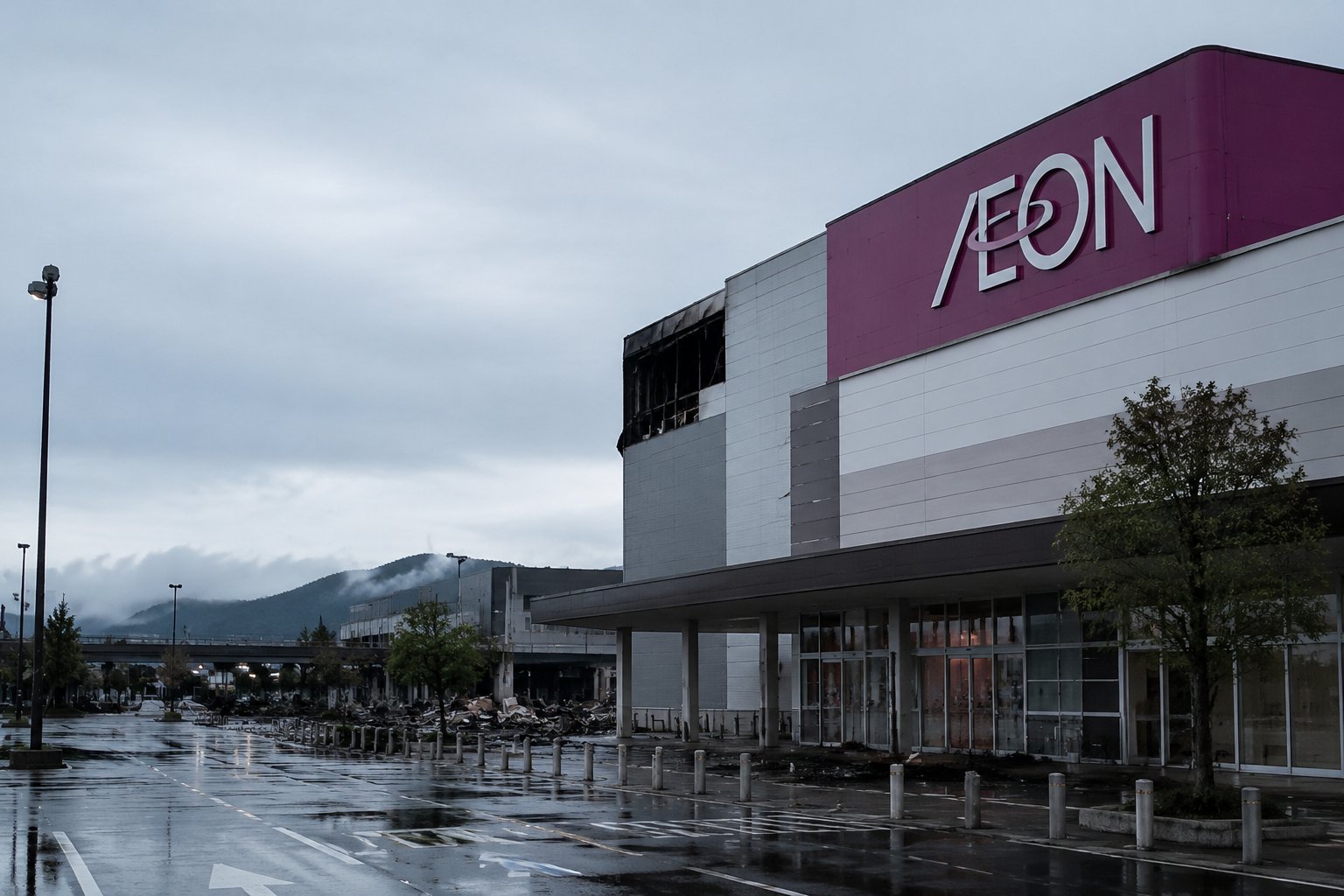
Trust in the safety of commercial facilities operated by Aeon is being shaken after the explosion at Aeon Mall Kumamoto in Kashima, Kumamoto Prefecture. LPG, which is believed to have caused the blast, has been promoted for its ability to maintain supply during disasters, and has been increasingly adopted by commercial facilities. Restoring confidence will require a review of the cause of the accident and the safety management system.
Impact on regional disaster hubs
An Aeon executive said of the accident, 'The loss of the safety myth is a blow.' Aeon has positioned 70 facilities nationwide, including Aeon malls, as disaster response hubs and has equipped them with temporary shelters, backup power generation equipment and emergency water supply systems.
The company has signed comprehensive partnership agreements with 203 municipalities, and the Aeon group as a whole had concluded disaster-prevention agreements with more than 850 municipalities and other bodies as of February 2026. It has also continued to deploy large evacuation tents nationwide. Aeon Mall Kumamoto also signed an agreement with Kashima town and has a record of supporting local evacuation efforts, including opening its parking lot for people sleeping in their cars during the 2016 Kumamoto earthquakes.
In the case of this accident, the Ministry of Economy, Trade and Industry carried out an on-site investigation with police and fire authorities on the 5th and concluded that the cause was likely an LPG explosion. The earthquake is suspected of damaging piping inside the building, causing gas to leak and ignite. Because LPG is stored and transported in large tanks, it can still be used for power generation and hot water if there is remaining fuel, even if power lines or city gas pipelines are cut off. In the government's Basic Energy Plan, it was also positioned as a last line of defense.
On-site investigation resumes on the 12th
METI and others resumed on-site inspections on the 12th to determine the detailed cause of the accident. The focus is whether emergency shutoff valves and gas leak alarms were properly installed and functioning. According to Atsumi Miyake, special professor emeritus at Yokohama National University, emergency shutoff valves are designed to trigger when shaking exceeds a set threshold, during power outages or external fires, preventing large-scale leaks. However, even if the valve closes, gas left in the piping can still leak, and if it accumulates in an enclosed space, it can lead to a major explosion.
The Fire Service Act enforcement regulations require alarms to be installed around combustion appliances or penetrations. Because LPG is heavier than air, they are placed near the floor. If installed properly, they should sound an alarm, and Aeon Mall's response also needs to be examined. Aeon said on the 11th that there had been a temporary re-entry into Aeon Mall Kumamoto after the earthquake.
Aeon said it takes seriously that the absence of post-evacuation rules, manuals, education and operational systems led to decisions being left to staff on site. If there was a smell of gas after the earthquake, re-entry would not have been desirable even if the alarm had not sounded. Going forward, the sequence of decisions at the time is expected to be examined by an investigative committee to be set up by Aeon.
Whether negligence existed will determine liability
When personal injury occurs due to negligence associated with corporate activity, civil and criminal liability can be pursued. In addition to whether the damage could have been foreseen, whether necessary measures were taken to avoid it is important. If civil negligence is recognized, the company will be liable for damages.
Whether Aeon Mall, which has positioned itself as a regional disaster-prevention hub, properly managed its safety equipment, and whether it took appropriate action after the earthquake, will likely face rigorous scrutiny. To restore trust, clarification of the cause and measures to prevent recurrence will be required.
Enjoyed this article? Share it with your network!