





Taiwan High Speed Rail to boost capacity with new N700ST trains
 2026-08-15
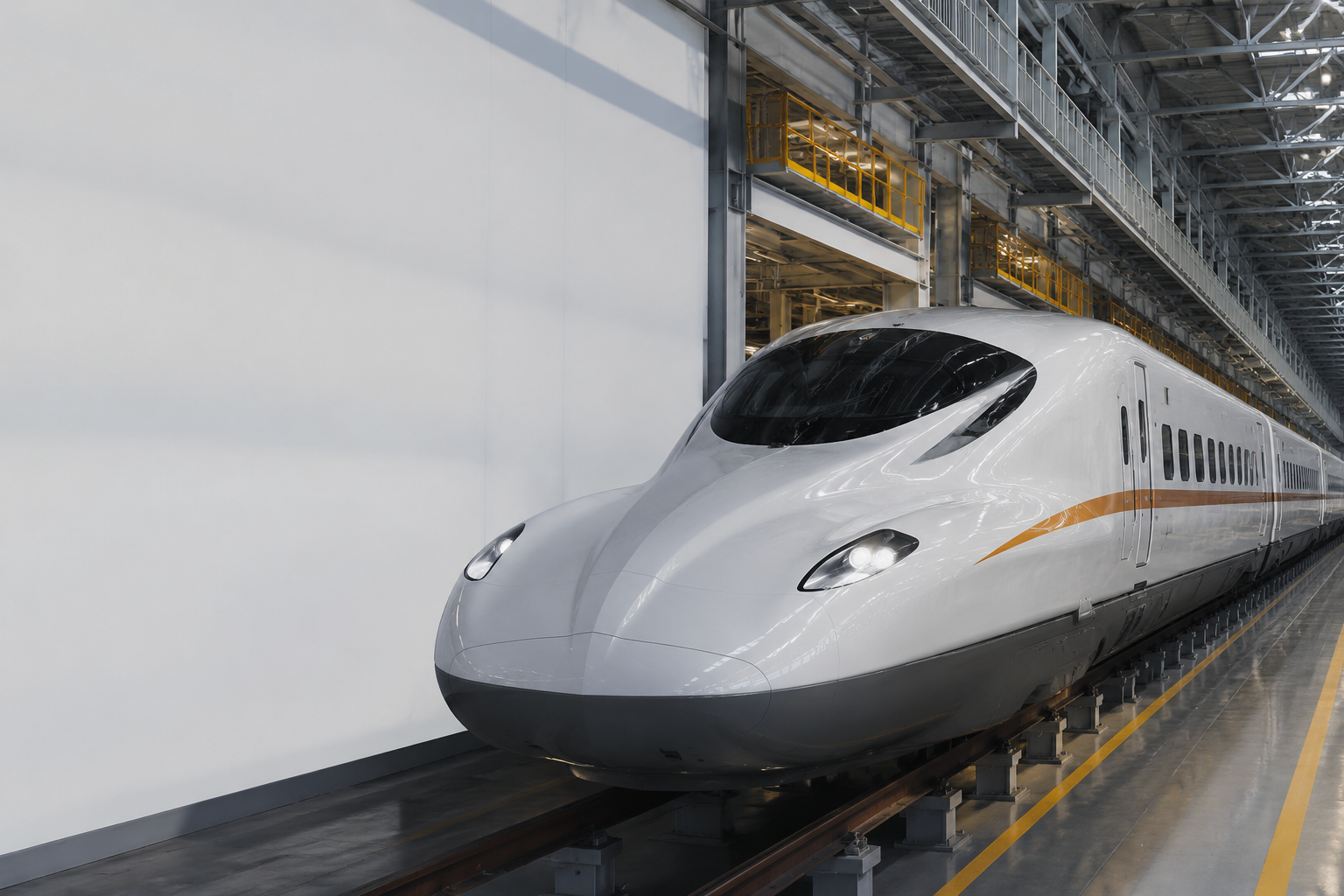
New trainset arrives
A new trainset has arrived at Taiwan High Speed Rail, and a ceremony was held at Kaohsiung Port on the 15th. The operator plans to begin commercial service in stages from July 2027, resuming capital investment ahead of its 20th anniversary.
Designed based on N700S
At Kaohsiung Port in southern Taiwan on the 15th, the new N700ST trainset, painted white with orange and black stripes, was lifted by crane and slowly revealed in the rain. When it was lowered at the port, applause broke out among the Japanese and Taiwanese officials gathered there.
The trainset was designed based on the N700S used on the Tokaido Shinkansen and other lines. It was shipped from a Hitachi Manufacturing plant in Yamaguchi Prefecture by a corporate consortium of Hitachi and Toshiba. In addition to reducing noise and vibration, it is equipped with auxiliary power for self-propulsion in the event of a blackout.
Inside the train are color LCD information displays and a large luggage storage area. The contract covers 12 trainsets, with a total value of TWD 124 billion. They will enter service in stages in 2027 and 2028, lifting peak-hour transport capacity by 25%.
Turning to growth investment
Taiwan High Speed Rail Chairman Shih Che said at the ceremony that the introduction of the new trainsets marks the beginning of a new challenge. He said the company will continue timetable revisions while also considering a review of fares, which have remained at the same level since the line opened.
Taiwan High Speed Rail runs across western Taiwan from Taipei through Hsinchu and Taichung to Kaohsiung, linking the route of about 350 kilometers in as little as one hour and 30 minutes. A woman who works at a company in Hsinchu City said, 'On weekends, I go back to my hometown Taipei almost every week.'
Rising demand and extension plans
Commuter season passes are priced at the equivalent of 49% of the standard non-reserved fare, making them relatively inexpensive, and many office workers commute to Hsinchu Station, about 30 minutes by train from Taipei. Construction of factories, including those related to semiconductors, continues in southern Taiwan, and further growth in ridership is expected. Annual ridership in 2025 topped 82 million.
The path was not smooth, however. After the line opened in 2007, it struggled with massive debt, and from 2015 onward Taiwan authorities led efforts to rebuild its finances. The company kept a semi-public, semi-private structure led by public capital and listed on the Taiwan stock market in 2016. It also weathered the COVID-19 pandemic, with profitability and financial health improving. Ridership in the January-March period rose 5% from a year earlier to 232,000 passengers a day, while congestion during peak hours remains a challenge.
In July 2026, an extension from Nangang Station to Yilan County was approved, with opening scheduled 11 years later. There are also plans to extend the line from Zuoying Station via the conventional railway Kaohsiung Station to Pingtung County, and environmental review procedures are ongoing. The extension section is expected to be developed under the leadership of Taiwan authorities, and in addition to the huge project cost, land acquisition and construction schedule management will be challenges. Chairman Shih said it had been 20 years that greatly shaped Taiwan's history, and Taiwan High Speed Rail is entering another phase of growth investment ahead of its 20th anniversary. The focus over the next 20 years will be balancing higher transport capacity with profitability.
Enjoyed this article? Share it with your network!