





Kansai Electric, Kawasaki Heavy to transport coal CO2 offsite first in Japan
 2026-08-08
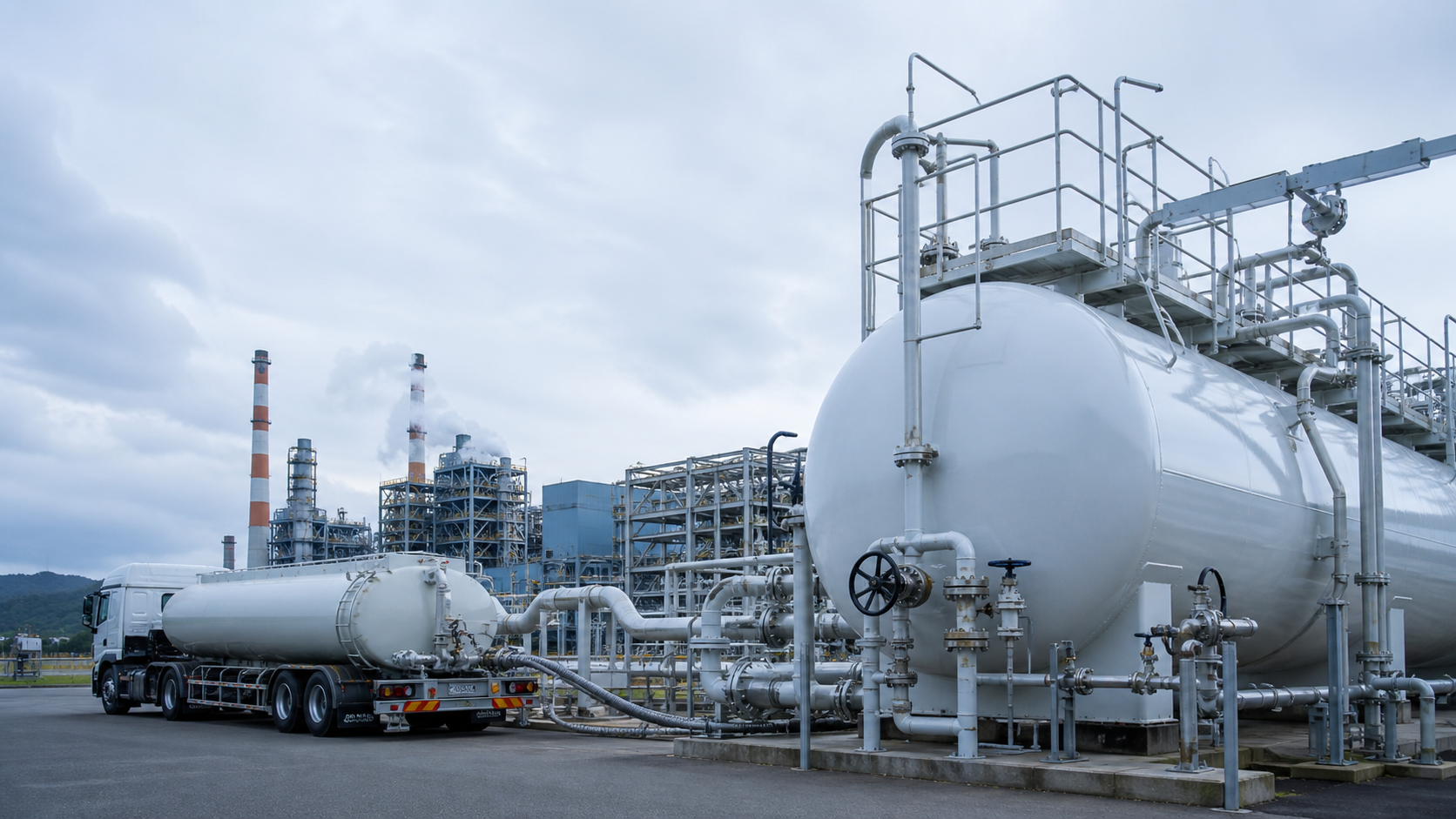
Handling capture through sea transport
Kansai Electric Power and Kawasaki Heavy Industries will transport carbon dioxide (CO2) emitted from a coal-fired power plant outside the site for the first time in Japan. The move is set to begin by fiscal 2026 and will lead to underground storage. The companies will build know-how toward establishing technology that can cut CO2 emissions from coal-fired power by as much as 90%.
Kawasaki Heavy will handle the process of capturing CO2 from the power plant at Kansai Electric's Maizuru thermal power station in Maizuru, Kyoto Prefecture. It has installed dedicated equipment and begun demonstration tests to capture CO2 intermittently.
Japan CCS Research, backed by 10 power companies including Kansai Electric and others, will transport the CO2 from Maizuru thermal power station to Tomakomai, Hokkaido. Until now, it had been advancing long-distance transport demonstrations using CO2 purchased from outside sources, but from now on it will carry CO2 actually captured from a power plant.
Rethinking the role of coal-fired power
The effective closure of the Strait of Hormuz disrupted supply chains for oil and liquefied natural gas (LNG) used for power generation, much of it sourced from the Middle East. In response, the use of coal for power generation has spread globally.
In Japan, most coal is imported from Australia and Indonesia, so dependence on the Middle East is limited. In March, the government decided to lift in fiscal 2026 operating restrictions that had been imposed on inefficient coal-fired power plants. From the standpoint of energy security, the importance of coal-fired power is being reassessed.
Coal-fired power emits twice as much CO2 as LNG-fired power. While a shift to LNG-fired generation is advancing, if coal-fired plants can also capture CO2 and store it underground, emissions could be cut by as much as 90%. Technology development is moving forward to support both the use of coal-fired power and decarbonization.
Commercialization eyed in Tomakomai
In Tomakomai, the destination for the transport, the government in September 2025 approved exploratory drilling aimed at commercializing underground CO2 storage. Since December of the same year, Japan Petroleum Exploration (JAPEX) and others have begun drilling, with commercialization in 2030 in view. Government support is also expected to expand in fiscal 2027.
For this transport project, CO2 emitted at the Maizuru thermal power station will be captured and compressed to reduce its volume, then transferred into a ship in a dedicated tank for sea transport. Transport will begin once additional equipment needed to raise CO2 concentration and capture frequency is in place.
As a separate effort, Japan CCS Research will also expand demonstrations of CO2 transport. By building a track record with transport from the Maizuru thermal power station, it aims to establish a framework for long-distance transport overseas, including to Malaysia and Australia.
For decarbonizing coal-fired power, companies have also pursued technologies other than underground CO2 storage. JERA is mixing ammonia with coal to curb CO2 emissions. With government support, it will receive ammonia from the United States in fiscal 2029 and use it for power generation at the Hekinan thermal power station in Hekinan, Aichi Prefecture.
J-POWER is working on integrated coal gasification combined cycle (IGCC) power generation, which generates electricity using hydrogen extracted from coal and other sources. Technology development aimed at decarbonizing coal-fired power will also support Japan's future stable energy supply.
Enjoyed this article? Share it with your network!