





Tokyo stocks fall on AI, chip drag; domestic demand shares firm
 2026-08-06
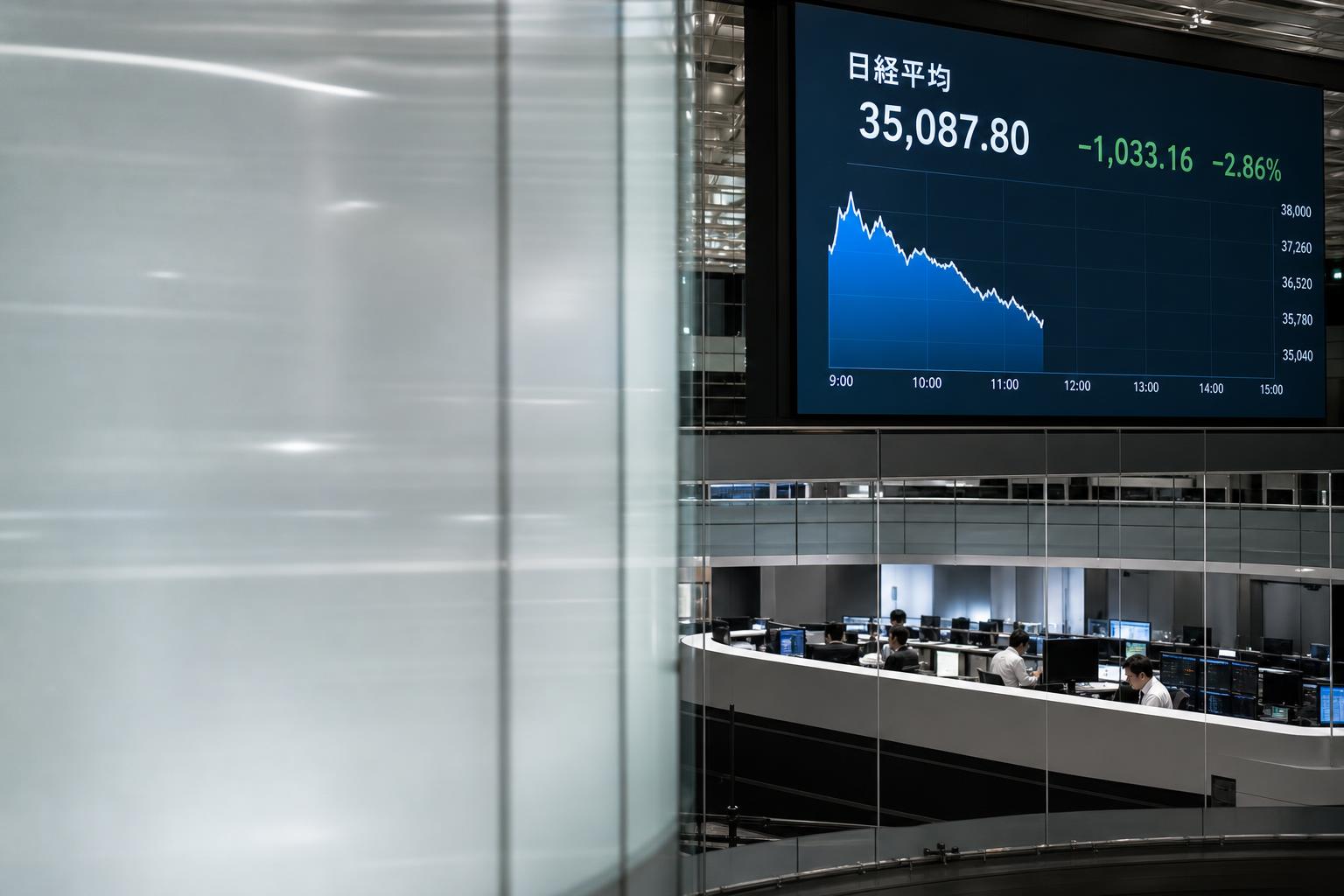
AI and chip shares sold
In morning trade in Tokyo on the 6th, the Nikkei Stock Average fell back, ending the morning session down 1,033.77 yen, or 1.56%, from the previous day at 65,266.67. After weaker U.S. tech stocks the previous day, profit-taking spread to artificial intelligence (AI) and semiconductor-related shares, which had been rising steadily. On top of the Nikkei's sharp 2,342 yen gain the day before, declines in South Korean stocks, which move closely with Japanese AI and semiconductor shares, also weighed on the market. The index at one point fell more than 1,300 yen and slipped below the 65,000 yen mark.
Weak U.S. tech stocks spill over
On the U.S. stock market on the 5th, the Nasdaq Composite, which has a high weighting of tech stocks, fell back for the first time in five trading days, while the Philadelphia Semiconductor Index (SOX), composed of major chip shares, also declined. Shares such as Advanced Micro Devices (AMD), which reported earnings, were sold, while Sandisk, whose sales outlook for the July-September quarter fell short of market expectations, dropped sharply in after-hours trading and prompted selling of semiconductor shares in Tokyo as well.
Domestic demand shares rise
Kioxia, which co-develops memory with Sandisk, as well as Advantest, Tokyo Electron and SoftBank Group (SBG) each helped push the Nikkei down by nearly 1,000 yen. On the other hand, gainers on the Tokyo Stock Exchange Prime market numbered 973, accounting for just over 60% of the total, while 517 fell and 66 were unchanged. Buying came into domestic demand-related shares such as food and retail, supported by speculation that traffic through the Strait of Hormuz could resume and by the view that lower crude oil prices would help companies contain costs. The government's approval on the 5th of a policy to cut the consumption tax rate on food items to 1% for two years starting in April 2027 also provided a tailwind, and Ryotaro Sawada, senior analyst at Tokai Tokyo Intelligence Laboratory, said, 'With a tailwind from a consumption tax cut as well, food and retail are serving as a refuge for money leaving semiconductor shares.' Mercari and Kao also drew buying after reporting strong earnings.
Indexes and trading
The Tokyo Stock Price Index (TOPIX) also fell back, ending the morning session down 15.13 points, or 0.37%, at 4,031.04. The JPX Prime 150 Index likewise fell back to end morning trade. Trading value on the Tokyo Stock Exchange Prime market at midday was estimated at 4.7481 trillion yen, with trading volume at 1,148.45 million shares. Fujikura, Ibiden and TDK fell, while Fast Retailing and Omron rose.
Enjoyed this article? Share it with your network!