





Takaichi cuts consumption tax on pledge, sidelining party caution
 2026-08-05
Decision on pledge
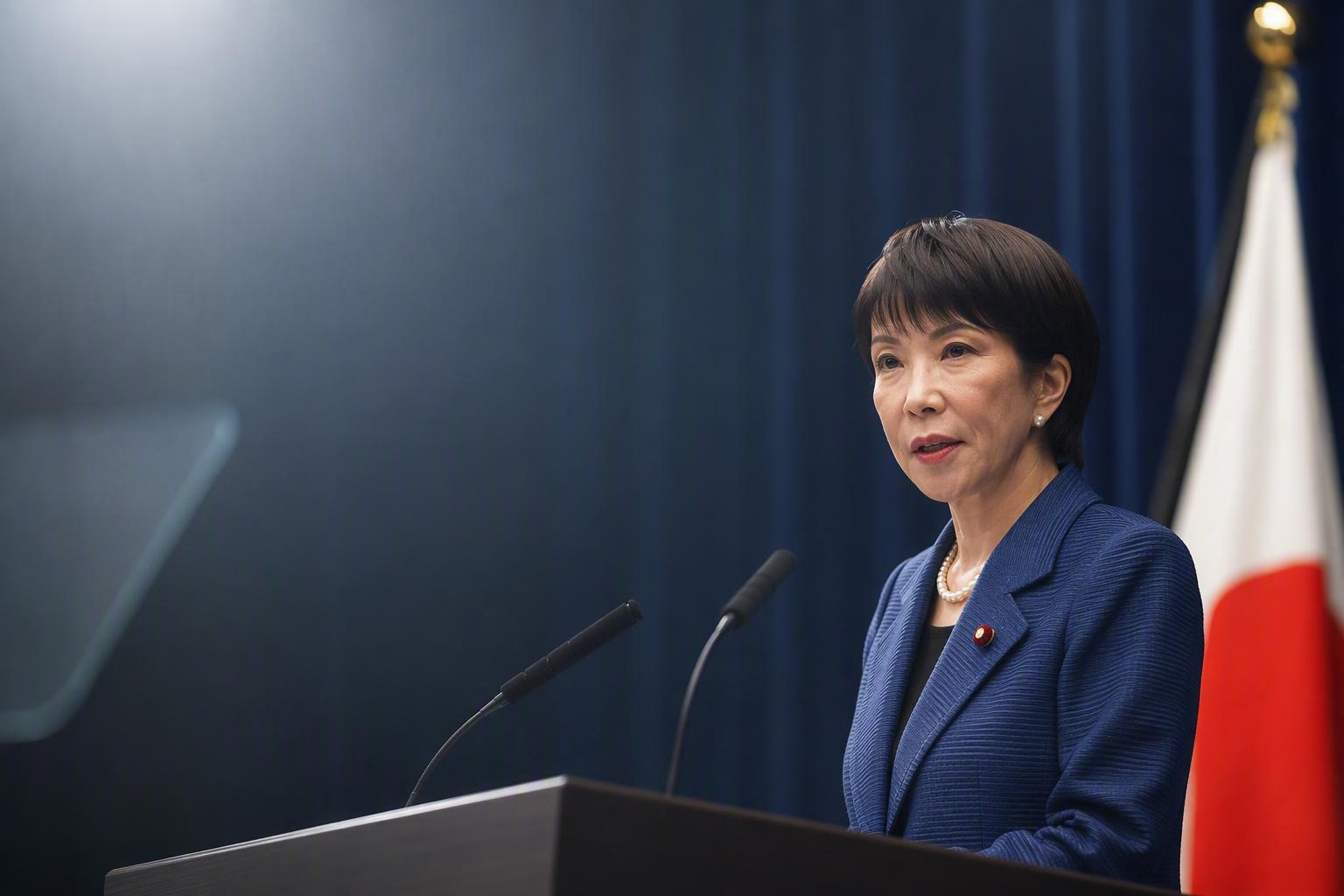
Prime Minister Sanae Takaichi decided to cut the consumption tax, using her lower house election pledge as the basis to override cautious voices within the Liberal Democratic Party. She described the aim of shutting down the issue before the opposition could turn it into a major point of contention as a personal long-held wish. The move ran counter to the LDP's traditional line of nurturing the consumption tax as a source of funding for social security, and the forceful decision-making process leaves a source of concern for future government management.
At an extraordinary executive meeting on July 30 in the party president's reception room at LDP headquarters, the prime minister cited the lower house election pledge in front of party leaders including Deputy President Taro Aso. She said the consumption tax cut was written here, and pointed to the relevant pages, saying the refundable tax credit was on page 18 and the two-year cut on food and beverages was on page 19. She stressed that the tax cut was a promise to the LDP and the public, and the attendees approved it unanimously.
Photos of past prime ministers who struggled with tax policy decisions lined the walls of the president's reception room. They included Prime Minister Masayoshi Ohira, who failed in his bid to introduce a general consumption tax, and Prime Minister Noboru Takeshita, who decided to introduce the consumption tax. One attendee said it was close to a one-sided notice. There was no atmosphere for objections.
Prime minister's aims and party coordination
The prime minister had not consistently championed tax cuts. In the LDP leadership race in the autumn of 2025, she held back tax-cut arguments to secure support from Aso, who places heavy emphasis on fiscal discipline, and after taking office she had effectively shelved her own view out of consideration for him.
The turning point came when the lower house was dissolved in January. As the opposition called for a consumption tax cut as a cost-of-living measure, the prime minister presented a cut on food items as my own long-held wish. Ahead of an election in which each lawmaker's fate was on the line, a structure emerged in which she would align with the opposition on tax cuts. Still, the lower house election pledge said that work to make it happen would be accelerated, leaving room for caution.
Later, the ruling camp, including Nippon Ishin no Kai, scored an unprecedented landslide by securing three-quarters of the seats in the lower house, and the prime minister gained the justification of public support and stepped up her push for implementation.
Speeding up as support slips
Initially, the prime minister envisioned finalizing the framework before summer in a bipartisan Social Security National Conference and involving all parties to create a path to implementation. The calculation was that if the parties could share some responsibility, it would be easier to advance legislation even under a minority ruling bloc in the upper house.
However, as the yen weakened and prices rose against the backdrop of the Strait of Hormuz crisis, parties tilted toward benefits that could be implemented quickly, while caution remained strong on the opposition side. Even after June, the discussions failed to come together and the plan stalled. In July, opinion polls from media organizations showed the cabinet's approval rating softening, and a sense of urgency spread inside the prime minister's office.
The person in charge of party coordination was Mitsunori Onodera, whom the prime minister appointed as head of the party's tax commission. On July 16, Onodera visited the prime minister's office and said opinion inside the party was split. It did not look like it could be brought together. The tax commission saw a stream of cautious views on funding and system design, and there was no prospect of building a consensus.
Pressure to silence opposition
Onodera asked the prime minister to attend a party meeting, but she turned him down, saying it was unnecessary. She would not back down, saying it was a lower house election pledge and had to be carried out, and that the party should be united on its own. Onodera advanced the consensus-building process while keeping the prime minister in mind, and at a party meeting in late July he explained that all of your opinions are being conveyed to the prime minister's office.
Within the party, there was growing acceptance that the prime minister's office was tracking support and opposition, as well as the content of statements, and that this could affect the next party leadership appointments and a cabinet reshuffle. The prime minister herself explained the tax-cut policy to Aso and Chief Cabinet Secretary Shunichi Suzuki on the 28th, and although Aso showed caution, he did not oppose it directly.
She then instructed party leaders on the 30th to bring the party together around a 1% rate from April 2027 in order to realize a prompt cut to the consumption tax on food items. Once Aso relented, there was no longer any force inside the party capable of strongly resisting the prime minister.
Tax cut becomes fait accompli
Senior government officials and ministers close to the prime minister urged lawmakers in the party to attend the August 3 meeting. They asked them to make remarks supporting the tax cut, and despite the Diet being in recess, many lawmakers came up from their constituencies on the morning of the meeting day. At the meeting, support for the prime minister came one after another.
After the meeting, attendees' views for and against the plan, along with the content of their remarks, were relayed to the prime minister by email. Party Policy Research Council chairman Takayuki Kobayashi also called lawmakers on the opposing side after the July 31 party meeting and over the weekend, telling them that the conclusion had already been decided.
While Takaichi's dominance stood out in the tax-cut process, a tax increase two years later was also built into the prime minister's calendar. If it becomes difficult to maintain support, a tax increase will be a severe political challenge. A former secretary-general said that if approval ratings can no longer be maintained, a tax increase will be a thorny road.
Enjoyed this article? Share it with your network!