





Nikkei Rises Sharply, but AI Buying Is Cautious as Korea Link Weighs
 2026-08-05
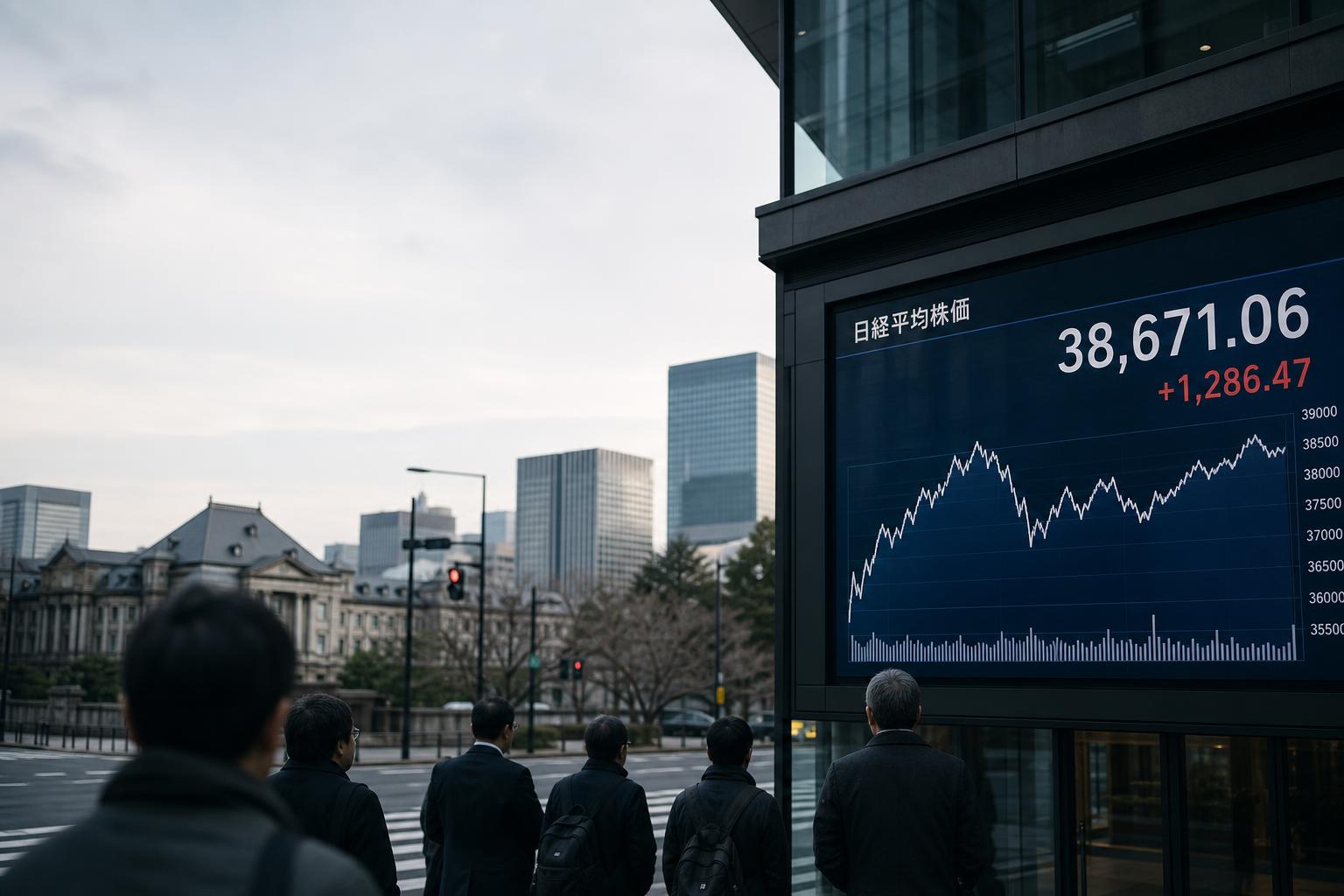
The Nikkei Stock Average extended its gains sharply in Tokyo trading on the 5th. AI-related stocks lifted the market, but investors are showing little sign of overheating. Fund managers bruised by July's sharp sell-off are cautious about buying back in, while volatile moves driven by Korean shares are also acting as a drag.
AI-related stocks surge
Ibiden, which was supported by its earnings announced the previous day, along with Advantest, Fujikura and Kioxia Holdings, rose across the board, and AI-related names dominated the top contributors to the Nikkei's gains. By the morning session, the index had climbed more than 2,000 yen, but a trader at a major domestic brokerage said the market's momentum felt out of sync with client sentiment.
Still, many market participants see the buying as being limited to short-term money through Nikkei futures and other derivatives. Naohide Une, president of Investment Lab, said July's AI stock slump appears to have passed its lowest point, but added that this is not the stage for investors to rapidly build positions. He said portfolio managers also find it difficult to increase risk when volatility remains high.
Correlation with Korean stocks is a concern
Investors are especially wary of the Nikkei's correlation with Korean shares. Since the U.S. and Iran agreed to a two-week ceasefire in early April through Pakistan's mediation, buying of AI and semiconductor stocks has intensified globally, making the Nikkei and South Korea's Kospi more likely to trade in step because of their high AI exposure.
As a result, sharp, supply-and-demand-driven moves in Korean shares have spilled into the Japanese market, making it easier for domestic factors such as individual company earnings to be drowned out. On the 5th as well, when the Kospi trimmed its gains, the Nikkei also lost momentum in tandem. Tomonobu Sekiguchi, fund manager at Asset Management One, said valuation concerns have eased as shares of Tokyo Electron and Murata Manufacturing have corrected, but he added that it remains difficult to add positions until stock prices settle in line with fundamentals.
A stronger yen is also dampening buying in export-oriented stocks. Michio Kyorabayashi, head of the investment division at H Fund Investment, said the yen's rise following coordinated intervention by Japan and the U.S. has made it harder to buy automakers and other stocks, and said Japanese equities lack clear trading themes. He said he sold futures aggressively when the Nikkei was near 70,000 yen and bought them back at around 62,000 yen, but plans to stay on the sidelines for both buying and selling for the time being.
September is the key restart point
On the timing of a full-scale return to buying Japanese equities, Une said September at the earliest could be one milestone. Japanese stock conferences for overseas investors are typically held around September, and there is a seasonal pattern in which investors who visit Japan deepen their understanding through meetings with company management before buying.
BofA Securities plans to hold a conference from Aug. 31 to Sept. 4, and the number of investors expected to attend already exceeds last year's total. According to Shinichiro Yamagami, head of Japanese equities sales, there are cases where requests for meetings with individual companies, especially in AI-related names, have risen fourfold from a year earlier.
If buying based on analysis of individual companies increases, the correlation with Korean shares is likely to weaken. If price swings calm, that could draw in additional buying and also raise expectations for a year-end rally.
Enjoyed this article? Share it with your network!