





Warnings over AI data centers spread across party lines before U.S. midterms
 2026-08-02
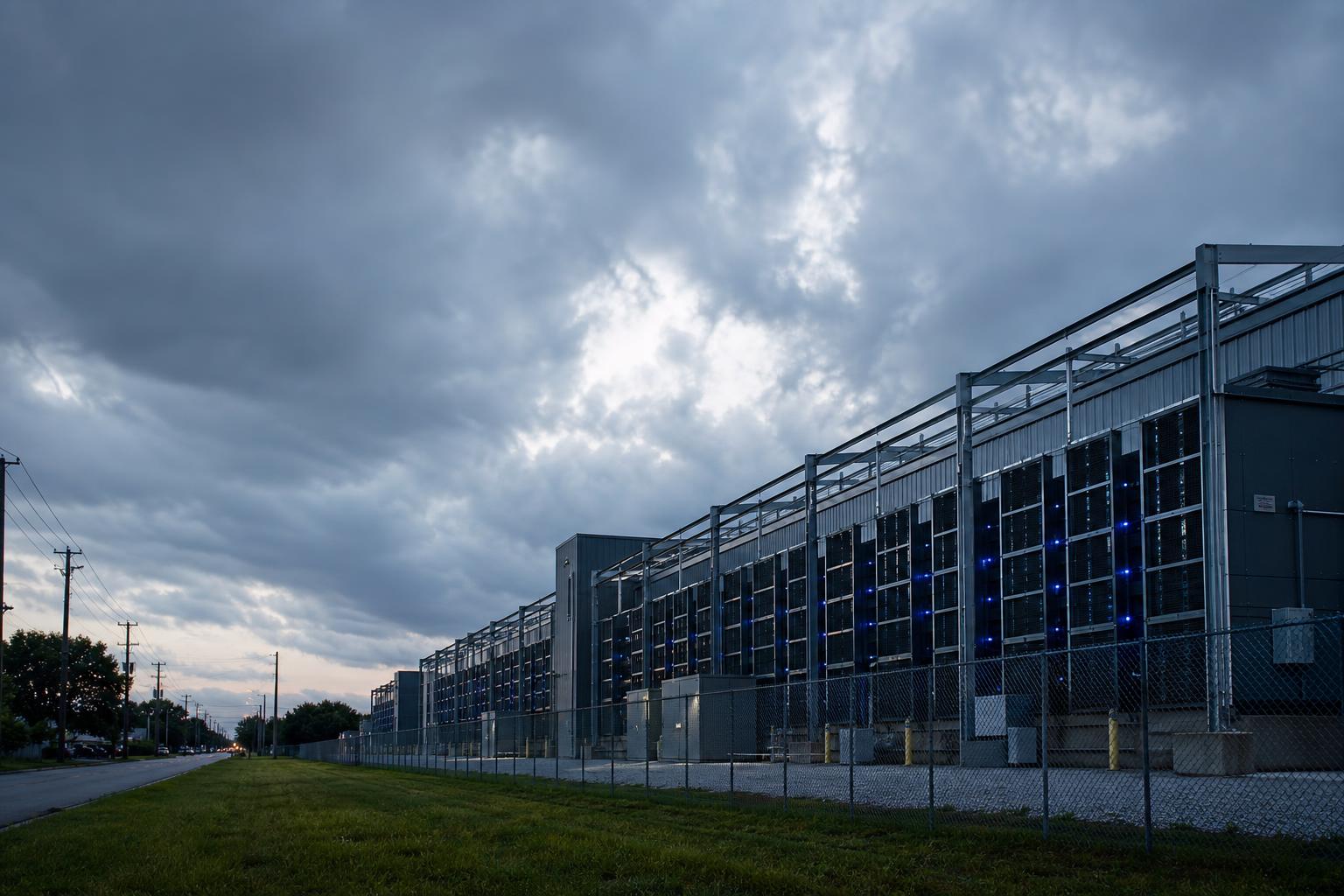
With less than three months to go before the U.S. midterm elections, opposition to construction of artificial intelligence-related data centers is growing in the United States. For Republicans, who are seeking to retain control of both chambers in the November vote, it could become an election flashpoint.
Headwinds for data center construction
In July, a community meeting on an AI data center Amazon Web Services (AWS) plans to build in the suburbs of Philadelphia, Pennsylvania, turned chaotic. Hundreds of residents gathered at a high school shouted 'Shame on you,' and the three-hour question session laid bare distrust of AI and big tech.
The planned site is an industrial district where U.S. Steel once operated coke ovens. When the ovens shut down in the 1990s, more than 5,000 jobs were lost. When redevelopment plans first emerged, there was some welcome as they were expected to boost the local economy, but residents' views have since changed completely.
Residents ignored state officials explaining Amazon's environmental measures and pressed them, asking if they were expected to trust Amazon. Even Amazon's claim that air quality had improved around other data centers drew pushback, with residents saying it was a lie.
Cross-party backlash
In the United States, data center construction plans are proliferating on the back of the AI boom. However, as electricity demand rises, household power bills in some areas have climbed more than 10%, and concerns about water resources used for cooling are also strong. In battleground states such as Pennsylvania, such burdens are likely to fuel voter backlash.
A survey conducted in June by pollster Ipsos and Reuters found 45% opposed data center construction, far exceeding 22% in favor. Opposition stood at 55% among Democratic supporters and 37% even among Republican supporters. Concern is spreading not only among the environmentally minded left but also on the right.
Clifford Young of Ipsos points out that beneath it all lies resentment that the social structure is set up to benefit elites. He says views are spreading across the political spectrum that AI-generated gains will be concentrated in a handful of giant companies, while local residents bear the costs in higher electricity bills and environmental strain.
Who gets the gains?
In May, Steve Bannon, who served as chief strategist in Trump's first administration, sent a letter to US President Donald Trump in the name of an anti-AI group, calling for regulation. In July, the group held protest rallies against data centers across the United States. Its arguments, including that they 'will be used for mass surveillance' and 'will push up electricity bills,' overlapped with left-wing concerns.
Sarah Kreps, a professor at Cornell University, says companies should make clear the benefits they bring, including local investment. Still, according to Stanford University, US AI investment in 2025 will exceed $285.8 billion, of which $218 billion was concentrated in California, home to Silicon Valley.
US hedge fund giant Bridgewater Associates sees the AI investment boom as capable of delivering GDP growth comparable to the 1990s internet bubble, but says profits will accumulate at a handful of companies such as Nvidia and are unlikely to 'circulate back' to the public. In the Ipsos survey, 44% said 'using AI has made work more productive,' so the technology is not being rejected outright, but data centers have become the target most likely to provoke backlash.
The AI boom is linking right-wing and left-wing populism. In June, Senator Bernie Sanders, a radical left figure, proposed a plan under which major U.S. AI companies such as OpenAI would have to pay 50% of their own stock as tax in kind. Trump also said a similar idea had been discussed for 'the past year' and showed alignment with it.
How should the gains and burdens of AI be divided? Ahead of the November midterm elections, that question is gaining weight across party lines.
Enjoyed this article? Share it with your network!