





Mainland money inflows revive Hong Kong office demand
 2026-08-01
Vacancy rate near three-year low
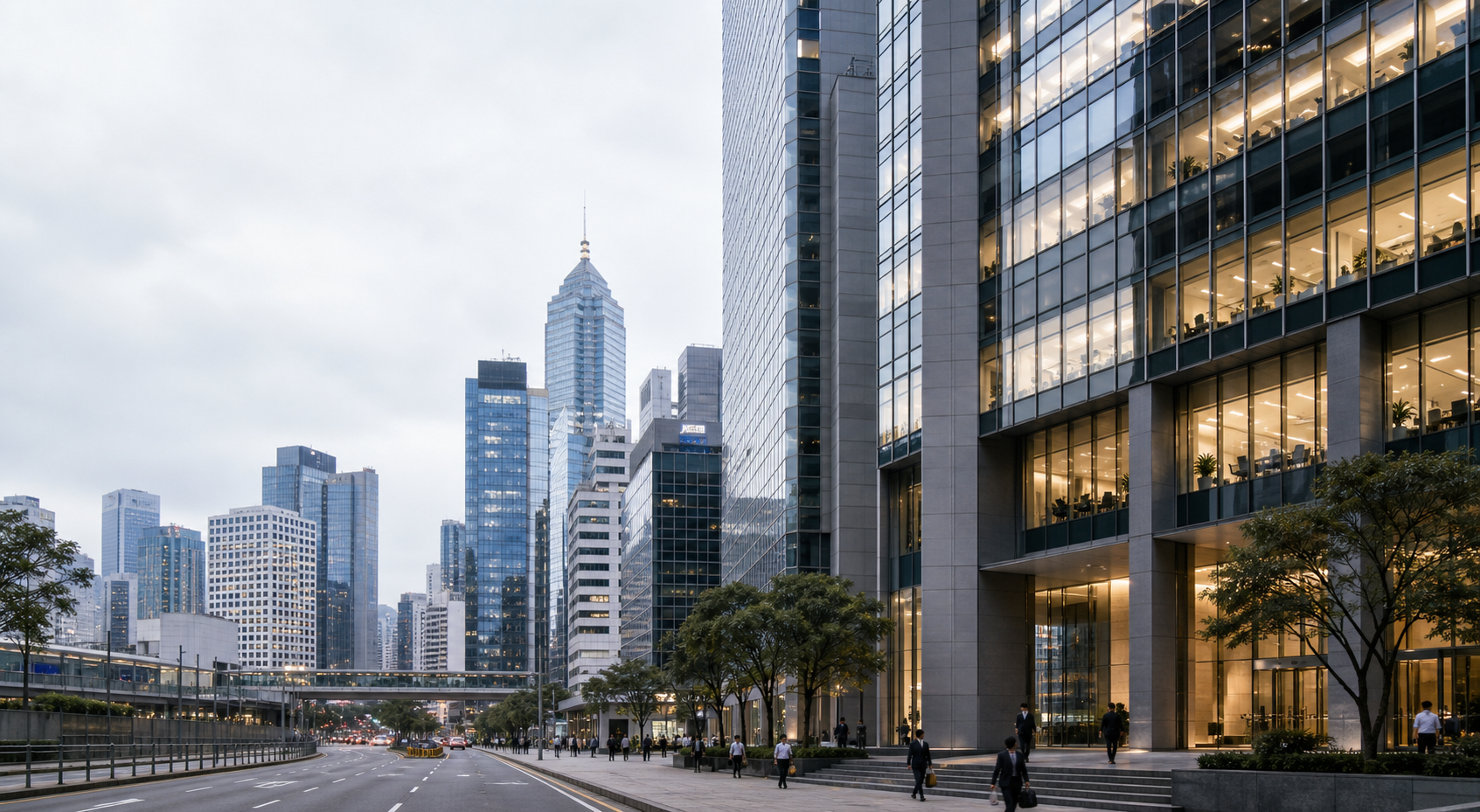
Office availability in Hong Kong's financial district fell to 13.1% in April-June 2026, down 3.6 percentage points from a year earlier. According to U.S. real estate services firm Cushman & Wakefield (C&W), that was the lowest level in about three years. While vacancies remain elevated across Hong Kong, demand is concentrating in the financial district.
Mainland money inflows lift demand
Behind the trend is an increase in inflows of wealth from mainland China. After the Hong Kong National Security Law took effect in 2020, political uncertainty intensified and a wave of Western companies pulled out. On top of that, the completion of large development projects worsened the office market in 2024 to a level that Britain's Savills described as something not seen even during past downturns such as the Lehman Shock, with rents down about 40% from the 2019 peak.
Financial firms expand presence
French asset manager Ardian, which entered Hong Kong in October 2025, quickly found its office in the Landmark's International Finance Centre (IFC) too small. Senior Managing Director Jason Yao said he asked the landlord about expanding, but was told there were 'no vacancies'. The firm now has 15 staff, hitting its target for the end of 2027 ahead of schedule. It plans to grow to 20 staff within 2026 and expand further. In addition to managing institutional investor capital, Ardian also aims to expand business with family offices serving wealthy clients. Hong Kong's family offices are seeing inflows from Taiwan as well as the mainland, it said. According to Boston Consulting Group (BCG), assets under management for wealthy clients outside the region rose 11% in 2025 from a year earlier to about 2.95 trillion dollars, or about 480 trillion yen, making Hong Kong the world's largest for the first time.
Side effects of capital inflows
Unlike the mainland, Hong Kong has no capital controls and levies no capital gains tax, dividend tax or inheritance tax. It has served as an outlet for mainland money left without a home in the property slump, and U.S. investment firm Adams Street Partners entered Hong Kong in November 2025. British hedge fund Cube Research and Technologies also plans to significantly expand its office in the same IFC building as Ardian within 2026. The anti-China protests in 2019 were driven in part by rising asset prices such as housing, boosted by inflows of Chinese money, which sharpened resentment over inequality. Hong Kong's government home price index has recovered on increased buying by mainland investors and has topped the previous month for 13 straight months through June. With civic activism gone, authorities now face the challenge of how to respond to potential social discontent if the shift toward finance deepens further.
Enjoyed this article? Share it with your network!