





Yen surges to 157.80 per dollar, with Japan and U.S. possibly intervening at the same time
 2026-07-30
Japan and U.S. authorities move at same time
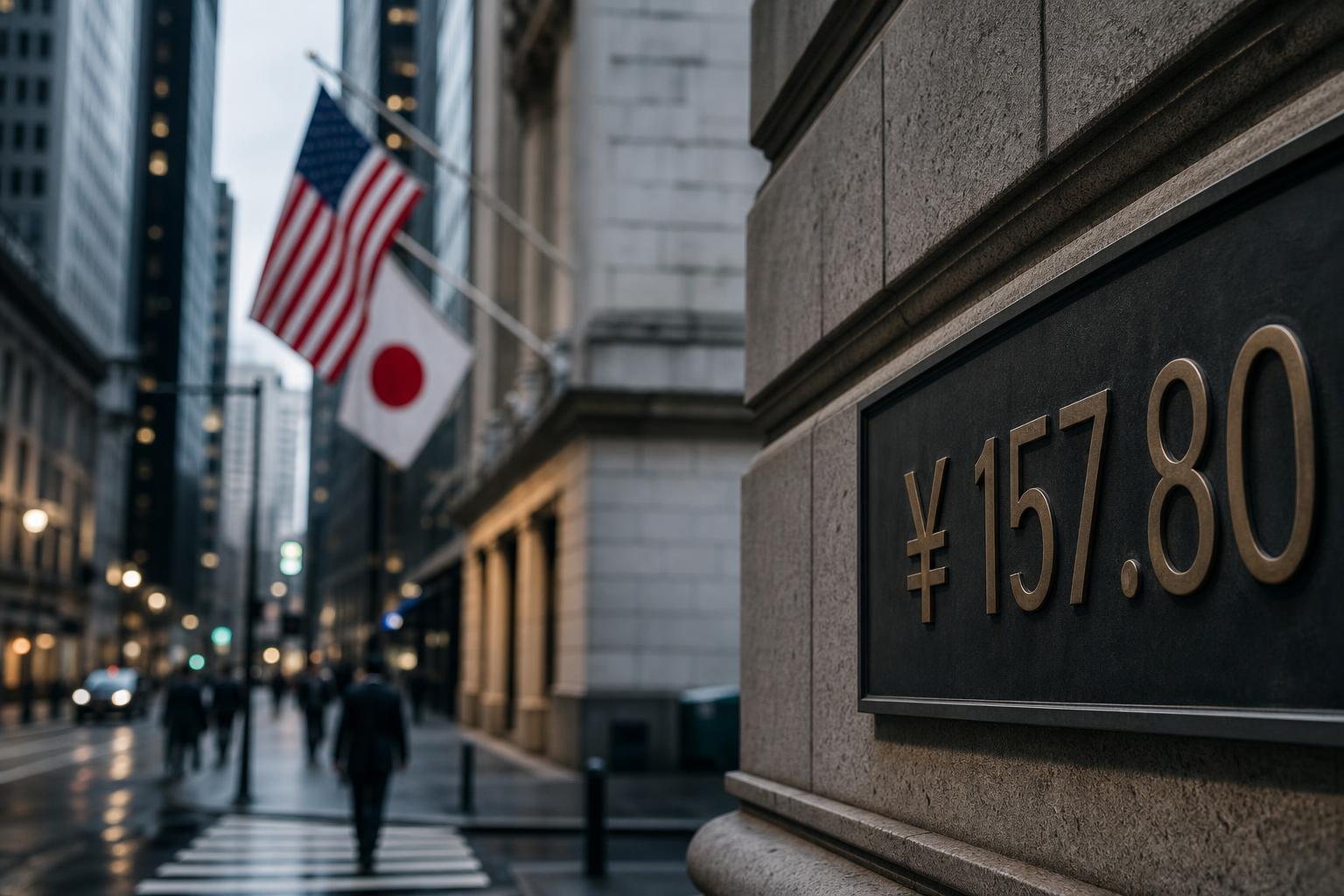
Market sources said the Japanese government and the Bank of Japan stepped in to buy yen and sell dollars, while U.S. currency authorities also conducted a pre-intervention rate check. In New York foreign exchange trading on the 30th, the yen surged against the dollar, briefly reaching 157.80 per dollar.
Yen buying accelerated after 9:30 a.m. Eastern Time on the 30th, or after 10:30 p.m. Japan time the same day. From around 162.80 per dollar, the yen strengthened by about 5 yen against the dollar in roughly 50 minutes, and market sources said the Japanese government intervened on a large scale. The yen later retraced to the upper 159 range before jumping again to the upper 158 range shortly after 1 p.m.
This followed a request by the New York Fed, acting on instructions from the U.S. Treasury, for several banks to provide exchange rate quotations in a rate check. It is unusual for Japanese and U.S. authorities to be involved in the market at the same time, and the U.S. Treasury did not respond to a Nikkei inquiry. The U.S. rate check followed a similar move in January this year, and the Federal Reserve acknowledged in February that it had conducted a rate check in January at the direction of the U.S. Treasury in preparation for yen buying and dollar selling.
Market remained unprepared
The yen fell on the 21st to the 163 range per dollar, a level not seen in about 40 years, and at one point neared 164, but market caution over intervention had not intensified. The official line is that currency intervention is not meant to defend a specific level and is only justified when disorderly moves threaten economic and financial stability, and because the pace of yen weakness had been gradual, the intervention was seen as lacking strong justification.
The easing of concern was also visible in the options market. The risk reversal for one-week yen options, an indicator of positioning for a stronger yen, had eased from a peak in early July. Implied volatility for one-month options also fell below 6% just before the move, the lowest level in four and a half years. Whether intervention can force speculative players who have built yen short positions to unwind them will be the key to changing the market trend.
Difference from the last intervention
The government and the Bank of Japan carried out interventions totaling just under 12 trillion yen from late April through May, but after a temporary surge, the yen returned within about two months to levels weaker than before the intervention. At the time, there is also a view that then Vice Finance Minister Atsushi Mimura, just before the move, said it was the 'last warning to evacuate,' strongly signaling the market and giving traders time to adjust positions, which weakened the surprise effect. This time, the authorities may have chosen to catch the market off guard as vigilance faded.
A bank economist said that if intervention did take place, it may have been decided based on movements in short-term U.S. interest rates after the Federal Open Market Committee meeting. During his press conference on the 29th, FRB Chair Warsh said rate hikes could not be described as the 'only means' to solve high inflation, deepening doubts about the Fed's stance on curbing inflation. U.S. growth and price data released on the 30th also came in below market expectations, helping to push the dollar lower.
Focus on BOJ meeting
Market participants are also keeping in mind developments from the summer of 2024. The government and the Bank of Japan carried out yen-buying intervention totaling 5.5 trillion yen on July 11 and 12, 2024, after which the yen rose by as much as about 20 yen, helped by the BOJ's rate hike and weaker U.S. price data. It took about two years before the yen returned to weaker levels below the 161 range against the dollar that prevailed before the intervention.
What amplified the yen's rise at that time was the unwinding of speculative yen short positions. According to the CFTC, net yen shorts among non-commercial traders stood at 152,125 contracts as of July 21, close to the peak of 184,223 contracts reached in July 2024. At 12.5 million yen per futures contract, the notional amount comes to about 1.9 trillion yen. CFTC statistics cover only part of the market, and if yen shorts were to be unwound all at once, there would still be room for the yen to strengthen more than the size of the intervention alone would imply.
The next focus is the Bank of Japan. It will release the results of its policy meeting on the 31st, followed by a press conference from Governor Kazuo Ueda. The policy rate is expected to be left unchanged. Market pricing broadly reflects a pace of rate hikes of about once every six months, and if Ueda signals a positive stance toward additional tightening, the yen could strengthen further.
Enjoyed this article? Share it with your network!