





1% food tax plan puts Takaichi govt under funding pressure
 2026-07-30
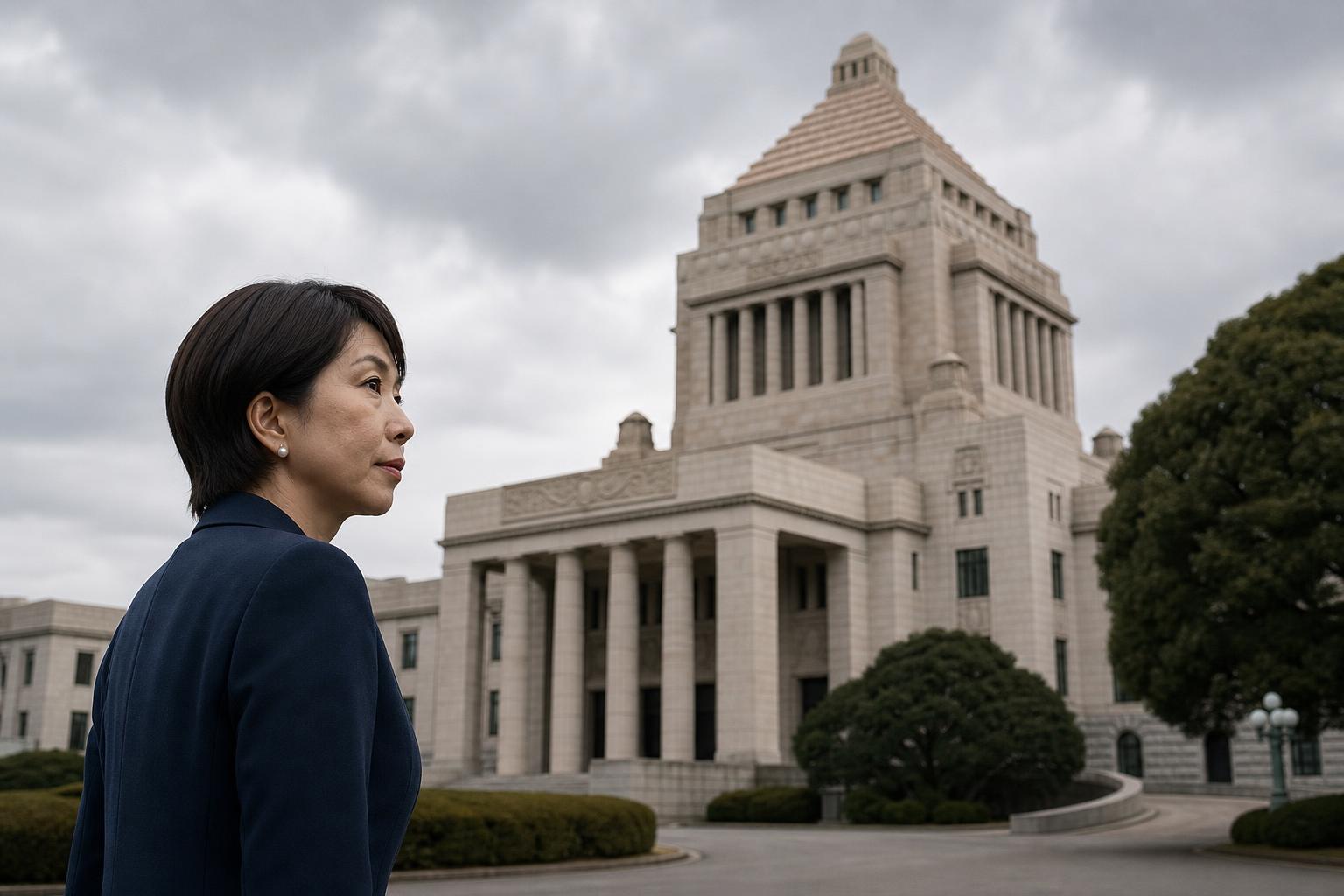
Prime Minister Sanae Takaichi on Monday reiterated that she does not want to rely on deficit bonds for a plan to cut the consumption tax rate on food items to 1%. But the roughly 5 trillion yen in required funding has no clear source, and whether it can coexist with growth investment and defense spending remains uncertain.
No funding prospect yet
To realize an 'effectively zero' burden by cutting the consumption tax on food items to 1% and offsetting the remaining 1% with cash payments, around 5 trillion yen in funding would be needed. Some experts close to the prime minister have proposed using upside surprises in tax revenue or tapping the Foreign Exchange Fund Special Account.
Even so, it is uncertain whether either can actually be counted on. Many of the potential sources are already earmarked for other uses, or lack the basis to be regarded as stable funding.
Spending growth weighs on the budget
Tax revenue has hit a record high for six straight years through fiscal 2025, helped by inflation. At the same time, initial budget spending has kept rising as a result of higher prices. Tax revenue alone has not been enough to cover the gap, so deficit bonds have been issued to fill it. There is not much room to absorb a tax cut as well.
In the fiscal 2027 budget, higher unit costs for public works due to expensive materials and rising labor costs, as well as wage increases for workers in medical care and nursing care, are expected to push spending higher. Interest payments are also expected to swell as rates rise. If extra tax revenue is diverted to a consumption tax cut, other spending could be squeezed.
Defense spending in focus
Using the Foreign Exchange Fund Special Account is also not easy. Takaichi said at a speech event in Kawasaki in January that the special account was 'flush with investment gains,' but some within the government say that once defense buildup is taken into account, there is little room to divert funds to a consumption tax cut.
The special account generates annual surplus funds, mainly from interest income on U.S. Treasurys, and fiscal 2025 is expected to bring in about 5 trillion yen. In typical years, about 3 trillion yen is transferred into the general account, of which about 800 billion yen has already been set aside as funding for defense buildup.
Foreign reserves also include unrealized gains from the weaker yen, but turning them into realized gains would require selling U.S. Treasurys, which make up most of the assets. In practical terms, that would amount to currency intervention by buying yen and selling dollars, and winning U.S. understanding would be difficult.
Budget settlement surpluses are not a decisive answer either. The fiscal 2025 accounts produced a surplus of 2.6 trillion yen, but the Public Finance Act requires that at least half be used to redeem government bonds. Of the 1.3 trillion yen available for free use, 700 billion yen has already been earmarked for defense funding, while the remaining roughly 600 billion yen will be carried over to year-end budget drafting.
Unclear impact from tax incentive review
Reviews of special tax measures and subsidies under a 'Japan-style DOGE,' which the government cites as one possible source of funds, also have no clear path to implementation. The review is moving ahead on 120 tax measures, but even eliminating all of them would likely free up only about 1 trillion yen. So far, only one measure has been announced for abolition.
Eliminating large tax measures used by many companies, such as wage-hike tax incentives and research and development tax credits, would have a significant effect. But resistance from lawmakers with deep ties to industry groups is expected, making reform difficult. By contrast, tax measures and subsidies that are easier to scrap would bring little funding benefit.
Even if about 5 trillion yen can be secured for a consumption tax cut, failure to also arrange funding for other flagship policies could lead to more government bond issuance and undermine market confidence.
Concerns over more bond issuance
For the fiscal 2027 budget request, which is due at the end of August, the government plans not to set caps for growth investment and crisis-management investment for each ministry. In a public-private investment plan targeting more than 370 trillion yen by fiscal 2040, a June estimate assumed government spending of 10 trillion yen a year, but the actual increase in spending is impossible to predict. Higher tax revenue and additional nontax revenue compete with a consumption tax cut for funding.
At year-end, defense buildup from fiscal 2027 onward will also be discussed. Defense spending in fiscal 2025, including a supplementary budget, already reached about 11 trillion yen, or 2% of gross domestic product.
In the new defense buildup plan, the GDP benchmark used as the indicator will be raised to the fiscal 2026 level. Even at the same 2%, required defense spending would rise to 13.8 trillion yen, up about 3 trillion yen from fiscal 2025. If Japan aims for the 3.5% of GDP target set by the North Atlantic Treaty Organization and South Korea, the amount needed would rise further.
In medium- to long-term economic and fiscal projections released by the Cabinet Office on Monday, the primary balance for the central and local governments was projected to show a surplus of 1.4 trillion yen in fiscal 2027. But the projection does not factor in a consumption tax cut. If the government suffers an effective revenue loss of around 5 trillion yen, that surplus could turn into a deficit.
A senior Finance Ministry official said, 'There is no point in discussing funding for each individual policy. We have to look at spending and revenue as a whole, and judge how far the final amount of bond issuance can be restrained.'
Enjoyed this article? Share it with your network!