





Food tax cut to 1% from April 2027, Takaichi says
 2026-07-29
Opposition mounts at national council
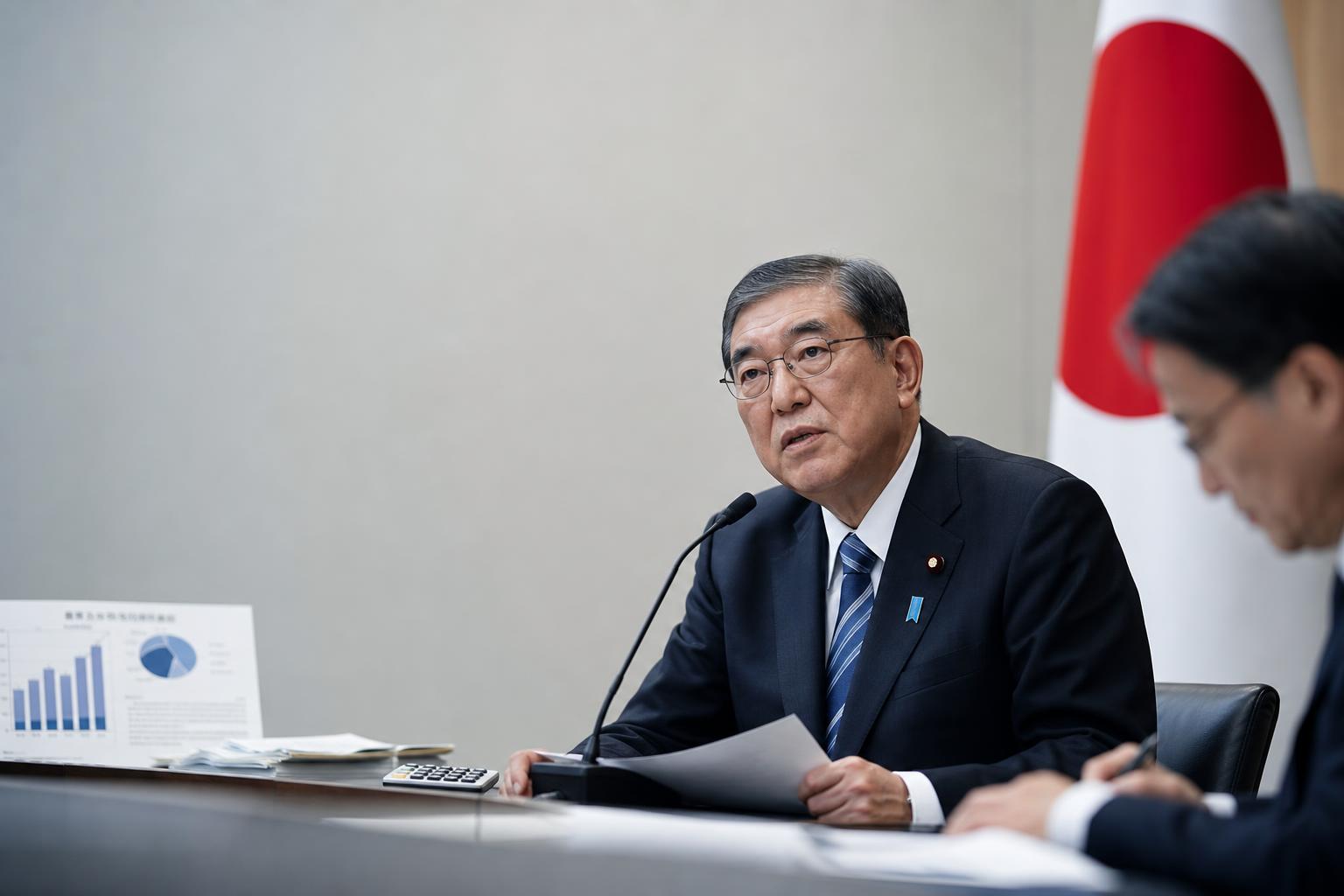
Prime Minister Sanae Takaichi said on Monday that the government and her coalition would quickly consider its policy on cutting the consumption tax on food items, aiming to do so by early August. Based on discussions at a bipartisan Social Security National Council, she will on Tuesday announce a plan to set the consumption tax rate on food items at 1% for two years from April 2027.
Leaders of ruling and opposition parties took part in the council held at the prime minister's office. The meeting, launched under Takaichi's leadership after the February lower house election, was intended to reflect each party's views in the coalition's pledge to cut the consumption tax.
At the council on Monday, opposition was voiced by the centrist reform alliance and the Democratic Party for the People, both of which had called for a consumption tax cut in the lower house election. The interim summary said that 'no consensus was reached on specific proposals'.
Opposition parties prioritize benefits
The council put on the agenda the introduction of a refundable tax credit, which would ease the burden on low- and middle-income earners, and a food tax cut as a bridge measure. The government and ruling bloc had initially intended to reach an agreement by June, but talks with the opposition ran into difficulties and the schedule slipped.
It had to include both the proposal by chairman Itsunori Onodera of the Liberal Democratic Party to lower the consumption tax on food items to 1% from April 2027 and the opposition's call to prioritize cash payments. Onodera's proposal called for 'virtually zero consumption tax on food items' by combining a cash handout of 600 billion yen a year, equivalent to the tax revenue from a 1% food tax, for low- and middle-income earners.
At Monday's meeting, major opposition parties backed the introduction of an income-linked benefit, while opposing a consumption tax cut based on the chairman's proposal. Yuichiro Tamaki, leader of the Democratic Party for the People, said, 'If we do not also think about measures to ease the impact when it effectively becomes a tax hike two years from now, it will deal a major blow to the middle class,' and urged that 'we should continue to consider ways that are less disadvantageous without being fixated on 1% for food items.' Junya Ogawa, leader of the centrist group, said, 'It is questionable whether it can have the meaning of a bridge measure,' while Junichi Mizuoka, leader of the Constitutional Democratic Party of Japan, called for 'benefits that can be implemented quickly, such as payments to households exempt from resident tax, to be delivered this year.'
Party coordination and funding
The Liberal Democratic Party will hold an emergency executive meeting on Tuesday. There, the prime minister will instruct party members to consolidate views within the party to lower the consumption tax on food items to 1% for two years from April 2027. There is still caution within the party about tax cuts, and several members voiced opposition at meetings on Monday, including the tax panel.
By leaving the coordination to senior officials such as Deputy President Taro Aso and Secretary-General Shunichi Suzuki, both cautious about tax cuts, the party aims to suppress internal dissent. The prime minister is also scheduled to explain the tax-cut policy and funding sources to the press on Tuesday.
Possible funding sources include higher tax revenue and spending reviews. The amount needed is estimated at around 5 trillion yen, and it remains unclear whether that alone would be enough. Markets remain wary of fiscal deterioration and rising interest rates, and the prime minister is stressing that funding must be secured without relying on deficit-covering government bonds.
New benefit system in fiscal 2029
The interim summary from the council's working-level discussions also included the full introduction in fiscal 2029 of a new income-linked benefit system. For now, only benefits will be offered because of concerns that the system would become complicated and increase administrative burdens, but a combination with tax credits will be considered in the future.
Eligible recipients will in principle be low- and middle-income workers, including not only company employees but also freelancers and working older people with low or middle incomes. For households raising children, benefit amounts will be increased according to the number of children aged 18 or under.
One of the aims is to encourage work, and the system will be designed so that take-home pay rises as people work more. For those who move beyond the so-called annual income wall, where tax and social insurance burdens increase, benefit payments will be topped up for a limited period. The summary said funding will not depend on special deficit-covering government bonds and stated that for permanent funding sources, 'a conclusion will be reached as early as possible, taking into account progress in the concrete reform of future budget formulation.' It pointed to possible reviews of subsidies and tax incentives.
Enjoyed this article? Share it with your network!