





SpaceX's Starship makes hour-long flight, but booster re-ignition falls short
 2026-07-25
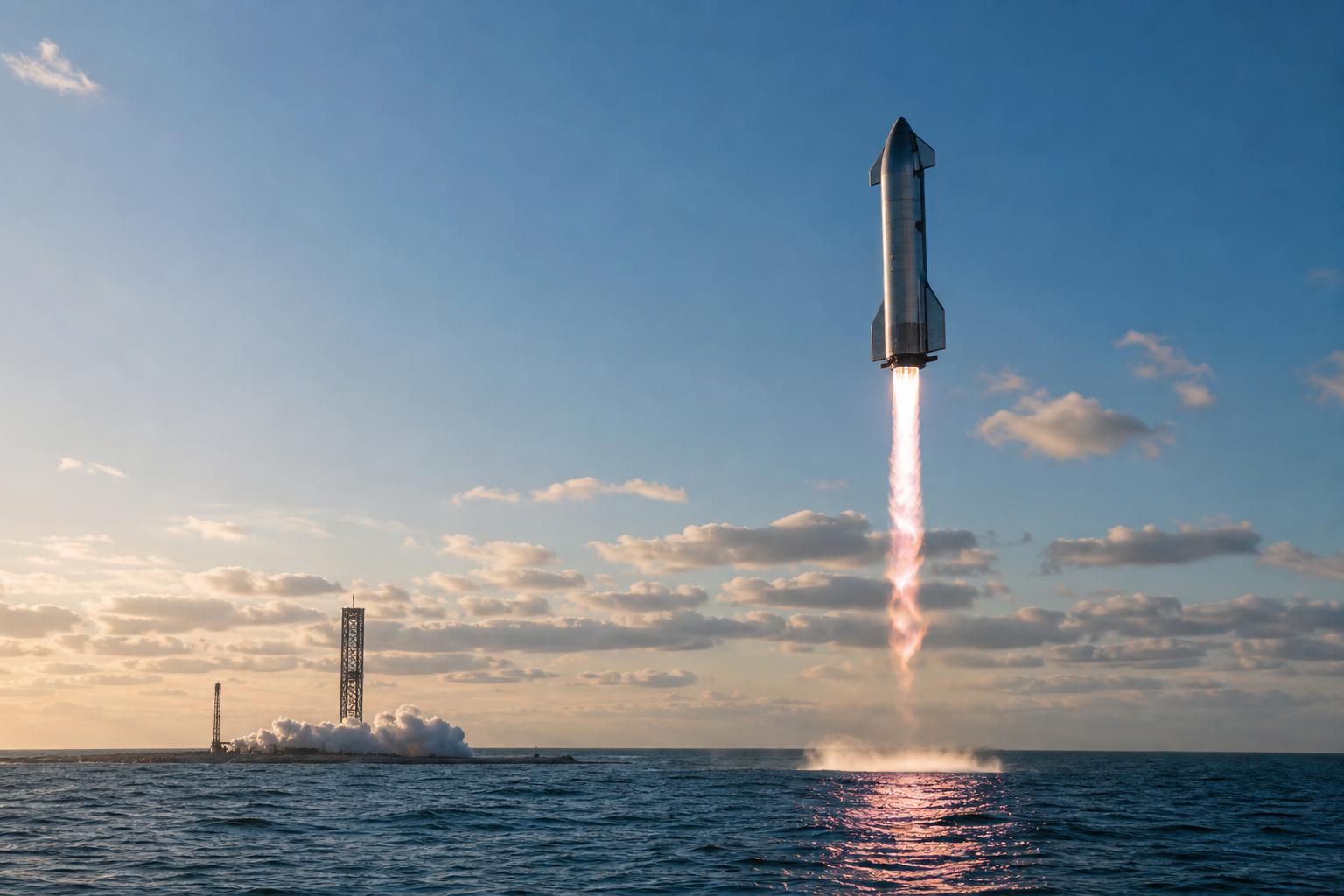
Starship lands intact after hour-long flight
SpaceX's Starship, the world's largest rocket, launched on the 24th and landed in the Indian Ocean after about an hour in flight, largely intact. The vehicle had often exploded on landing in the past, but this was the first time a soft landing and floating on the sea were shown in an online webcast.
Booster re-ignition remains a challenge
One key focus of the test, the engines, still had issues. Starship is made up of an upper spacecraft section and a lower booster, but on the lower stage some engines failed to re-ignite and it landed at a faster speed than planned. A SpaceX employee speaking on the webcast said the aim had been a gentler landing, but the speed was substantial.
Starlink satellites were deployed successfully
Another test item was the deployment of 20 of the latest satellites for the Starlink communications service, and that was successfully completed. The satellites deployed in this test have 10 times the communication capacity of earlier versions, but their larger size means they cannot be carried by existing rockets. After deployment, communications links were confirmed with all 20 satellites, and they later re-entered the atmosphere along with Starship and were discarded.
Hurdles remain for full reuse
On future launches, attention will turn to achieving full reuse of both the upper stage and the lower stage. That item was not included in this test, but reuse is essential to putting the system into practical use and lowering launch costs. SpaceX is aiming for commercialization within 2026, but it faces many challenges, including mass production and securing launch capacity. On the 23rd, Bloomberg reported, citing people familiar with the matter, that the company plans not to accept bookings for Falcon 9 beyond 2028, suggesting it expects to shift to Starship.
Enjoyed this article? Share it with your network!