





Secondary Capital Law Advances Framework to Ease Tokyo Concentration
 2026-07-24
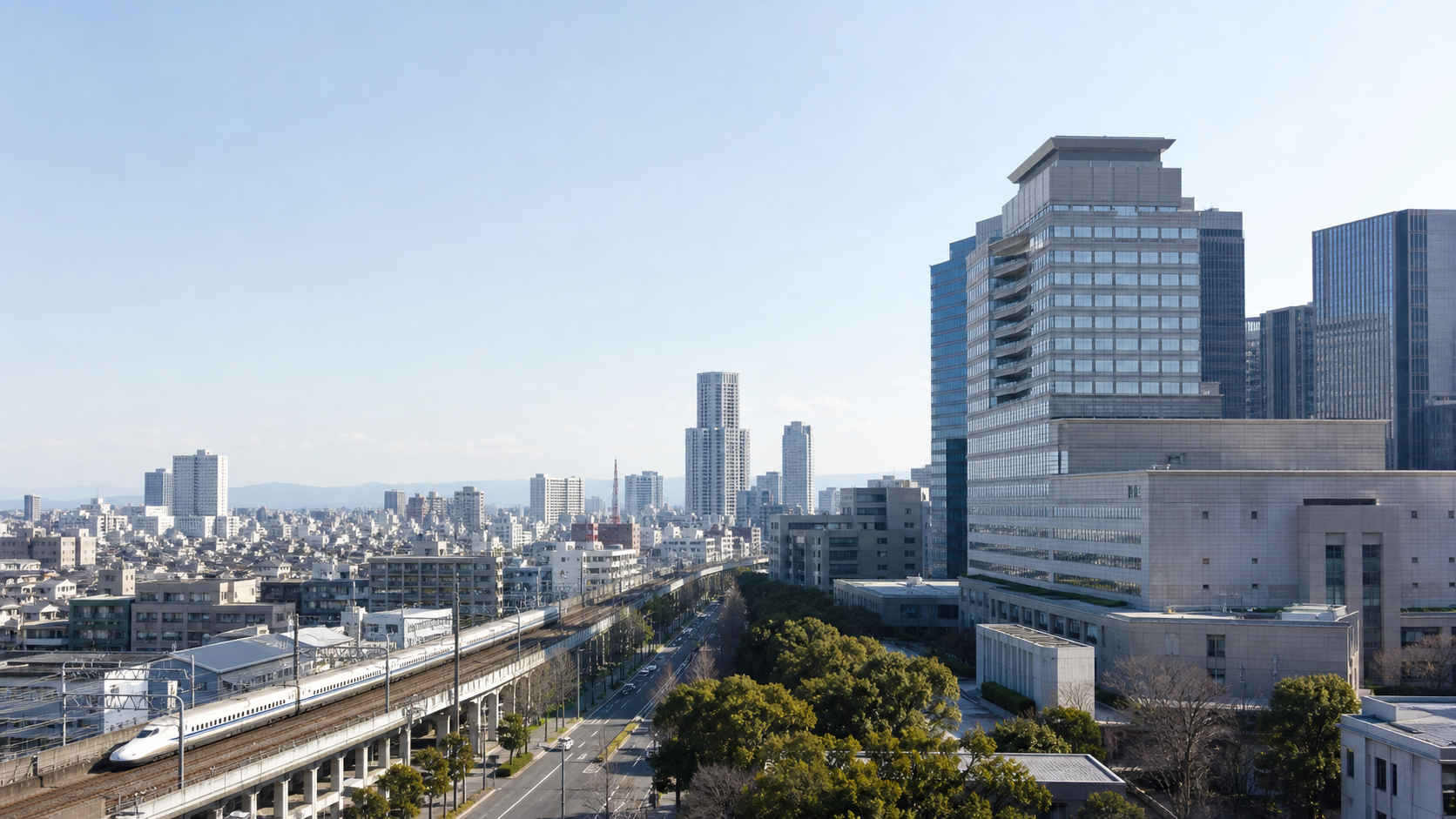
Secondary capital law enacted to build backup functions for Tokyo area
At a plenary session of the House of Councillors on the 24th, a secondary capital law was approved and enacted to allow administrative and economic functions of the Tokyo metropolitan area to be substituted in the event of a major disaster. The government will promote corporate relocation to designated cities through measures including tax incentives, aiming to correct the concentration of functions in Tokyo.
Vote was 123 in favor, 121 against
The Liberal Democratic Party, the Japan Innovation Party, Team Mirai and independent lawmakers voted in favor, while the Constitutional Democratic Party of Japan, the Democratic Party for the People and others opposed it. Of 244 votes cast, 123 were in favor and 121 were against. The secondary capital law was introduced jointly by the LDP and Ishin as lawmaker-sponsored legislation and sets requirements such as the necessary local administrative framework. Ishin had aimed to secure passage during the current Diet session before its scheduled end on the 25th.
Corporate relocation and designation requirements
The bill is built around three pillars: 1. strengthening industrial competitiveness and forming hubs for economic activity, 2. developing transport networks and urban infrastructure, and 3. establishing bases for national government agencies and special public corporations. It also envisages tax incentives for companies that move their headquarters from Tokyo. Osaka, Nagoya, Fukuoka and Sapporo are among the cities that have shown interest.
Under the system, prefectures seeking to become a secondary capital apply after first obtaining approval from their assemblies, with the prime minister making the designation. Decisions will be based on factors including the location of national administrative agencies, concentrations of population and economic activity, and local administrative frameworks. A secondary capital may be selected even before a basic plan for its establishment is drawn up.
Dispute over Osaka metropolis plan
During deliberations on the bill on the 24th, the biggest point of contention was whether to hold a referendum on the Osaka metropolis plan sought by Ishin on the same day as unified local elections. Hirofumi Yoshimura, governor of Osaka Prefecture and head of Ishin, has called for realizing the Osaka metropolis plan to support designation of Osaka Prefecture and Osaka City as a secondary capital. The plan would abolish Osaka City and reorganize it into multiple special wards, and a referendum on the same day as the unified local elections in spring 2027 is also under consideration.
Opposition parties raised concerns that if the referendum were held on the same day as local elections, political activities calling for support or opposition would be restricted under the Public Offices Election Act. They had taken the position that they would not agree to a vote unless the ruling parties firmly pledged to prohibit same-day implementation.
Further session extension avoided
Upper house Diet affairs chiefs from the ruling and opposition parties held intermittent talks on the 24th ahead of the vote, seeking to resolve the dispute. The ruling parties gradually accepted opposition demands, and Ishin also agreed to revise the wording of an incidental resolution on prohibiting local elections and the referendum from being held on the same day. Within the ruling camp, a further extension of the Diet session had been considered if the opposition had not agreed to a vote that day, but it was ultimately avoided.
The government will establish a headquarters to promote development of the secondary capital, headed by the prime minister, to coordinate measures. A minister in charge will also be appointed. Ishin sees this as a potential opportunity to take its first step into cabinet-level cooperation in the next cabinet reshuffle. Nobuyuki Baba, a former head of Ishin, cited internal affairs minister as one desirable post in an online program released on the 15th. That is because the ministry oversees local administrative systems related to establishing a secondary capital.
Meanwhile, because talks between the ruling and opposition parties dragged on until the night of the 24th, an intensive session of the House of Representatives Budget Committee scheduled for that day with Prime Minister Sanae Takaichi in attendance was postponed. It will be held on the 27th.
Enjoyed this article? Share it with your network!