





Nikkei Falls 1,811 Points as AI, Chip Stocks Sell Off
 2026-07-24
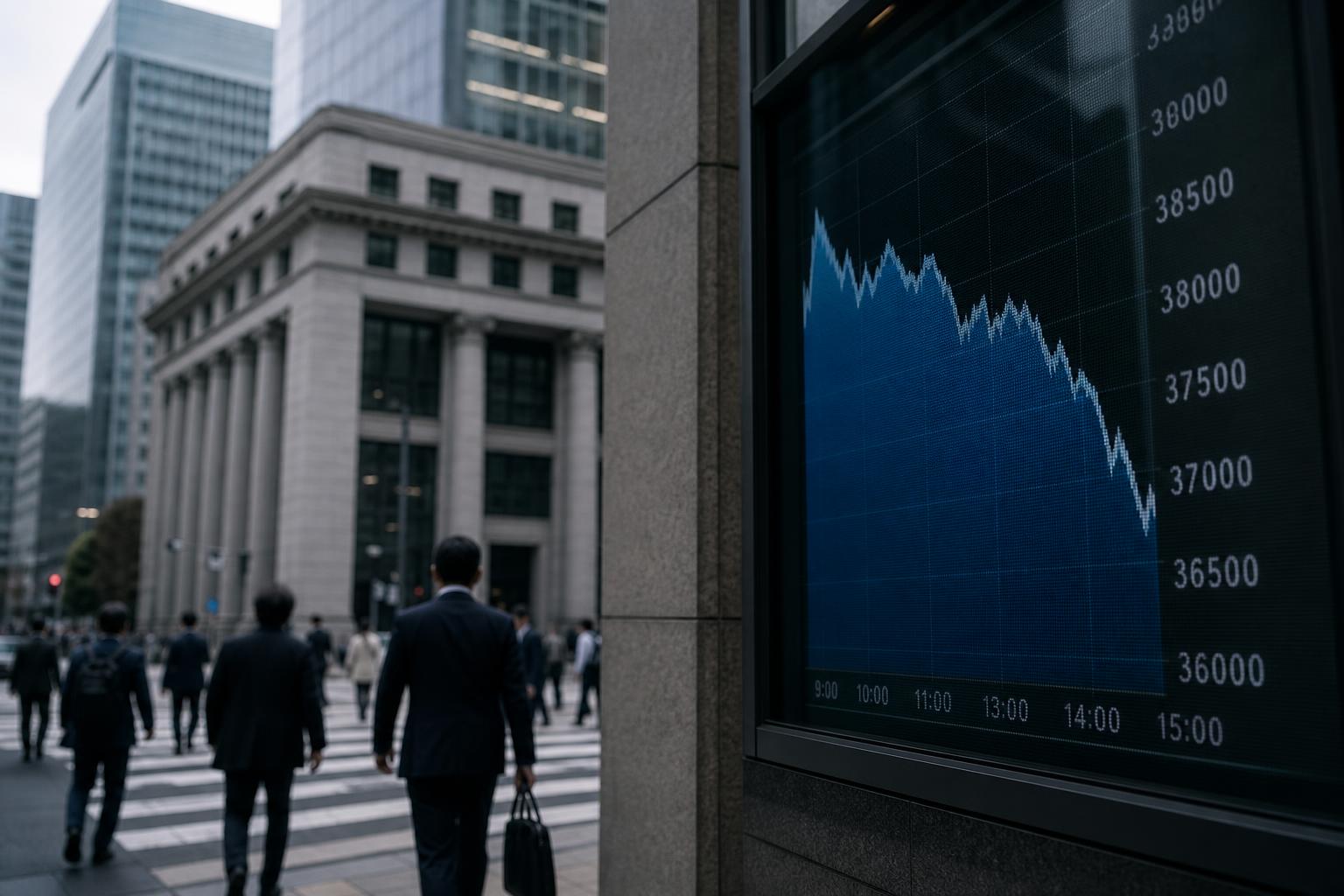
At the Tokyo stock market on the 24th, the Nikkei average ended lower for the first time in two sessions, down 1,811.45 points, or 2.7%, from the previous day at 64,611.15. The market followed the drop in US semiconductor shares on the 23rd, while higher oil prices on rising Middle East tensions also dampened investor sentiment. Ibiden, which counts US chipmaker Intel, which reported strong earnings, among its customers, was also sold down to as much as 4% lower.
US stock weakness spreads to Tokyo
Sell orders dominated from the start of trading, and the Nikkei's decline at one point exceeded 2,200 points. Chip-related stocks led the market, with SoftBank Group down 7%, Advantest down 6% and Tokyo Electron down 5%. In the previous session in the US, the Nasdaq Composite Index, which has a heavy concentration of tech stocks, fell 2%, and that impact also reached the Tokyo market.
US Alphabet, which owns Google, fell 7% on the 23rd. The company said on the 22nd that net profit for the April-June 2026 quarter was four times that of the same period a year earlier, and also announced higher capital spending, but selling strengthened on concerns over whether such massive investment can be recouped.
A trader at a foreign securities firm said, 'The earnings results from major US tech companies are not bad, but their share prices are not keeping up. The mood is also getting worse.' Masahiro Yamaguchi, head of investment research at SMBC Trust Bank, said of such companies that investors are 'unable to be confident that shareholder returns and capital expenditure will continue.'
Weakness does not spread to Ibiden
What symbolized the deterioration in market sentiment was the decline in Ibiden shares. Intel, a major customer of the company, said on the 23rd that its consolidated sales outlook for the July-September quarter was likely to rise 16% to 23% from a year earlier. Intel shares surged as much as 13% in after-hours US trade on the 23rd, but the positive momentum did not reach Ibiden shares.
Takahiko Masuzawa, head of equity trading at Phillip Securities, said that despite confirmation of strong demand for AI and semiconductor-related stocks, the weakness in Ibiden shares reflects investor anxiety.
Negative factors have been piling up lately. Oil futures rose after US media reported that President Donald Trump was considering a large-scale attack in Iran. On expectations that inflation would accelerate, the US long-term yield briefly rose to around 4.7%, the highest level in about a year and a half. Bond prices fell.
The yen was trading in the upper 163 range against the dollar, its weakest level since November 1986. Retail-related shares, which had tended to be bought when AI and semiconductor stocks were falling, were also soft amid concerns about higher import costs and a slowdown in consumption due to inflation.
View that the correction may last
Warnings over possible yen-buying intervention by the Japanese government and the Bank of Japan remain strong. With the US Federal Open Market Committee meeting on the 28th and 29th and the BOJ's monetary policy meeting on the 30th and 31st approaching, there is still little room to buy Japanese stocks aggressively.
Takashi Hiroki, chief strategist at Monex Securities, said that 'it is necessary to wait not only for the adjustment in stock price levels, but also for supply-demand conditions to calm down.' He expects it will take time for profit-taking and loss-cutting selling by investors to run their course.
From April to June, stock prices continued to rise amid brisk trading. Looking at the trading value on the Tokyo Stock Exchange Prime Market since April by Nikkei average price range, the 68,000 yen to 70,000 yen range was the largest at 161 trillion yen. As 49% of transactions since April were concluded at 66,000 yen or higher, a considerable number of investors are believed to be holding unrealized losses around the current 65,000 yen level.
South Korea's Financial Services Commission said on the 24th that it would move up a planned increase in required deposits for leveraged exchange-traded funds tied to individual stocks from August to late July. South Korea's KOSPI briefly fell about 5% on concerns over trading restrictions.
In addition to concerns over the sustainability of the artificial intelligence rally, risk factors such as Middle East tensions and interest-rate trends are also increasing. It is likely to take some more time before stock prices move out of the correction phase.
US stock weakness spreads to Tokyo
Sell orders dominated from the start of trading, and the Nikkei's decline at one point exceeded 2,200 points. Chip-related stocks led the market, with SoftBank Group down 7%, Advantest down 6% and Tokyo Electron down 5%. In the previous session in the US, the Nasdaq Composite Index, which has a heavy concentration of tech stocks, fell 2%, and that impact also reached the Tokyo market.
US Alphabet, which owns Google, fell 7% on the 23rd. The company said on the 22nd that net profit for the April-June 2026 quarter was four times that of the same period a year earlier, and also announced higher capital spending, but selling strengthened on concerns over whether such massive investment can be recouped.
A trader at a foreign securities firm said, 'The earnings results from major US tech companies are not bad, but their share prices are not keeping up. The mood is also getting worse.' Masahiro Yamaguchi, head of investment research at SMBC Trust Bank, said of such companies that investors are 'unable to be confident that shareholder returns and capital expenditure will continue.'
Weakness does not spread to Ibiden
What symbolized the deterioration in market sentiment was the decline in Ibiden shares. Intel, a major customer of the company, said on the 23rd that its consolidated sales outlook for the July-September quarter was likely to rise 16% to 23% from a year earlier. Intel shares surged as much as 13% in after-hours US trade on the 23rd, but the positive momentum did not reach Ibiden shares.
Takahiko Masuzawa, head of equity trading at Phillip Securities, said that despite confirmation of strong demand for AI and semiconductor-related stocks, the weakness in Ibiden shares reflects investor anxiety.
Negative factors have been piling up lately. Oil futures rose after US media reported that President Donald Trump was considering a large-scale attack in Iran. On expectations that inflation would accelerate, the US long-term yield briefly rose to around 4.7%, the highest level in about a year and a half. Bond prices fell.
The yen was trading in the upper 163 range against the dollar, its weakest level since November 1986. Retail-related shares, which had tended to be bought when AI and semiconductor stocks were falling, were also soft amid concerns about higher import costs and a slowdown in consumption due to inflation.
View that the correction may last
Warnings over possible yen-buying intervention by the Japanese government and the Bank of Japan remain strong. With the US Federal Open Market Committee meeting on the 28th and 29th and the BOJ's monetary policy meeting on the 30th and 31st approaching, there is still little room to buy Japanese stocks aggressively.
Takashi Hiroki, chief strategist at Monex Securities, said that 'it is necessary to wait not only for the adjustment in stock price levels, but also for supply-demand conditions to calm down.' He expects it will take time for profit-taking and loss-cutting selling by investors to run their course.
From April to June, stock prices continued to rise amid brisk trading. Looking at the trading value on the Tokyo Stock Exchange Prime Market since April by Nikkei average price range, the 68,000 yen to 70,000 yen range was the largest at 161 trillion yen. As 49% of transactions since April were concluded at 66,000 yen or higher, a considerable number of investors are believed to be holding unrealized losses around the current 65,000 yen level.
South Korea's Financial Services Commission said on the 24th that it would move up a planned increase in required deposits for leveraged exchange-traded funds tied to individual stocks from August to late July. South Korea's KOSPI briefly fell about 5% on concerns over trading restrictions.
In addition to concerns over the sustainability of the artificial intelligence rally, risk factors such as Middle East tensions and interest-rate trends are also increasing. It is likely to take some more time before stock prices move out of the correction phase.
US stock weakness spreads to Tokyo
Sell orders dominated from the start of trading, and the Nikkei's decline at one point exceeded 2,200 points. Chip-related stocks led the market, with SoftBank Group down 7%, Advantest down 6% and Tokyo Electron down 5%. In the previous session in the US, the Nasdaq Composite Index, which has a heavy concentration of tech stocks, fell 2%, and that impact also reached the Tokyo market.
US Alphabet, which owns Google, fell 7% on the 23rd. The company said on the 22nd that net profit for the April-June 2026 quarter was four times that of the same period a year earlier, and also announced higher capital spending, but selling strengthened on concerns over whether such massive investment can be recouped.
A trader at a foreign securities firm said, 'The earnings results from major US tech companies are not bad, but their share prices are not keeping up. The mood is also getting worse.' Masahiro Yamaguchi, head of investment research at SMBC Trust Bank, said of such companies that investors are 'unable to be confident that shareholder returns and capital expenditure will continue.'
Weakness does not spread to Ibiden
What symbolized the deterioration in market sentiment was the decline in Ibiden shares. Intel, a major customer of the company, said on the 23rd that its consolidated sales outlook for the July-September quarter was likely to rise 16% to 23% from a year earlier. Intel shares surged as much as 13% in after-hours US trade on the 23rd, but the positive momentum did not reach Ibiden shares.
Takahiko Masuzawa, head of equity trading at Phillip Securities, said that despite confirmation of strong demand for AI and semiconductor-related stocks, the weakness in Ibiden shares reflects investor anxiety.
Negative factors have been piling up lately. Oil futures rose after US media reported that President Donald Trump was considering a large-scale attack in Iran. On expectations that inflation would accelerate, the US long-term yield briefly rose to around 4.7%, the highest level in about a year and a half. Bond prices fell.
The yen was trading in the upper 163 range against the dollar, its weakest level since November 1986. Retail-related shares, which had tended to be bought when AI and semiconductor stocks were falling, were also soft amid concerns about higher import costs and a slowdown in consumption due to inflation.
View that the correction may last
Warnings over possible yen-buying intervention by the Japanese government and the Bank of Japan remain strong. With the US Federal Open Market Committee meeting on the 28th and 29th and the BOJ's monetary policy meeting on the 30th and 31st approaching, there is still little room to buy Japanese stocks aggressively.
Takashi Hiroki, chief strategist at Monex Securities, said that 'it is necessary to wait not only for the adjustment in stock price levels, but also for supply-demand conditions to calm down.' He expects it will take time for profit-taking and loss-cutting selling by investors to run their course.
From April to June, stock prices continued to rise amid brisk trading. Looking at the trading value on the Tokyo Stock Exchange Prime Market since April by Nikkei average price range, the 68,000 yen to 70,000 yen range was the largest at 161 trillion yen. As 49% of transactions since April were concluded at 66,000 yen or higher, a considerable number of investors are believed to be holding unrealized losses around the current 65,000 yen level.
South Korea's Financial Services Commission said on the 24th that it would move up a planned increase in required deposits for leveraged exchange-traded funds tied to individual stocks from August to late July. South Korea's KOSPI briefly fell about 5% on concerns over trading restrictions.
In addition to concerns over the sustainability of the artificial intelligence rally, risk factors such as Middle East tensions and interest-rate trends are also increasing. It is likely to take some more time before stock prices move out of the correction phase.
Enjoyed this article? Share it with your network!