





Falcon 9 Display at NASA Site Signals Policy Change
 2026-07-22
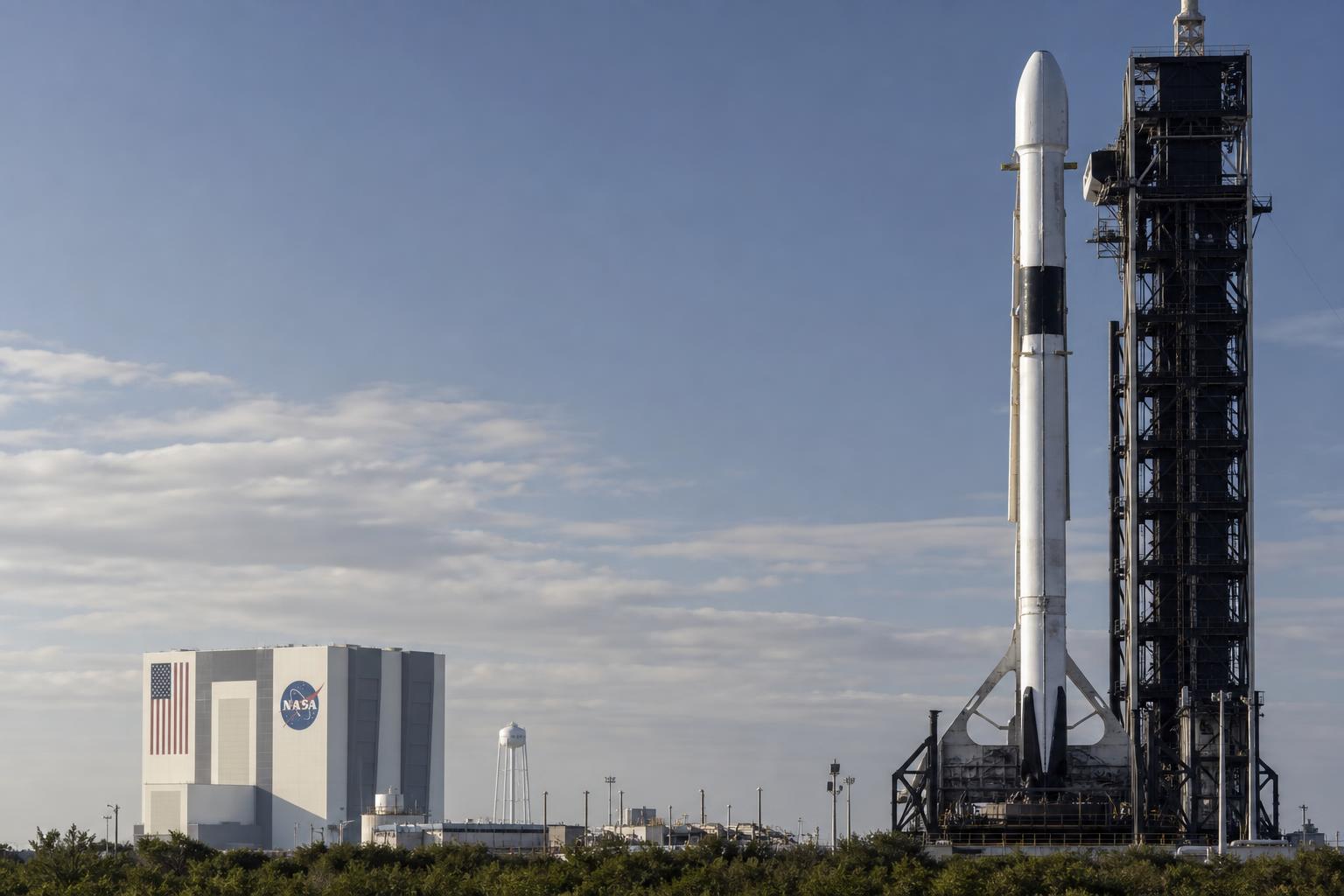
When visitors enter NASA's grounds in Houston, Texas, the first thing that catches their eye is not Apollo or the space shuttle, but a booster from SpaceX's Falcon 9 rocket. Around the symbols of space exploration, US policy has changed markedly.
The competition NASA chose
NASA in 2006 was in a quiet crisis. Three years had passed since the space shuttle broke apart in flight, retirement had been decided, but a successor program was not moving ahead, and ties with Boeing and Lockheed Martin had also become dysfunctional. Deadlines were slipping, costs were rising and the United States was nearing a point where it would have to rely on Russia to resupply the International Space Station.
NASA therefore moved away from the traditional model of handing companies a lump sum and adopted a milestone-based approach that paid for results. No extra budget was approved, and contracts would be cut if goals were not met. There was skepticism inside the agency and in Congress about this method of making multiple companies compete, but NASA had no room to turn back.
How SpaceX changed the picture
Six years after that competition began, SpaceX succeeded in resupplying the ISS. The company was also facing a string of failures at the time and was close to collapse, but through all-out development it brought a reusable rocket into practical use and reshaped the balance of power in space development.
The Falcon 9 booster displayed at NASA headquarters is not just a monument to technology. It is also a symbol of the cliff-edge thinking that led NASA to change policy at the brink.
State-led competition
In Japan, the shape of the growth strategy based on public-private cooperation championed by the Sanae Takaichi administration is also being questioned. Total public and private investment is said to exceed 370 trillion yen. While some argue that massive state support is indispensable, others say the government cannot pick industrial winners and that the market should be left to decide.
However, in an era when science, technology and industry are tightly linked, even participation in the global race is out of reach without support on a national scale. The key is not to pile up subsidies and government procurement, but to create the toughest competition and a mechanism that selects the winners.
Behind the rapid growth of China's electric vehicles and solar panels was not only huge subsidies and preferential treatment, but also a competition environment led by the state. On the 17th, generative AI startup Moonshot AI unveiled Kimi K3, an open-source model that rivals advanced US AI. In the Chinese market, Baidu, Tencent Holdings and DeepSeek are among the many players vying for position, and the company is just one of those that emerged from that field.
The government provides funding, but does not choose the winner. It builds a giant arena, lets many companies run and does not shy away from seeing some fall behind. That cold design has rapidly hardened China's high-tech industry.
Taiwan and South Korea follow suit
The United States is a country of market principles, but it is also a pioneer of state capitalism. If one traces the origins of the internet, the global positioning system and semiconductors, they lead back to massive investment by the Defense Department and DARPA. DARPA is also known for a mechanism that pits multiple organizations against each other and shifts funding, and it has long used a design that keeps competition alive.
Japan has raised growth strategies many times during its lost 30 years. Simply choosing companies that meet the conditions, investing money and waiting for the results will not create competition. In the debates surrounding Rapidus and the Cool Japan Fund, the focus is less on whether the government should be involved or how much money is at stake than on whether competition is being excluded.
Government investment in Taiwan and South Korea is not necessarily the single-point concentration seen in Japan. In Taiwan, the government became a shareholder and established Taiwan Semiconductor Manufacturing, but even before that it had been pushing semiconductor technology transfer, industrial cluster formation and talent concentration under state leadership. From that emerged TSMC.
The Korean wave was not the result of the government choosing BTS or Squid Game. Its background lies in training large numbers of producers, scriptwriters and directors and creating a soil in which entertainment companies compete with each other.
Competition also creates losers. NASA selected Rocketplane Kistler alongside SpaceX, but cut the contract for failing to meet its goals. The company appealed to the US Government Accountability Office and Congress, but later went bankrupt. Competition design is also a policy that carries the responsibility of accepting losers.
In an era in which nations compete through the design of competition, there is no room to keep tolerating dysfunction. As NASA changed policy at the brink, Japan is being asked whether it can also shift strategy with a cliff-edge mindset.
Enjoyed this article? Share it with your network!