





AI data centers are overtaking smartphones as an economic engine
 2026-07-20
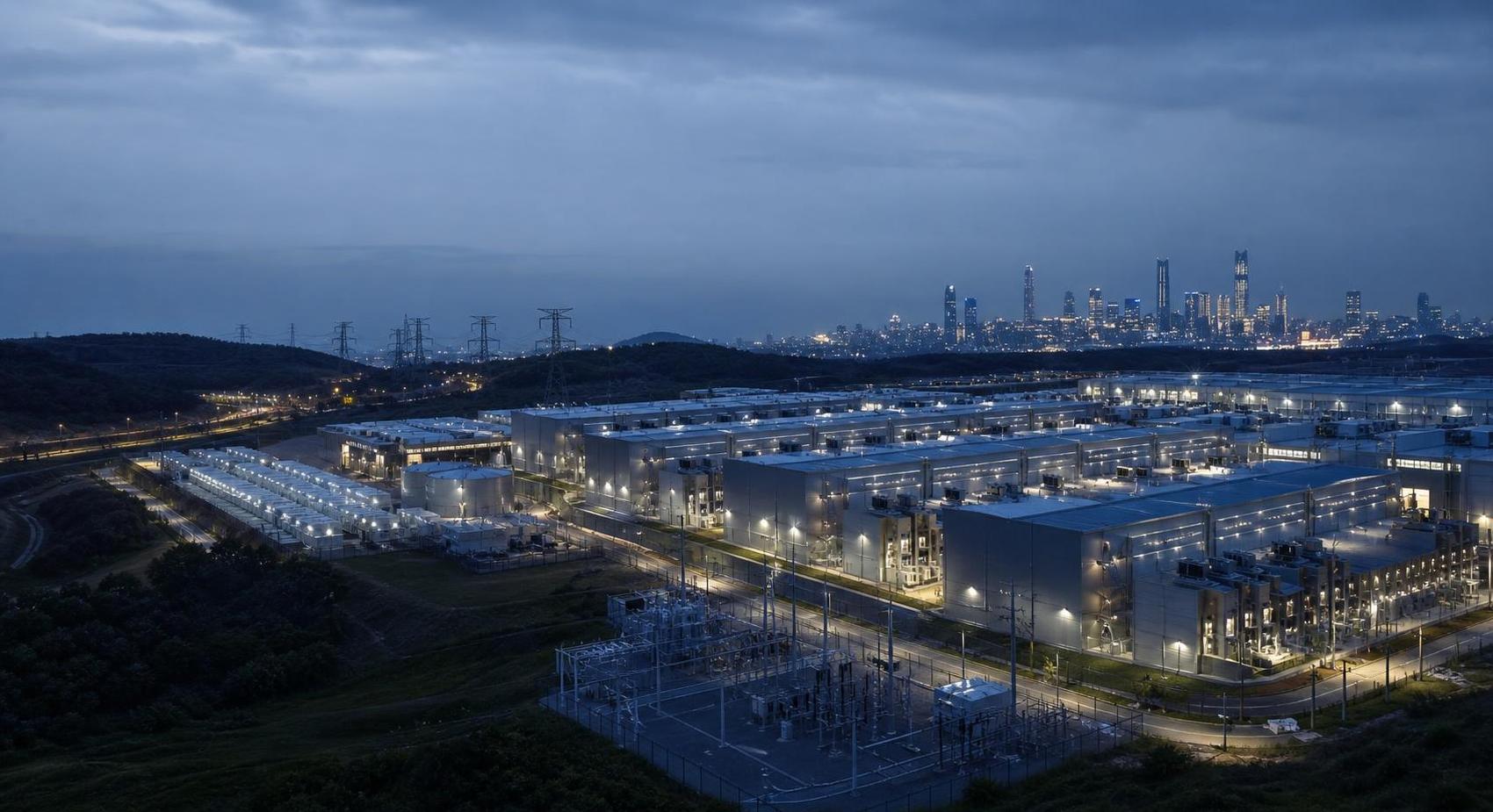
Massive investment becomes the norm
AI data centers are starting to form a huge economic sphere that outstrips smartphones. Cutting-edge AI servers contain more than 40 times as many parts as cars, and the related industries go far beyond semiconductors. Investment on a scale unseen in industrial history signals the arrival of the data center economy, one that is rewriting business norms.
In early July, in a conference room of an office building in Kawasaki, Sei Yamamoto, a manager at Toshiba Device & Storage who oversees the hard disk drive business, was pressed by a US customer that said storage was nowhere near enough. The other side was an executive at a major cloud provider, a so-called hyperscaler, responsible for procurement of products for data centers. When Yamamoto said HDD demand was likely to rise by about 20%, the counterpart replied that it was not nearly enough, signaling an aggressive stance toward large-scale procurement.
Major US tech companies are spending tens of trillions of yen a year per company on building out AI data centers. According to US research firm Dell'Oro Group, annual investment in data centers worldwide is expected to reach $1.3 trillion, or about 200 trillion yen, in 2026. Spending above $1 trillion is equivalent to more than four times the Apollo program, which took about 10 years to send humans to the moon. Data centers are absorbing that amount of capital in just one year.
The supply chain runs from chips to construction
The main driver of the digital revolution since the 2010s is shifting from smartphones to data centers. According to US-based Grand View Research, the global market size of companies using data centers and related services will reach $902.2 billion in 2033, 2.4 times the level in 2025. The smartphone market, at $537.6 billion in 2025, is larger than the data center market, but is projected to grow to only $749.1 billion in 2033, leaving it to be overtaken.
At first glance, a data center may look like nothing more than a cluster of servers housing AI, but its supply chain is broad. The core component that determines capability is the graphics processing unit, or GPU, mainly made by Nvidia. The GPU, together with the CPU, is built into a chip about the size of a cutting board, placed on a server tray and mounted in a rack. A server rack stands about 2 meters tall and weighs about 1.8 tons, roughly the weight of a large pickup truck popular in the United States.
Nvidia's latest AI server, Vera Rubin, has 72 GPU chips in a single rack, and the number of parts per rack reaches 1.3 million. A car is said to contain about 30,000 parts, meaning an AI server has roughly 43 times as many parts as a car. Development cycles are also shortening from years to annual updates. The Vera Rubin server has about 2.2 times as many parts as the previous model, and each generation brings more performance and complexity.
Spending spreads from core parts to the edges
The first sharp surge in demand in the AI supply chain was for Nvidia's GPUs. Demand then spread to HBM, or high-bandwidth memory, and CPUs, and tight supply and demand in HBM drew attention to SSDs, storage devices that use NAND made by Kioxia Holdings. The pattern is that special demand ripples outward from the core components.
The next area drawing expectations is even further out in the component chain. According to Morgan Stanley, one AI server needs 440,000 multilayer ceramic capacitors, or MLCCs, 10 to 15 times the number required for a conventional server. Murata Manufacturing and Taiyo Yuden, which make MLCCs, saw their share prices rise temporarily on expectations for AI demand.
The related industries are not limited to semiconductors and electronic components. Opportunities are spreading to power infrastructure, cooling equipment, and construction and real estate involved in the design and operation of data centers. The investment wave is reaching sectors that had seen only limited benefit from digital products.
In Japan as well, five of the current top 10 companies by market capitalization are data center-related names: Kioxia Holdings, SoftBank Group, Tokyo Electron, Hitachi and Advantest. The impact is being felt in the domestic market too.
Japanese firms race for a piece
MinebeaMitsumi plans to raise bearing production capacity from 400 million units a month now to more than 500 million by 2030. It will invest 50 billion yen in existing plants in Southeast Asia and build a new building. Chairman and CEO Yoshihisa Kainuma said sales of bearings for data centers have surged to about three times the level of three to four years ago, bringing forward the start of construction by one year from the original plan for the end of 2026.
Entries from other industries are also accelerating. Sanoh Industrial, which makes piping components for automobiles, has developed and begun selling parts needed to cool AI servers. Masahiro Ogaki, head of the cooling systems business promotion department, said that even for the same type of component, it can be sold at a significantly higher price for data centers than for automobiles.
Sanoh Industrial has reduced production for Japanese carmakers at its Chinese plants to nearly half the peak level in response to the weakness of Japanese automakers. It has also decided to close some plants. The company plans to redirect excess production capacity to components for data centers, and as the competitiveness of the auto industry declines, suppliers are seeking a shift toward AI-related businesses.
A winner-take-all race
The 19th-century railway network and the power grid built in the early 20th century spread across regions over decades. By contrast, data center investment supporting the AI revolution is moving at global scale in parallel over a short period.
In response to concerns about overheated investment, Alphabet CEO Sundar Pichai said underinvestment is far riskier than overinvestment. Many companies entered during the buildout of railways, power and the internet, but history shows that firms that hesitated to invest were eliminated.
Despite debate over whether this is madness or sanity, tech companies continue a winner-take-all race. Companies that view the structural changes created by the data center economy not as a risk but as an opportunity to open a new era are the ones that will survive.
Enjoyed this article? Share it with your network!