





Hanoi urban rail plan advances with Vingroup involved
 2026-07-18
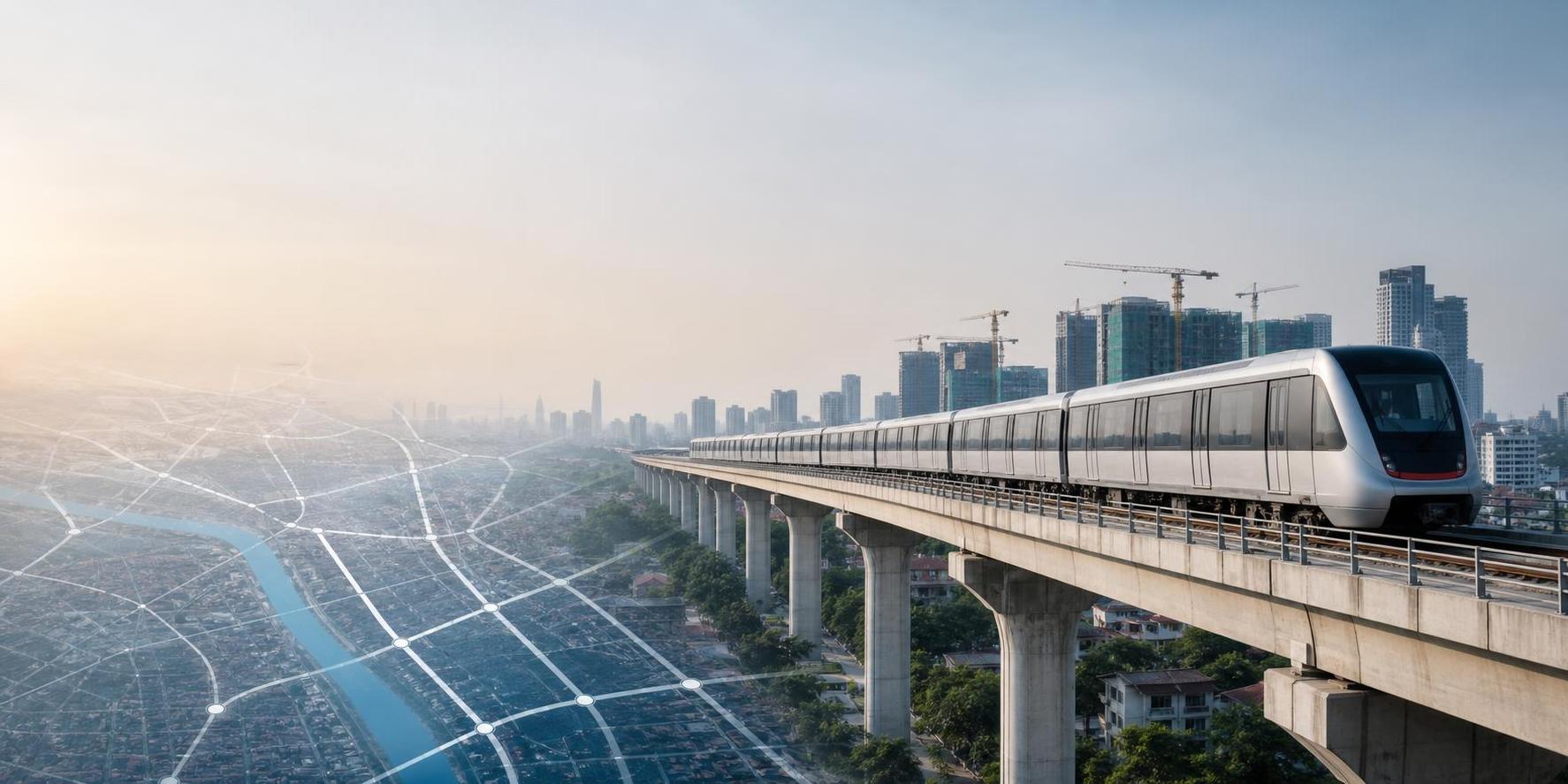
Hanoi urban rail development
Vietnam's capital Hanoi is moving ahead with plans to develop a large-scale urban rail network. The project envisions 18 lines with a total length of about 1,000 kilometers, and total costs could reach as much as 22 trillion yen. It was also announced that Vingroup, Vietnam's largest conglomerate, will take part.
At a ceremony in late June to unveil the '100-Year Vision' infrastructure plan, Hanoi People's Committee Chairman Vu Dai Thang positioned infrastructure development as 'the foundation for growth over decades'. He outlined urban development centered on public transport, and Truong Gia Binh, chairman of FPT, who attended the event, promised cooperation in human resource development and said a life without motorcycles would be realized.
Scale of rail investment
The core of the plan is urban rail. Over the next 10 years or so, the network is expected to extend to about 500 kilometers including underground sections, and expand to about 1,000 kilometers by 2065. Hanoi's current urban rail system consists of only two lines of about 21 kilometers in total, both above ground, and development has proceeded with foreign capital, including the introduction of trains made by France's Alstom.
Total project costs are estimated at as much as $137 billion, or about 22 trillion yen. That would equal roughly one-quarter of Vietnam's nominal GDP in 2025, and private funding is being considered for financing. Asked about funding methods, Le Trung Hieu, deputy director of the Hanoi Department of Finance, said, 'We will prioritize projects that private companies can implement.'
Private-sector participation expands
Vietnamese companies are also stepping up. Major lender Bank for Investment and Development of Vietnam (BIDV) will work with other major banks to help raise 150 trillion to 200 trillion dong, or about 930 billion to 1.24 trillion yen. Chairman Le Ngoc Lam said, 'We will mobilize all our resources to supply funds for urban infrastructure.'
Vingroup said a consortium of its subsidiaries signed an engineering, procurement and construction (EPC) contract for the construction of five lines, with total project costs of about 8 trillion yen. Pham Thieu Hoa, chairman of Vinhomes, one of the participating companies, told Nikkei that the group is working with global partners on detailed design and selecting the best technologies and suppliers for each element, including rolling stock.
In 2025, Vingroup withdrew from a north-south high-speed rail project linking Hanoi and Ho Chi Minh City. The project had been estimated to cost about 10 trillion yen, but there were also views questioning demand. This time, the group has shifted its focus to urban rail, where synergies with its core real estate business are easier to envision, and it is also pushing large-scale development in future areas along the lines.
Japanese position weakens
Vingroup's participation was not shared in advance with the Japanese side, which had been seeking business opportunities in Hanoi Metro. The Japanese government had focused on Line 2, which links the city center with the international airport, and had been negotiating participation with financial support, but while Hanoi sought a 2030 opening, the Japanese side remained cautious. A shortage of domestic rolling stock manufacturing capacity also made it difficult to win the contract.
Japanese companies have had some recent tailwinds. Sumitomo Corp. and others reached an agreement in talks with Ho Chi Minh City over payment for construction costs on Ho Chi Minh City Metro Line 1. It was Vietnam's first subway line, opened at the end of 2024 with Japanese funding and technology, but a dispute had arisen over the calculation of construction costs. Sumitomo Corp.'s public relations unit declined to comment on the status of the talks, including whether a settlement agreement had been reached.
The Vietnamese government is pushing localization and strengthening its policy of prioritizing domestic companies. Steelmaker Hoa Phat has announced plans to enter rail steel, while conglomerate Truong Hai is partnering with South Korea's Hyundai Rotem to establish a rolling stock manufacturing base in Ho Chi Minh City.
Foreign direct investment (FDI) accumulated in Hanoi since 1989 has reached about $75 billion, of which Japan accounts for about 20% and is the largest investor. As Vietnam aims to become a high-income country by 2045, expectations remain strong that infrastructure investment will create major business opportunities, but Mai Fujita, principal research fellow at the Institute of Developing Economies, said, 'Japanese companies need to face the reality that they are no longer being chosen by Vietnam.'
Enjoyed this article? Share it with your network!