





Global AI, chip stocks fall as overheated money unwinds
 2026-07-18
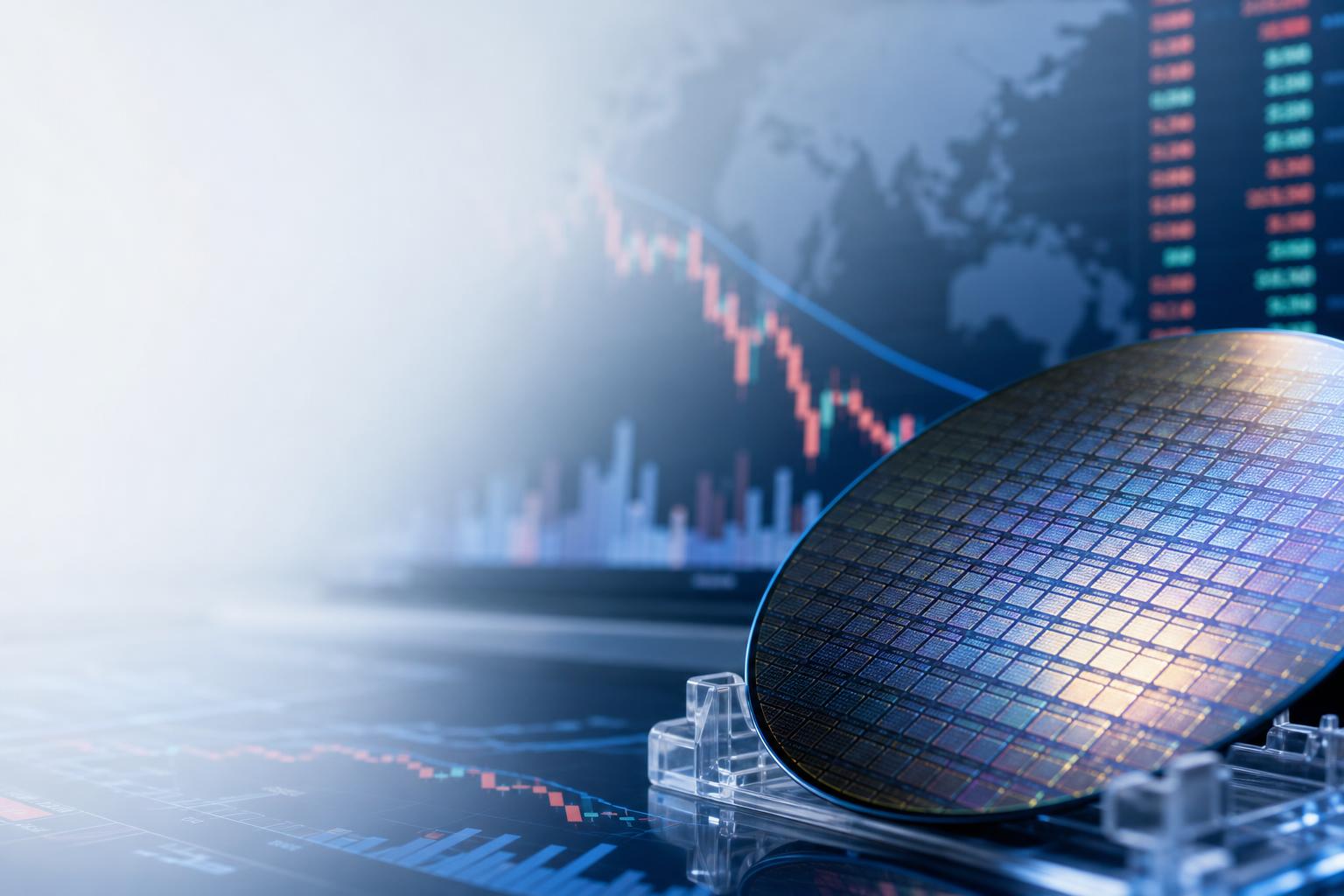
AI, chip stocks sold off globally
Declines in artificial intelligence (AI) and semiconductor-related stocks are accelerating in stock markets around the world. Competition from Chinese memory makers and emerging AI companies has come into view, sending overheated speculative money rushing out. The near-term outlook is unstable, and some see the correction taking time.
Nikkei enters correction phase
The Nikkei average on the 17th plunged 2,694 points, or 4.0%, from the previous day to 64,141. The decline from its June 25 record high has exceeded 10%, the benchmark often used to define a correction phase. Semiconductor-related stocks, which have led the rally, are driving the decline, and the Nikkei Semiconductor Stock Index, which is made up of major names, is down 30% from its peak. In the United States, the Philadelphia Semiconductor Index (SOX) fell 1.6% on the 17th, leaving it more than 20% below its June 22 record high. South Korea's KOSPI also has fallen 25% from the record high it reached that day.
Chinese rise and supply concerns
Kioxia Holdings, Taiyo Yuden and Murata Manufacturing have all fallen 40% to 50% from their all-time highs reached in the past month. Analysts' expected earnings have continued to rise, even after factoring in strong growth in AI demand, and the immediate focus is not on near-term earnings prospects but on a correction in expectations that had built up ahead of time.
Several factors lie behind the move. Concerns about excessive AI investment by US hyperscalers resurfaced, and in early July it was reported that US Meta was considering launching a cloud business to supply surplus computing capacity externally. Worries about excess computing capacity prompted profit-taking and helped trigger the reversal in the market. Attention is also on the rise of CXMT, China's largest DRAM maker. Its parent, ChangXin Technology Group, is preparing for an initial public offering, and investors have begun to worry that capacity expansion could result in more memory supply than expected. Kazuyuki Muramatsu, head of the investment division at Wa Capital, said, 'I expect memory demand to keep growing until around 2028, but near term there are concerns that the memory market will loosen and push prices lower.'
Margin trading and ETFs amplify selling
Some say leveraged products that magnify price moves are also having a large impact. In South Korea, leveraged exchange-traded funds (ETFs) designed to move twice as much as Samsung Electronics and SK Hynix were listed at the end of May and have been popular with individual investors. However, the sharp fall in the two companies' shares forced buyers sitting on unrealized losses to sell, creating a cascade of selling. So-called sidecar measures, which temporarily halt program trading on the Korea Exchange, have been triggered frequently, and as of the 16th they had been invoked 37 times for the KOSPI alone since January 2026. That already exceeds the 26 cases seen in all of 2008 and marks a record high.
In Japan as well, the rapid rise in stock prices had fueled buying through margin trading, in which investors borrow from securities firms and others to expand their buying power. Kioxia's outstanding margin purchases stood at a little over 100 billion yen as of the 10th, surging from 22 billion yen at the end of March. Margin trading, which is closed out through offsetting trades after a certain period, is known as synthetic demand, and an increase in outstanding margin buys means relatively stronger selling pressure ahead. Tomoichiro Kubota, chief market analyst at Matsui Securities, said, 'While some people have been forced to sell at a loss, margin positions are still building up. There is a possibility that individual investors' capitulation selling will continue to grow for a while.'
Capex in focus ahead
The AI market is becoming more corrective as short-term money drives it, but there are still few who see it entering a full-fledged downtrend. Rie Nishihara, chief equity strategist at J.P. Morgan Securities, said, 'The fundamentals that AI and semiconductor demand will increase have not changed. Buying on dips is likely to come in as well, and the downside target for the Nikkei average is around 63,000.' Market attention has shifted to hyperscalers' capital spending plans, with earnings reports from major US companies such as Meta and Alphabet due in succession in late July. Kazuyori Tatebe, chief strategist at Daiwa Asset Management, said that if investors can confirm the companies can continue making huge AI investments, confidence will spread and AI-related stocks will be bought back.
Enjoyed this article? Share it with your network!