





Nikkei drops to 64,141 as AI, chip sell-off accelerates
 2026-07-17
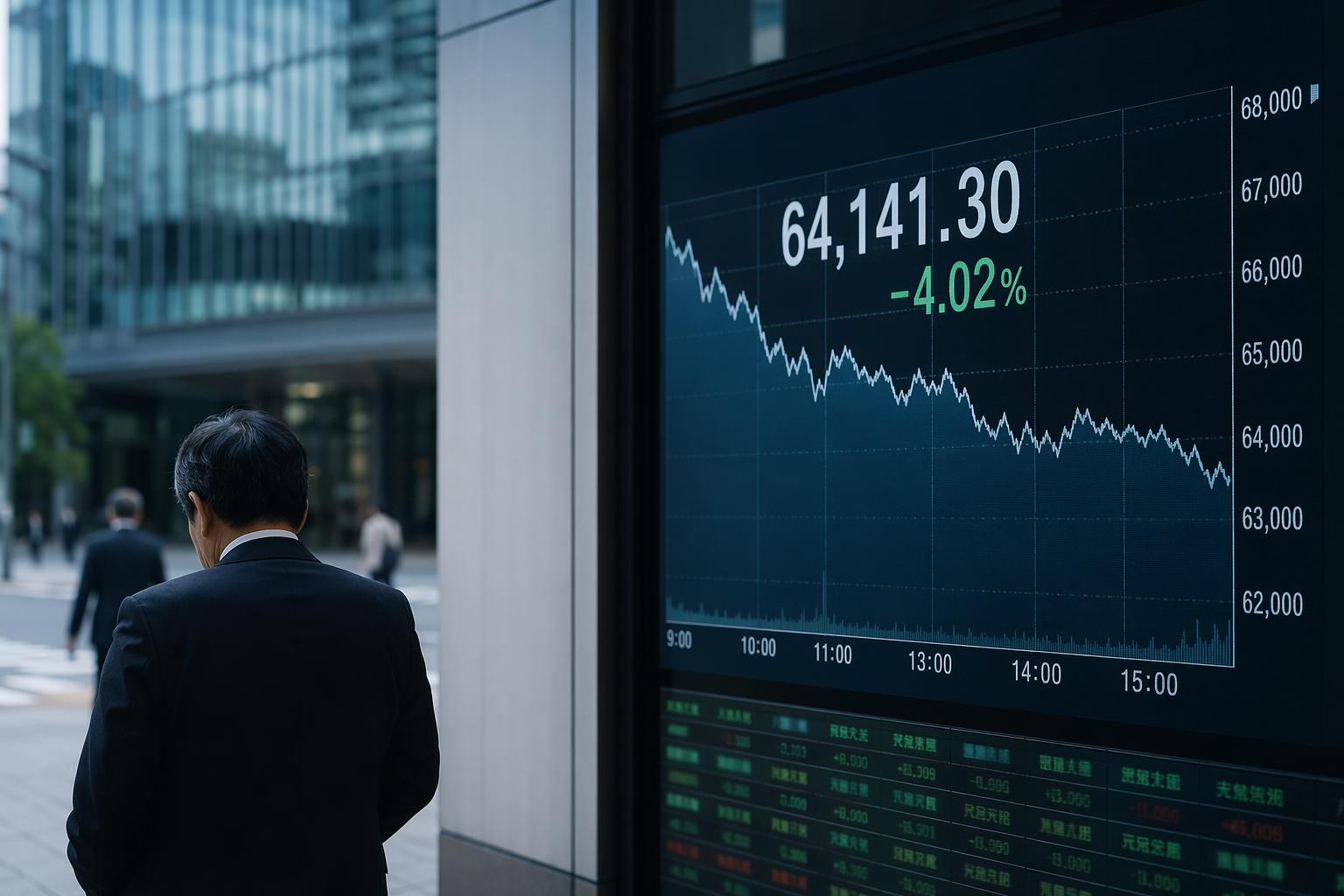
In Tokyo trading on the 17th, the Nikkei Average fell sharply and dropped below 65,000 yen. Selling continued in artificial intelligence and semiconductor-related stocks, reversing funds out of shares that had supported the market.
The Nikkei Average closed 2,694 yen lower than the previous day at 64,141, down 4.0%. It was the lowest level since June 8, and the decline ranked fifth largest on record by point loss versus the previous trading day.
Position unwinding in margin buying weighs on market
Shota Yamafuji, equity market analyst at Tokai Tokyo Intelligence Lab, said panic selling by individual investors on margin buying had expanded. Leading the decline were large-scale sales of AI and semiconductor stocks, which had previously driven gains.
Kioxia Holdings shares ended at the daily limit-down level, the lower end of the permitted price range, closing at 52,110 yen, down 10,000 yen. That was half the level of the all-time high set on June 22. Margin trading buy positions, in which investors borrow funds from securities firms and others to trade beyond their own capital, had accumulated, and forced selling appears to have increased after the sharp share-price drop.
The Nikkei semiconductor stock index had risen 2.8 times in about six months from the end of 2025 to its peak in June 2026. Hirotaka Tsuboi, chief strategist at Daiwa Securities, said near-term growth expectations have already been priced in and the market has entered a phase of assessing sustainability.
Concern over rising Chinese rivals
One factor behind the correction is concern that intensifying competition from Chinese players will weigh on the sector. Chinese semiconductor memory giant ChangXin Technology Group on the 14th announced plans to raise up to 66.6 billion yuan in an initial public offering on the Shanghai Stock Exchange's STAR Market for emerging companies. The proceeds are expected to be used to expand production capacity.
Development of low-cost AI models by startups such as Moonshot AI is also advancing. Takeshi Kamoshita, head of equity management at PGIM Japan, said some demand could shift to lower-priced products from Chinese companies, reducing profitability.
South Korean financial regulators' measures announced on the 16th to tighten restrictions on single-stock leveraged exchange-traded funds also had an impact. Kohei Onishi, senior investment strategy researcher at Mitsubishi UFJ Morgan Stanley Securities, said if it becomes harder for funds to flow into AI and semiconductor-related stocks in South Korea, buying of highly correlated Japanese shares is also likely to be restrained.
Still, the broader market did not turn uniformly bearish. On the 17th, buying came into retail and content-related shares, and 30% of all stocks on the Tokyo Prime Market rose. The Tokyo Stock Price Index, or TOPIX, remains only 4% below its record high.
Rie Nishihara, chief equity strategist at J.P. Morgan Securities, said sector rotation into names with solid earnings continues, and the overall Japanese market has not turned bearish.
Enjoyed this article? Share it with your network!