





SoftBank rolls out AI cyberdefense; 137 firms show interest
 2026-07-14
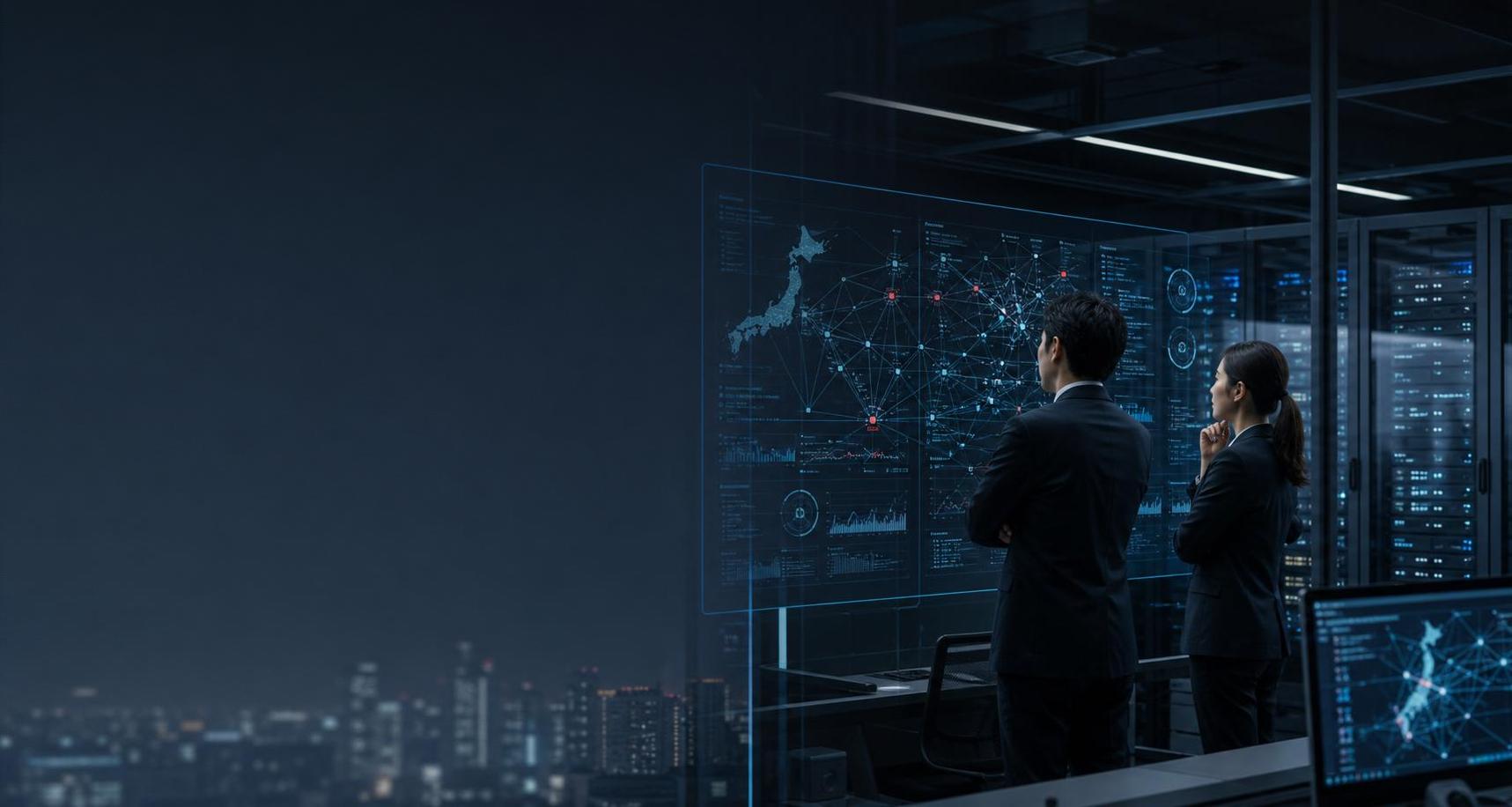
SoftBank said on the 14th it will begin fully offering a new cyberdefense service using artificial intelligence (AI). It has drawn interest from 137 domestic companies and will expand sales mainly to infrastructure-related firms, aiming to tap demand for countermeasures against increasingly sophisticated cyberattacks.
AI flags vulnerabilities and proposes fixes
The new service uses OpenAI's new AI model, GPT-5.5 Cyber, to diagnose system vulnerabilities and then outline remediation measures. SoftBank plans to roll it out to 3,000 companies supporting Japan's critical infrastructure, including financial, transport and manufacturing firms, and will also deploy about 1,000 engineers to support operations at customer sites.
At SoftBank World, the company's annual corporate event held the same day in Tokyo, President Junichi Miyagawa said, 'It is an AI model that can connect the dots on holes such as legacy software and configuration mistakes, and even analyze the route of an attack.' The event drew 740 companies and 1,140 participants.
Average of 280 findings per company
Vulnerability assessments conducted at 63 group and non-group companies found an average of 280 vulnerabilities per system, SoftBank said. SoftBank Group Chairman and President Masayoshi Son said, 'All companies are full of holes. We are going to protect Japan's infrastructure companies.'
SoftBank also said the same day it had obtained exclusive distribution rights in Japan for the services of U.S. startup Sierra, which develops AI agents for customer support. In testing at some of its own call centers, the issue resolution rate improved from 83% to 97%.
AI compute supply also expanding
SoftBank aims to secure new revenue sources by leveraging AI services, semiconductors and data-center computing resources that the group has developed in an integrated manner. Its Infrinia business, which uses graphics processing units (GPUs) owned in Japan to lend the computing power needed for AI via the cloud, began trial services in May 2026 and is scheduled for full-scale rollout in October.
In July, it will establish a new company, SB Neo, through joint investment with SBG, to launch a neocloud business that provides computing resources such as data centers to U.S. companies. SBG is advancing multiple data-center investments for AI in the United States and is assuming hyperscalers, or large-scale cloud providers, as customers. It aims to launch the business in fiscal 2027.
Meanwhile, advanced AI models from U.S. companies such as OpenAI, which SoftBank uses, also carry the risk of intervention by the U.S. government. In June, foreign use of Anthropic's advanced model Mythos was temporarily banned.
Domestic AI development to reduce dependence
Against this backdrop, SoftBank is also stepping up development of domestic AI. In physical AI, which enables machines to operate autonomously, it established a new company, Noetra, with NEC, Honda and Sony Group. Forty-four domestic companies have invested, and the company is moving quickly to develop a Japanese-made model that can power robots and industrial machinery.
At the event on the 14th, Son said global AI infrastructure investment will reach about 800 trillion yen a year in 2040, while AI-related sales will total 7,000 trillion yen a year. He said humanoid robots will number 1 billion and 100 trillion AI agents will be operating at all times. Addressing corporate leaders, he stressed that 'it is important for the president to keep shouting AI, AI, AI,' and also referred to the importance of return on AI (ROA), which shows how AI can raise corporate value.
Enjoyed this article? Share it with your network!