





Mitsubishi UFJ tops Japanese market-cap rankings for first time since 1986
 2026-07-13
Top in domestic market capitalization
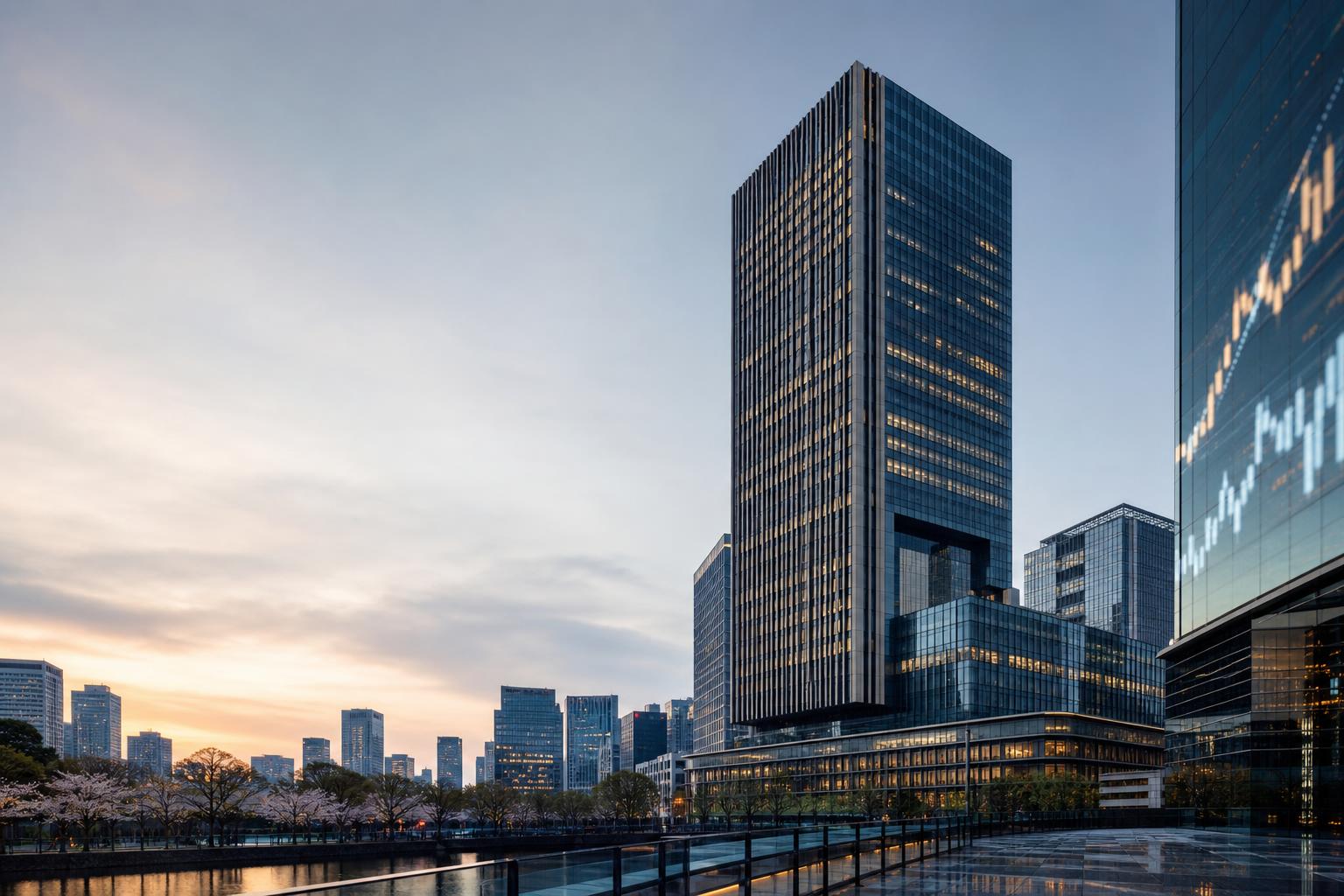
Mitsubishi UFJ Financial Group on the 13th became the first Japanese company to rank No. 1 in market capitalization. It was the first time for a financial institution to take the top spot since Sumitomo Bank in 1986, marking a turning point for Japan's financial industry, which has struggled with prolonged ultra-low interest rates.
Higher rates draw buying
On the Tokyo Stock Exchange on the 13th, Mitsubishi UFJ's market capitalization briefly rose into the 42 trillion yen range, overtaking semiconductor memory maker Kioxia Holdings and Toyota Motor to move into first place among listed Japanese companies. Its shares also at one point rose nearly 3% from the previous week's close to 3,564 yen.
Rising interest rates following Bank of Japan rate hikes have strengthened expectations for wider lending margins, drawing investment funds. On the 13th, Mitsubishi UFJ shares outperformed the market even as the Nikkei stock average fell on heightened tensions in the Middle East.
From low rates to overseas expansion
According to a Nikkei tally, the last time banking led market capitalization rankings was in 1986, when Sumitomo Bank took the top spot. Tokyo-Mitsubishi Bank and Industrial Bank of Japan had also at times ranked near the top, but the usual leaders were NTT and Toyota.
After the bubble burst, banks were consumed by bad-loan disposal and restructuring, while long-term deflation and low rates kept profitability under pressure. Mitsubishi UFJ's market capitalization briefly fell below 5 trillion yen in 2011. When the Bank of Japan launched negative interest rate policy in 2016, the bank's valuation appeal faded until the policy began to unwind from 2024 onward.
At the same time, its earnings sources have expanded beyond domestic lending. As of fiscal 2025, the U.S. and Asia account for just over 50% of operating profit. Profits tied to its 2008 investment in U.S. bank Morgan Stanley are at a level equivalent to 20% to 30% of group net profit. It has also pursued mergers and acquisitions in Asia, including the purchase of a local bank in Thailand.
Since its inception, Mitsubishi UFJ has set a goal of breaking into the top five in global financial institutions by market capitalization. As of the end of March, it ranked ninth in the world, and President Junichi Hanzawa said in a Nikkei interview in July that he aims to raise return on equity to the mid-teens over the medium to long term.
Enjoyed this article? Share it with your network!