





Memory Price Surge Lifts Electronics on AI Boom
 2026-07-13
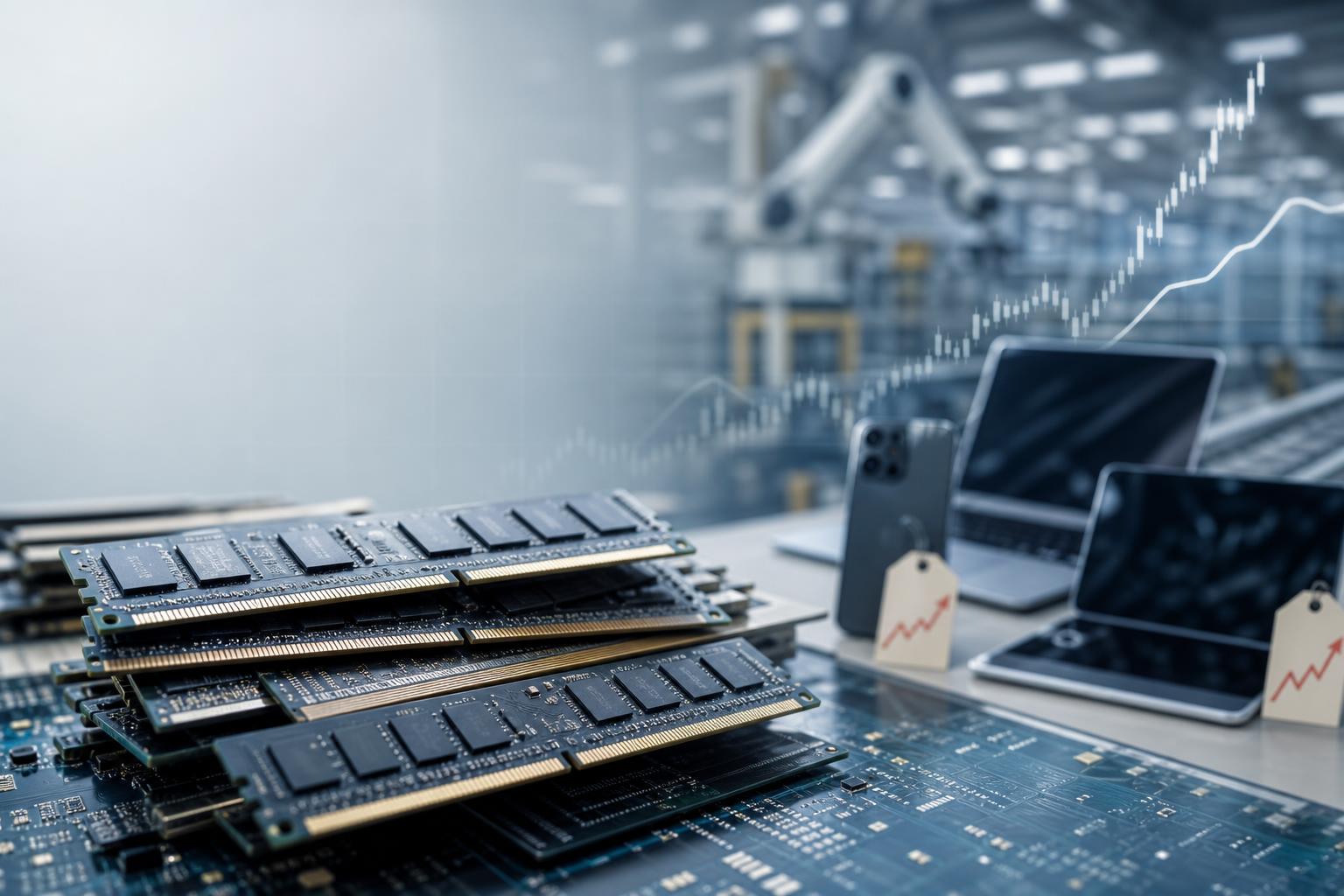
Higher prices for memory semiconductors driven by AI investment are spreading price increases across electronic devices such as smartphones and personal computers. The average smartphone price has risen by $94 in one year, and global shipments are expected to post a record decline. Semiconductor prices are still expected to stay elevated, and concern is growing that AI investment is dampening consumption.
Spillover to Older Models
The surge in memory semiconductor prices is reaching even older products. A smartphone maker executive on the U.S. West Coast said even low-cost memory used in handsets is now $100 higher than a year ago. Suppliers send price-increase notices with every order, heightening caution that prices will rise further.
In June, Morgan Stanley Securities in Japan compiled a report saying DRAM prices had more than sextupled in the past year as supply and demand tightened. What reversed the long-running downtrend was the sharp expansion in investment for AI. In the United States, capital expenditure in 2026 by the four major companies including Amazon.com is projected to rise 76% from a year earlier to as much as $725 billion, a scale comparable to Japan's national budget.
U.S. tech companies are racing to build data centers needed to develop and run AI, and demand for high-bandwidth memory, or HBM, for AI servers has surged. Companies are giving priority to producing DRAM for more profitable HBM, leaving general-purpose memory in short supply. Storage for long-term data retention has also risen, pushing up prices across electronic devices.
Price Rises Spread to Smartphones and PCs
Price pass-through is especially visible in smartphones. Sharp set the top-end model in its Aquos lineup, due for release in July, at around 160,000 yen, lifting the price 50% from the previous model. China's Oppo and Xiaomi also raised prices by several thousand yen, mainly for existing models priced in the 30,000 yen to 60,000 yen range. Apple's flagship iPhone is also expected to become more expensive.
U.S. research firm IDC forecasts that the average global smartphone price in 2026 will be $550, up $94 from the previous year. It is expected to rise by another $23 in 2027. According to Nint in Tokyo's Shinjuku district, the average price of smartphones traded on domestic e-commerce sites in January-May 2026 was about 60,000 yen, 25% above the 2024 average.
Price increases are also continuing in personal computers. Apple raised the price of the MacBook Neo, launched in March at 99,800 yen, by 20,000 yen in June. Vaio, under Nojima, also lifted prices for consumer and corporate customers in April. In game consoles, Sony Group raised the PlayStation 5 price by 18,000 yen, while Nintendo increased the price of the Nintendo Switch 2 by 10,000 yen.
IDC sees total global smartphone and PC shipments in 2026 at 1.34 billion units, down 200 million from the previous year. Smartphone shipments are expected to fall 14%, the biggest drop on record, with sales of low- to mid-priced models that use a high share of memory seen slumping sharply.
Supply Shortages May Last Longer
Memory shortages are also affecting corporate servers. At Otsuka Shokai, servers destined for small and midsize businesses have not been shipped by manufacturers for four months. NEC President Takayuki Morita said delivery cannot be guaranteed more than two months ahead, and is advising customers to place orders earlier and use cloud services.
The DRAM market is dominated by three companies - Samsung Electronics and SK Hynix of South Korea, and Micron Technology of the U.S. - which together hold 90% of global market share. Backed by expanding AI demand and rising prices for standard products, the three companies' earnings are surging. Market forecasts put combined net profit for the current fiscal year at around 7 trillion yen, about seven times the previous estimate.
In late June, a class-action lawsuit was filed in California against the three companies. The plaintiffs argue that they coordinated production cuts around 2022 to drive up prices. That period, however, coincided with a time when the companies' performance was deteriorating as DRAM prices fell. Backlash against memory makers continuing to expand profits is becoming visible in the United States.
The three companies have announced investment in higher production and new plants, but it will take several years before new factories begin full-scale operations. Tech companies still have strong appetite for AI investment, and there also appears to be an intention to avoid prices falling too far because of excessive investment. Many expect supply shortages to continue at least until 2027, prolonging high price levels. Hong Kong research firm Counterpoint Research expects the price of DRAM per gigabit to rise from $0.48 in 2025 to $1.96 in 2027, before easing to $1.47 in 2028 but remaining at a high level.
Opposition to AI investment is also spreading across the United States, with critics citing the high electricity and water consumption of data centers. If price increases continue for everyday products, consumer anti-AI sentiment could strengthen further.
Enjoyed this article? Share it with your network!