





US President Confirms Strait of Hormuz Is Open
 2026-07-12
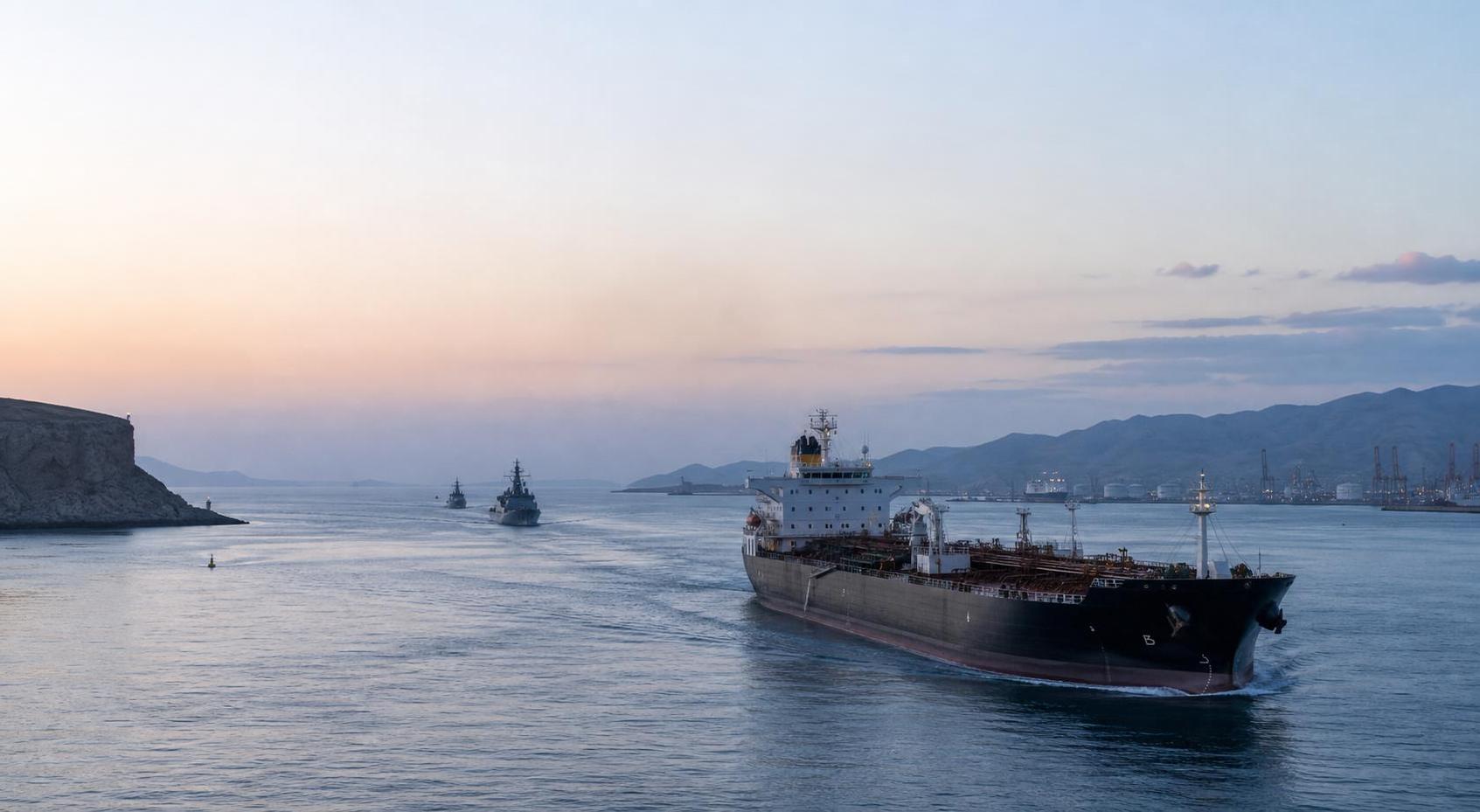
US President Confirms Strait Open
US President Donald Trump said in an NBC television interview on the 12th that he believes the Strait of Hormuz is open. He effectively rejected the Iranian Revolutionary Guard Corps' claim that it had been reclosed. The United States and Iran have each claimed influence over the strait, while military attacks have continued.
US Central Command Pushes Back
US Central Command said on the same day on social media that the Revolutionary Guard Corps' claim that vessels can pass through the Strait of Hormuz only under the watch of the Iranian military is false. It said the Strait of Hormuz remains 'an international waterway' and explained that US forces are deployed to maintain that status.
Exchange of Attacks and Stalled Talks
As the military clashes between the two countries continue, conditions around the strait are becoming more unstable. While the United States seeks to secure free passage beyond Iran's control, Iran wants navigation through routes it controls to preserve its influence, and no compromise is in sight.
Trump said, 'We bombed the hell out of them last night.' On the 11th, US Central Command carried out airstrikes on 140 targets, including missile bases, after the Revolutionary Guard Corps attacked a Cyprus-flagged container ship. The airstrikes were the third since attacks resumed on the 7th.
According to Iranian media, the Iranian side retaliated by targeting US military bases in Jordan, Kuwait, Bahrain, Qatar and Oman, among others. The attacks have escalated into a cycle of strikes across the Middle East.
As Iran attacks merchant ships in the strait, the US military seeks to contain it with strikes, and Iran responds in kind. Underlying this is the failure to bridge the gap in the two sides' perceptions of control over the strait.
Talks Resume, But to No Avail
After exchanging attacks with Iran on the 7th and 8th, the United States sought to resume dialogue. It proposed that talks could restart if Iran declared it would stop attacking merchant ships transiting the Strait of Hormuz, prompting mediators including Pakistan and Qatar to act. Renewed discussions in Switzerland were also being considered.
According to US news site Axios, Iran, Oman and Middle Eastern mediators held talks on the 10th over the strait issue. One proposal was to resume unrestricted transit through a southern route via Omani waters, but the Iranian side took it back for internal consultations, Axios said. The exchange of attacks on the 11th occurred soon after.
Trump said, 'Yesterday, they agreed. Then they left the room, and less than an hour later they launched a drone.' It is unclear whether Iran actually agreed, but there is strong frustration that moves toward dialogue were derailed by attacks on merchant ships.
A memorandum between the US and Iran aimed at ending hostilities, concluded in June, has also entered a precarious phase. Trump said the ceasefire was over after Iran attacked merchant ships. Meanwhile, Parliament Speaker Mohammad Bagher Ghalibaf said on the 12th on social media that the memorandum explicitly states Iran oversees safe passage in the Strait of Hormuz, urging the US to comply.
The United States is using force to reduce Iran's ability to attack vessels passing through the southern route. While targeting small boats, ammunition depots and radar facilities, it has not found a way to restart negotiations and remains unable to break out of the cycle of attacks.
Enjoyed this article? Share it with your network!