





US-Iran tensions push yields higher, Japan's 10-year bond hits 2.9%
 2026-07-09
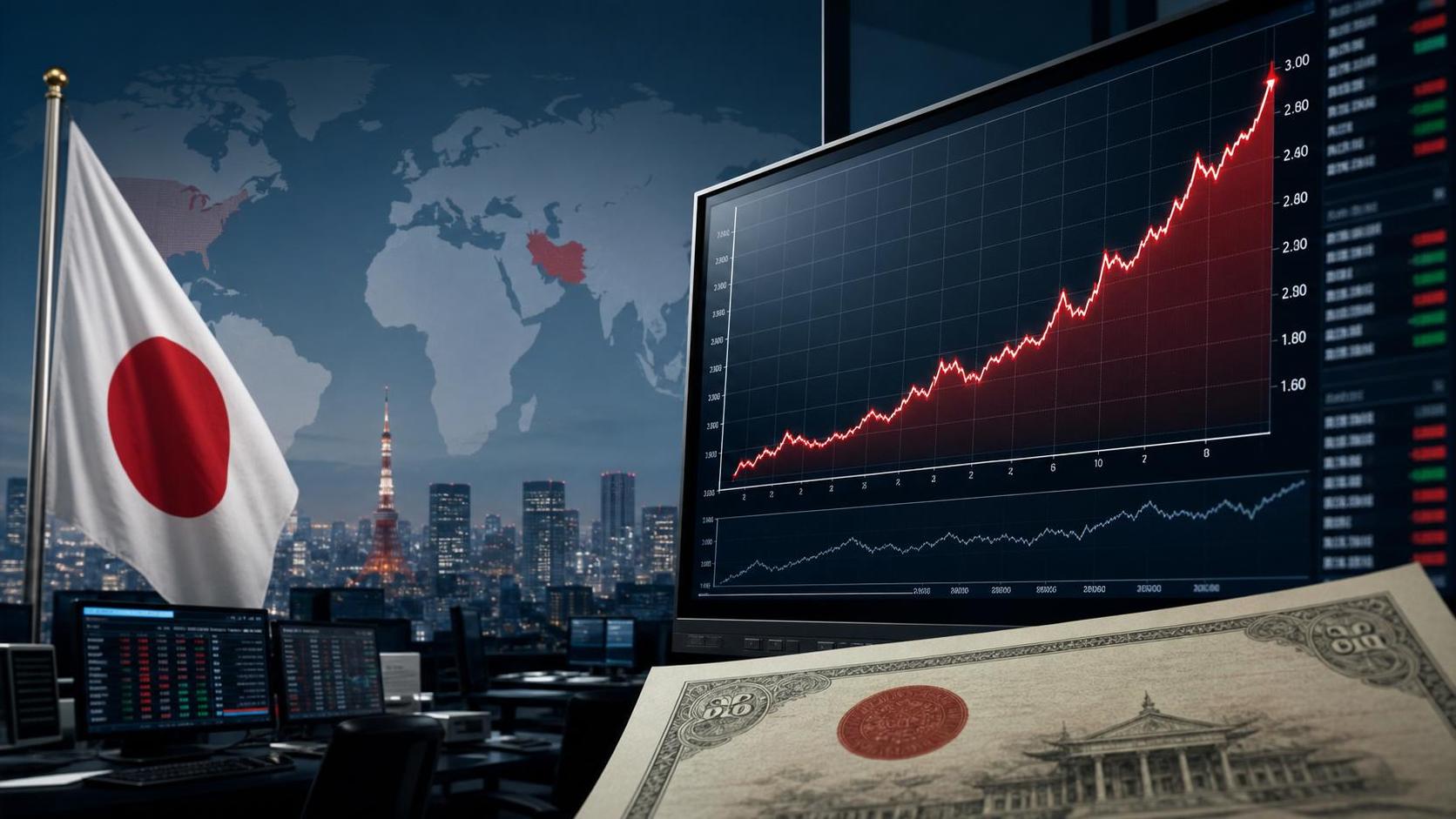
Global yields are rising again after the latest exchange of attacks between the United States and Iran. Higher oil prices have stoked inflation worries, while long-dated U.S. Treasury yields briefly climbed to their highest level since late May. In Japan, fiscal concerns added to the pressure, with long-term yields reaching 2.9% for the first time in about 30 years and coming close to the 3% threshold.
Sell pressure builds in Japan's bond market
In Japan's bond market on the 9th, the yield on the newly issued 10-year government bond, the benchmark for long-term rates, briefly rose 0.035 percentage point from the previous day to 2.9%. It was the highest level since September 1996, and the increase in yields driven by government bond selling is accelerating.
A bond trader at a domestic securities firm said: 'Some people are preparing to buy, but there is a sense that nobody wants to be the first mover,' acknowledging the difficulty of buying.
Middle East tensions accelerate oil price gains
The trigger for higher yields was worsening relations between the United States and Iran. The U.S. Central Command carried out retaliatory strikes after saying Iran had attacked merchant ships in the Strait of Hormuz, reversing hopes that the fighting would end that had spread since June.
Market pessimism deepened after U.S. President Donald Trump said on the 8th that a ceasefire with Iran was 'already over'. Oil prices advanced on views that normalization of energy transport was receding, and inflation concerns spread across global markets.
In addition to inflation, the market priced in deteriorating public finances as military spending expanded, leading to a global rise in yields, said Eiji Doke, chief bond strategist at SBI Securities.
The yield on the U.S. 10-year Treasury rose from the 7th, when news of the U.S. Central Command's strike on Iran was reported, and on the 8th climbed to the upper 4% range, 0.2% above the end of June. The rise in long-term yields also spread to Europe, where British government bond yields rose about 0.1 percentage point on the 8th from the previous day and neared 5%. German government bond yields also broke above the key 3% level, reaching their highest since late May.
Rate hike expectations for the Fed also emerge
Expectations for rate hikes by the U.S. Federal Reserve are also strengthening. Doke said the market reacted ahead of itself as signs of renewed inflation emerged.
According to FedWatch, which indicates market policy rate expectations based on movements in U.S. interest rate futures, the probability of at least one rate hike by the September Federal Open Market Committee meeting is currently 60%, up from 50% a week earlier.
In Japan's market, domestic upward pressure is adding to overseas factors. Following the draft of the Basic Policy on Economic and Fiscal Management and Reform, released at the end of June, concern has spread that if fiscal consolidation and Bank of Japan rate hikes are delayed, they could instead trigger a sharp rise in yields. Bond prices fell, and the upward trend in yields strengthened.
Bond selling over the draft was also dubbed the 'Basic Policy shock'. If oil prices rise again and inflation remains elevated, concern over an extra supplementary budget will intensify further.
Market participants still remember how long-term yields surged in May during the process surrounding a supplementary budget plan. Prime Minister Sanae Takaichi ordered the compilation of a supplementary budget as a countermeasure against higher prices, following issues including a blockade of the Strait of Hormuz.
Masahiro Otani, general manager of investment planning at Daido Life Insurance, said: 'The administration says it does not want to rely on a permanent supplementary budget, but if it moves to compile one, the market could react in the same way as in May.' Londo Tanji, chief bond strategist at Mizuho Securities, also said: 'If turmoil in the Middle East drags on, and Japan ends up drawing up a supplementary budget in the autumn or the yen weakens further to 170 to the dollar, long-term yields could reach 3.5%.'
Toru Matsumoto, head of market sales at Yokohama Bank, said: 'At the 3% level, small buy orders do come in, but there is no clear buyer. I cannot picture yields holding at 3%.'
Enjoyed this article? Share it with your network!