





Yen and won fall on rate gap, capital outflows and structural factors
 2026-07-09
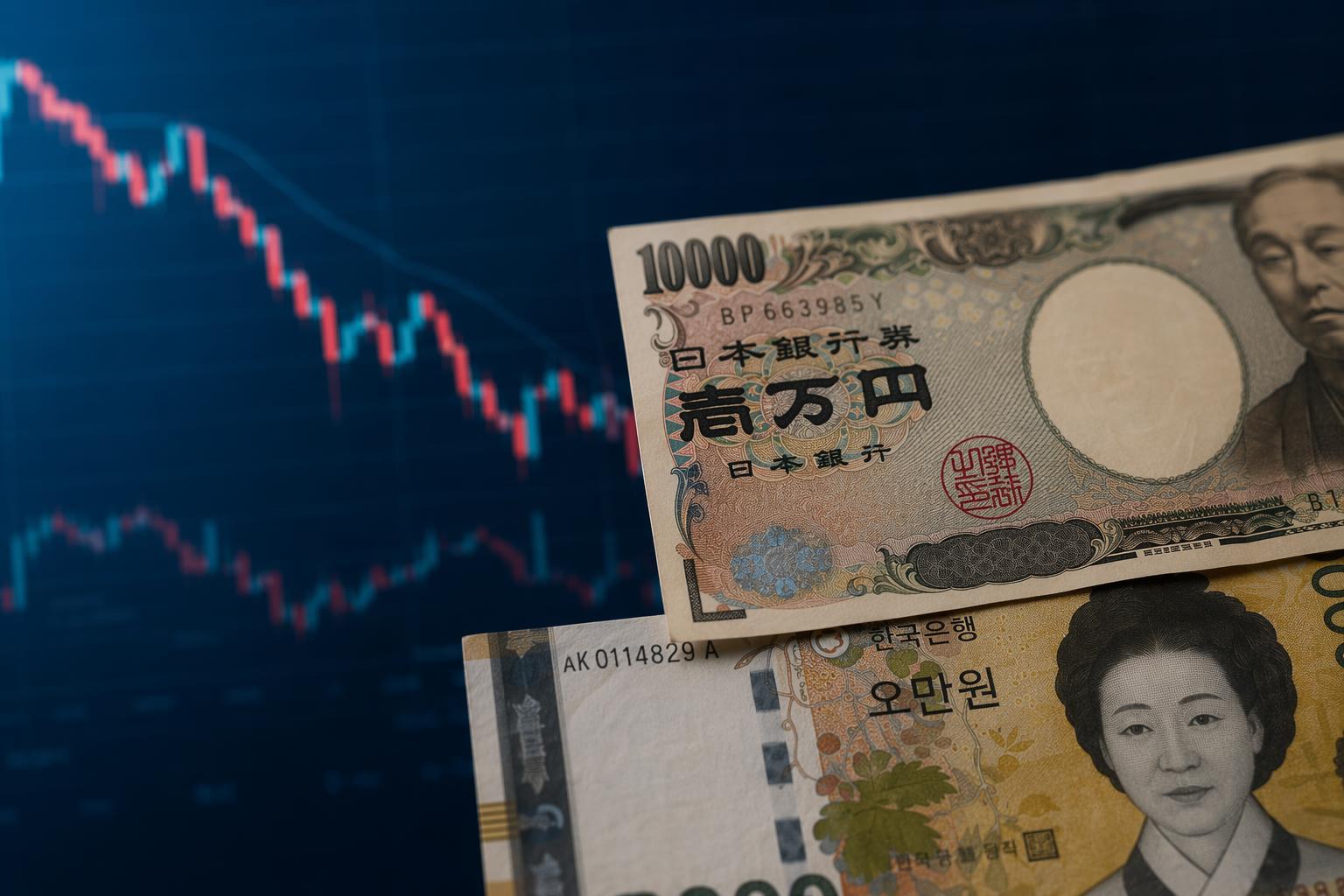
The Japanese yen and South Korean won are both weak. In addition to a stronger dollar on expectations that the Federal Reserve will raise rates, the two currencies face shared structural pressures.
Why yen and won are weak
The won is trading in the 1,500 won per dollar range, near its weakest level since 2009 and around a 17-year low. The yen is also around 162.5 per dollar, its weakest in about 39 and a half years. Year to date in 2026, the won has fallen 4% against the dollar and the yen 3%.
In South Korea, semiconductor and memory exports have risen on the back of the artificial intelligence boom, and the trade surplus in June climbed to a record 36.1 billion dollars, or about 5.8 trillion yen, according to the Ministry of Trade, Industry and Energy. Even so, why is the won still hard to buy?
Katsuyuki Hasegawa, professor at Tokyo Woman's Christian University, points to a shared 'structural currency weakness' in Japan and South Korea. He says three factors are keeping constant selling pressure on the yen and won: interest rate differentials with the United States, domestic capital outflows, and a structure that makes it hard for foreign currency to flow back home.
Rate-gap narrowing bets fade
The Bank of Korea signaled multiple rate hikes in its six-month policy rate outlook released at its May 28 Monetary Policy Board meeting. The Bank of Japan also raised rates at its June monetary policy meeting.
However, the Fed signaled at its June Federal Open Market Committee meeting that it was leaning toward raising rates before year-end. In FedWatch, which uses US interest-rate futures to predict policy rates, traders are pricing in about an 80% chance of a rate hike this year. Expectations that the rate gap with the United States will narrow have faded.
Capital outflows from domestic investors also continue. In South Korea, overseas investments by the National Pension Service, as well as a boom in retail investors buying US stocks, are encouraging capital outflows. In Japan, foreign asset investment through the Nippon Individual Savings Account scheme is also creating real demand to sell yen.
Weak foreign-currency repatriation and stock gains
The difficulty semiconductor companies face in bringing foreign currency earnings back home is also weighing on the currencies. According to the Financial Times, companies such as Samsung Electronics and SK Hynix have become increasingly inclined to keep overseas earnings in US dollars rather than repatriating them.
Toru Nishihama, chief economist at Dai-ichi Life Asset Management's Institute of Economic Research, said that as population decline clouds the outlook for South Korea's domestic market, 'many companies see investing in the US and elsewhere as more likely to support earnings, so they do not convert into won.' Shota Akimoto, senior economist at Okasan Securities, also said that if the global economy shrinks and demand weakens, South Korea's current account balance is likely to swing into deficit.
Rising stock prices are also a factor weakening the currency. Eugene Kwon, foreign exchange analyst at Nomura Securities, said the surge in South Korean shares has increased their weight in overseas investors' portfolios, forcing sales to avoid excessive concentration. According to the Financial Supervisory Service, net selling of South Korean stocks by foreign investors through May 2026 topped 100 trillion won, or about 11 trillion yen, a record high.
Policy response and stance
Authorities in both Japan and South Korea have stepped in to buy their own currencies in response to the weakness. So far, however, they have not managed to reverse the trend.
Markets widely expect both countries to take further steps to defend their currencies. Reuters and others reported on the 2nd that a South Korean currency official said the country was closely coordinating with Japan and other relevant nations to stabilize exchange rates. Masashi Hashimoto, senior fellow at the Institute for International Monetary Affairs, said coordinated intervention, if large enough, could become a trigger for a turn in the currency's direction, including through its signaling effect.
Okasan Securities' Akimoto said that unless structural factors are resolved, the sell-off bias in the yen and won is unlikely to reverse.
In the medium to long term, however, differences in how the two governments approach their central banks could create a clearer split. In Japan, a draft of the Basic Policy on Economic and Fiscal Management and Reform, published at the end of June, described the Bank of Japan's 'appropriate conduct of monetary policy' as 'extremely important.' Markets grew concerned that Sanae Takaichi's administration would restrain the BOJ from raising rates.
By contrast, there has been no such comment from the South Korean government on the Bank of Korea's monetary policy, and its pro-hike stance has not changed. Some also see South Korea as having more policy room.
Bank of Korea Governor Rhee Chang-yong said on the 9th that he judged it necessary to raise the policy rate at an appropriate time in future monetary policy operations. The next Monetary Policy Board meeting is scheduled for the 16th.
After the draft was released, it emerged that the Japanese government was coordinating revisions to the wording of the basic policy, but market caution remains. Takahiro Hori, senior market economist at Mizuho Bank, said the yen could remain weak against the won, backed by central bank independence, as long as market speculation persists that the Takaichi administration is reluctant to see the BOJ raise rates.
Enjoyed this article? Share it with your network!