





Late Khamenei's State Funeral in Tehran Draws Calls for Revenge on U.S.
 2026-07-06
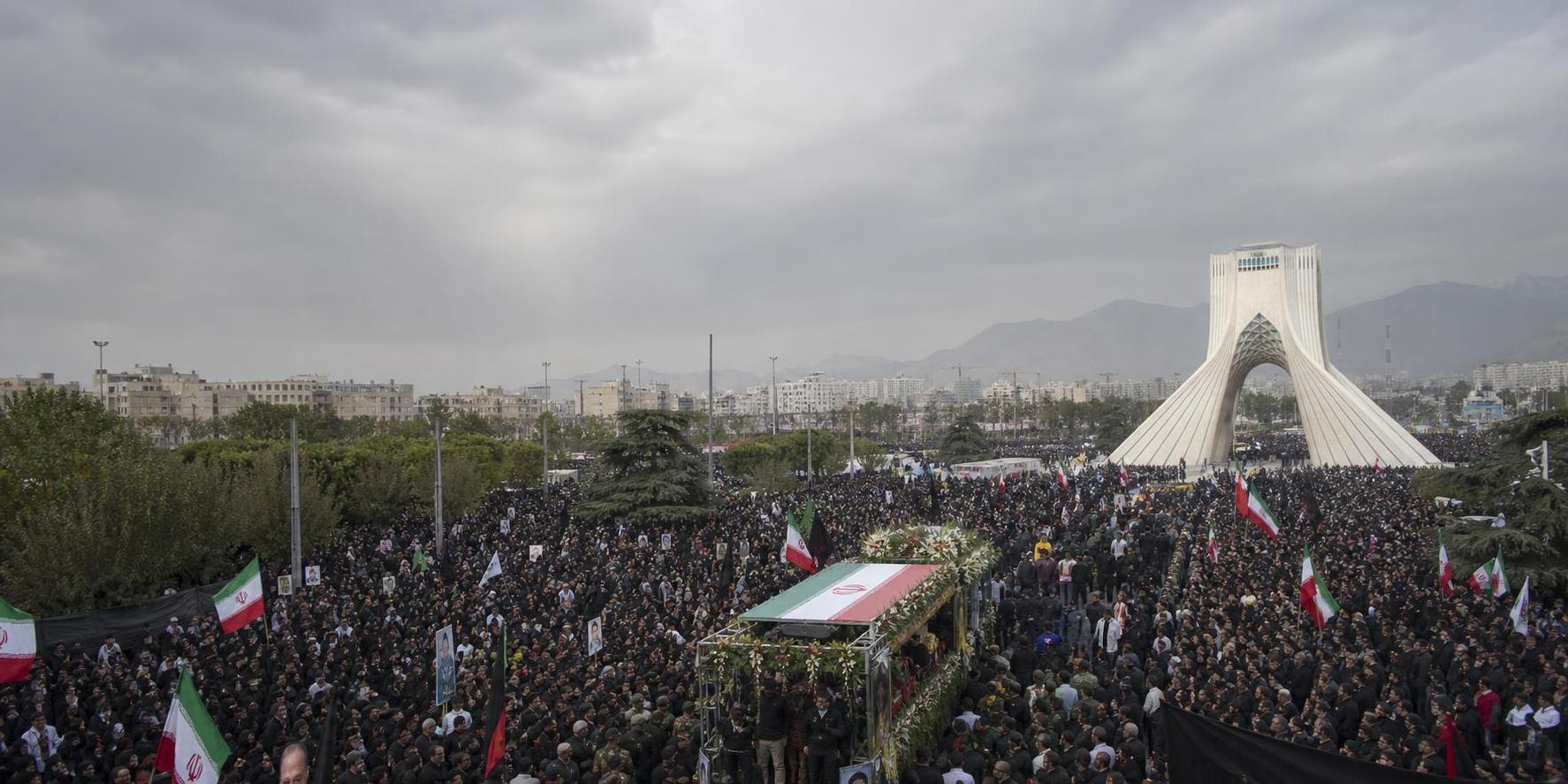
State funeral reaches peak in Tehran
The state funeral for Iran's former supreme leader, the late Ali Khamenei, reached its peak on the 6th in the capital, Tehran. Streets along the route of the large funeral procession were packed with citizens gathered to watch the coffin pass, with chants of 'Revenge on the United States' echoing through the crowd.
Memorial songs and slogans played from loudspeakers, and mourners wept as they shouted 'Our father has died' and 'We will carry on your will.' Black flags bearing fist designs lined the streets, which the leadership has positioned as a new symbol of resistance for the Islamic system.
Mojtaba Khamenei does not attend
In Japan, it is customary to send off the dead quietly, but in Iran there is a funeral culture of mourning the death of a close person with intense wailing. Mojtaba Khamenei, the late Khamenei's second son and the current supreme leader, had not appeared at any of the ceremonies by noon on the 6th. His eldest son, Mostafa, and two other sons attended the farewell ceremony on the 5th.
The New York Times reported on the 4th, citing a source in the Revolutionary Guard, that security forces decided against having Mojtaba attend to avoid an Israeli assassination attempt or the identification of his hiding place. Mojtaba had wanted to take part in some of the events, it said.
State media showed Ahmad Vahidi, the Revolutionary Guard's top commander, attending the farewell ceremony and other events. He is a hard-liner on the United States and Israel and once led the Guard's elite Quds Force. He had not been seen in public for several months.
Talks set to resume after the funeral
According to Qatar, mediation in U.S.-Iran talks is expected to resume after Khamenei's funeral ends. The two sides remain far apart over control of the Strait of Hormuz, treatment of frozen assets and nuclear development. It is also seen as an attempt to show Vahidi is alive and to keep the United States in check.
The Middle East is in the Islamic month of Muharram, a key season for Shiite Muslims to mourn martyred leaders. The state funeral strongly stirred the religious feelings of devout believers.
Asghar, 36, who came from Hamadan in western Iran, said, 'The battle with the United States and Israel is a war between humans and demons. We are walking a bright path that leads to heaven.' Shokat, 62, who said, 'God will never forgive the enemy that took our leader,' could not hold back tears as he answered questions. A man, 35, who said he had come with his four children and his wife, answered 'My name is Khamenei's soldier' when asked his name.
More than 10 million people attended the June 1989 funeral of revolutionary leader and first supreme leader Ruhollah Khomeini, which was described as one of the largest in human history, surpassing the funerals of Gandhi and Nasser. Iranian media said more than 15 million were expected to attend this funeral, but some who experienced Khomeini's funeral said the atmosphere was not as intense as it was then.
Most attendees were middle-aged and older men, and there is a view that younger generations are more focused on social freedom and their future livelihoods. Forty-seven years after the 1979 Islamic Revolution, memories of that fervor are fading.
Foreign delegations also came to offer condolences. Foreign Minister Araghchi said on his social media on the 4th that more than 70 countries attended. A memorial event will be held on the 7th in Qom, a holy city in central Iran, and burial is scheduled for the 9th in Mashhad, the holy city in northeast Iran and Khamenei's hometown.
Enjoyed this article? Share it with your network!