





China military signals US deterrence with SLBM launch into Pacific high seas
 2026-07-06
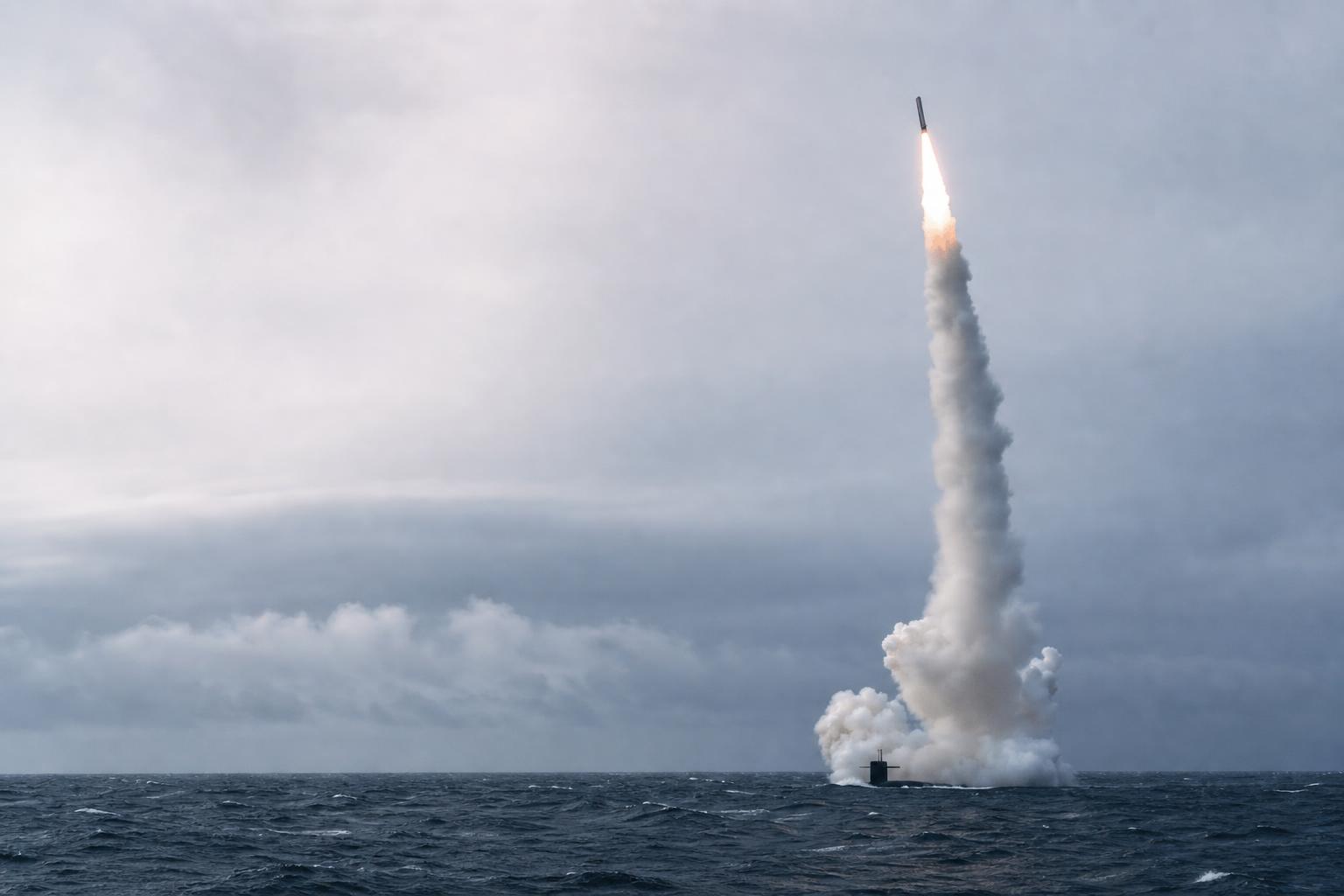
The People’s Liberation Army fired a submarine-launched ballistic missile (SLBM) toward the high seas of the Pacific Ocean on the 6th, aiming to show it can reach the US mainland and to project a stance of countering the Trump administration with military power. China’s expanding military activity in the Pacific is directly tied to Japan’s security.
Global Times, a media outlet affiliated with the Chinese Communist Party, said the launch also carried the meaning of reaffirming China’s resolve to unify Taiwan. It stressed that China’s will to achieve complete reunification should not be misjudged.
SLBM launch signals US mainland reach
The Trump administration, which backs Taiwan through arms sales and other support, is the target. Following an intercontinental ballistic missile (ICBM) launch in September 2024, China has again shown the international community that it can target the US mainland from both land and sea, underscoring its intent to deter US intervention in Taiwan.
Global Times cited military expert analysis saying the missile launched on the 6th was likely JL-3, a new type first unveiled by the Chinese military in September 2025. Its range is said to exceed 10,000 km, and it is believed to be able to reach most of the US mainland even if fired from the South China Sea or elsewhere.
The older JL-2 SLBM has a range of about 7,200 km, meaning a launch from waters near China may not have been able to reach the US mainland. In September 2024, the Chinese military also fired a single ICBM from land into the Pacific high seas, and it was widely believed to be the Dongfeng-31, which is said to cover most of the US mainland.
President Xi Jinping is scheduled to visit the United States in September at the invitation of President Trump. If Trump decides to sell arms to Taiwan before or after the visit, it would also affect Xi’s prestige. China had reason to warn the United States over the Taiwan issue.
Japan notified 90 minutes ahead
Chief Cabinet Secretary Minoru Kihara said at a news conference on the 6th that China’s military moves, combined with a lack of transparency, are a serious concern for Japan and the international community.
The Japanese Embassy in China was notified by China’s Ministry of National Defense about an hour and a half before the launch. According to a senior Japanese government official, China identified multiple flight target zones at the advance-notification stage, and one of them could have landed in Japan’s EEZ.
The official said, 'If they had tried to fire closer to Japan, it would have passed over Kyushu,' adding that the route was chosen to avoid friction with Japan.
Launch comes amid stepped-up pressure on Japan
Pacific nations were also on alert. Australia and New Zealand received notice from China. According to New Zealand Foreign Minister Peters, the missile headed toward the South Pacific. The 6th was also the day Australia and Fiji signed a mutual defense treaty setting out joint responses in the event of an attack by a third country.
China regards nuclear-powered submarines capable of long-duration submergence and long-range SLBMs as strategic weapons to block US forces from moving closer to Asia. It treats the first island chain, running from Okinawa through Taiwan and the Philippines, as the baseline for near-seas defense, and in recent years has stepped up activities beyond the second island chain linking the Ogasawara Islands and US territory Guam, enhancing its ability to operate in distant waters.
China’s expanding military influence in the Pacific is a clear threat to Japan. The missile launch took place amid a broader trend of increasing pressure on Japan.
Relations between Japan and China have continued to deteriorate since November 2025, when Prime Minister Sanae Takaichi told parliament, in response to a question about a Taiwan contingency, that it could become a 'survival-threatening situation.' China has criticized the Takaichi administration’s push to strengthen defense capabilities as 'new militarism' and has repeated provocations toward Japan.
At the same time, China is working with Russia and stepping up intimidation through naval and air power. The Chinese and Russian air forces carried out a joint flight of bombers and other aircraft over the Sea of Japan, the East China Sea and the Pacific Ocean on June 27. It was their first such exercise since December 2025.
Diplomatic stalemate raises risk of escalation
There is also a view that China raised the level of provocation after Japan and the Philippines agreed to begin talks on delineating their EEZ boundary.
No clear path has emerged for dialogue aimed at improving Japan-China ties. Communication, including through parliamentary channels, has been insufficient, leaving the situation prone to escalation.
University of Tokyo professor Shin Kawashima said China may further intensify its provocations. Citing the United States as an example of a country that strengthens its response to China while managing competition, he said Japan should normalize ties to the point where leaders and cabinet ministers can exchange visits.
Enjoyed this article? Share it with your network!