





Japan bonds face selling pressure on fiscal draft; 10-year yield tops 2.8%
 2026-07-03
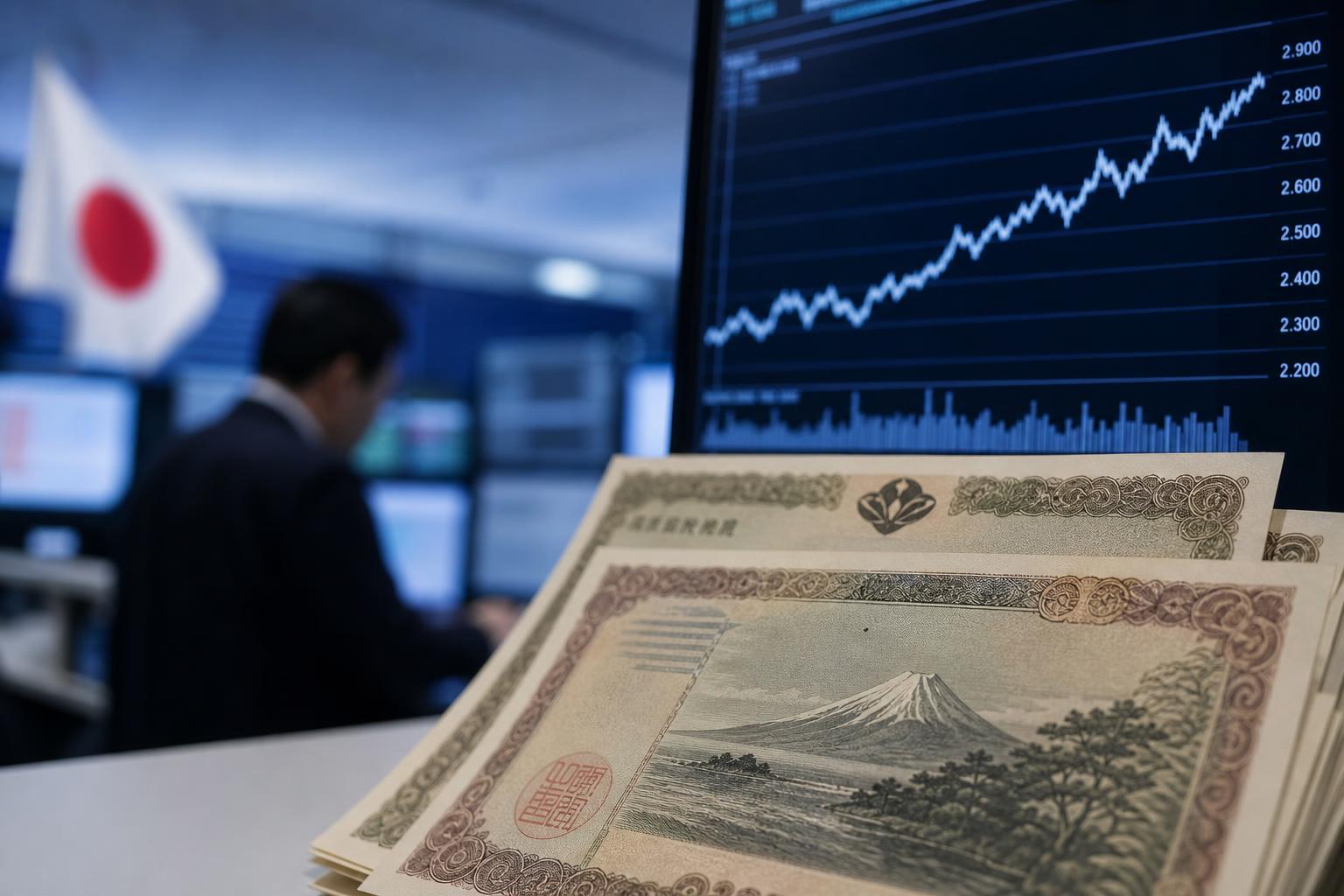
Japan bonds under selling pressure on fiscal draft
Japan's bond market is under strain. With the long-term yield within sight of the key 3% level, markets are growing more cautious about the Sanae Takaichi administration, which is seen leaning toward expansionary fiscal policy, after a draft of the government's Basic Policy on Economic and Fiscal Management and Reform.
Toshitoshi Inadome, senior strategist at Sumitomo Mitsui Trust Asset Management, said: 'You could call it a Basic Policy shock. Concerns about fiscal deterioration and the risk that the Bank of Japan falls behind in raising rates have both intensified.'
Why yields are rising
On the domestic bond market on the 3rd, the yield on newly issued 10-year Japanese government bonds, the benchmark for long-term rates, rose as high as 2.810% at one point, the highest since October 1996. Thirty years ago, the market was still in a prolonged period of monetary easing, but the following year the failures of Hokkaido Takushoku Bank and Yamaichi Securities followed one after another, deepening the financial crisis.
On the previous day, the June US employment report showed job growth below market expectations, easing bets on further US rate hikes and putting downward pressure on US yields in the American bond market. Normally, Japan's market on the 3rd would have followed that trend and rates would likely have fallen.
Even so, rates rose sharply because investors focused on fiscal concerns specific to Japan. The trigger was the draft of the 2026 Basic Policy, released on June 30. Market participants saw reasons to sell government bonds in the wording.
Focus on fiscal policy and the BOJ
On the fiscal side, the draft projected additional fiscal spending from fiscal 2027 onward at 10 trillion yen a year on a real basis, while dropping the phrase 'fiscal consolidation' that had appeared through 2025. Goken Suemasa, financial and fiscal analyst at SMBC Nikko Securities, said: 'With possibilities such as a consumption tax cut and additional defense spending also being considered, the issue of funding is being pushed back.'
Some of the wording was also taken as a call to the BOJ. The draft said appropriate monetary policy conduct was 'extremely important' and, citing the Bank of Japan Act, called for close coordination with the government. In the market, this was seen as an attempt to encourage caution again toward rate hikes that could increase debt-servicing costs under a government pursuing fiscal expansion and also weigh on the economy.
Markets are wary that government pressure could delay BOJ rate hikes. The 10-year breakeven inflation rate, which reflects expectations for Japan's inflation rate, had fallen on lower oil prices but then rebounded and moved back above 2%. Bonds are vulnerable to inflation, and if price gains strengthen further, selling could accelerate.
Looking at the breakdown of the rise in yields, market caution after the Basic Policy draft appears clearer. In general, long-term yields can be decomposed into expectations for future short-term rates and the term premium, the extra yield demanded for holding bonds over time.
According to an estimate by Shotaro Kugo, senior research fellow at the Institute for International Monetary Affairs, most of the recent rise can be explained by the term premium. Reflecting concerns about fiscal conditions and inflation, it rose to around 1.7% as of the 2nd, the highest level in 20 years, while expectations for future short-term rates have been broadly flat.
Supply, demand and the outlook
Inside the BOJ, some officials say there is 'no change in the approach of judging monetary policy responsibly while watching economic and price developments.' The June nationwide corporate short-term economic survey, or Tankan, released on the 1st, also showed business sentiment among large manufacturers improving for a fifth straight quarter, a factor that supports the rate-hike path.
Fiscal concerns are likely to persist toward year-end, when work on the fiscal 2027 budget becomes more concrete. Views on rates could be pushed higher along with them. Takashi Yamawaki, head of bond research at J.P. Morgan Securities, said: 'The rise in rates could continue sluggishly, and even if they reach 3%, buyers may not emerge.'
Demand for government bonds is weak. A 10-year bond auction conducted by the finance ministry on July 2 was lackluster, with little investor buying. Super-long bonds, which have maturities of more than 10 years and tend to reflect fiscal risk more directly, have also been sold, and the 30-year yield climbed above 4% for the first time in a month and a half.
The government is not ignoring the issue. Finance Minister Satsuki Katayama said at a post-cabinet meeting press conference on the 3rd that, regarding rising long-term yields, 'we will estimate appropriate government bond issuance and the scale of fiscal spending, and maintain confidence in the government bond market and fiscal sustainability.' The long-term yield on the 3rd closed at 2.785%, down from the previous day.
Kugo said that to curb the rise in yields, 'it is important to set out a policy of ensuring a balance between spending and funding over the long term.' If the BOJ falls behind the rise in prices, it may be forced into much larger rate hikes later. Market participants also view it as essential for the government to acknowledge the BOJ's rate-hike path in order to stabilize the bond market.
Enjoyed this article? Share it with your network!