





BYD overseas sales jump 70% as Chinese cars top Japan in Europe
 2026-07-02
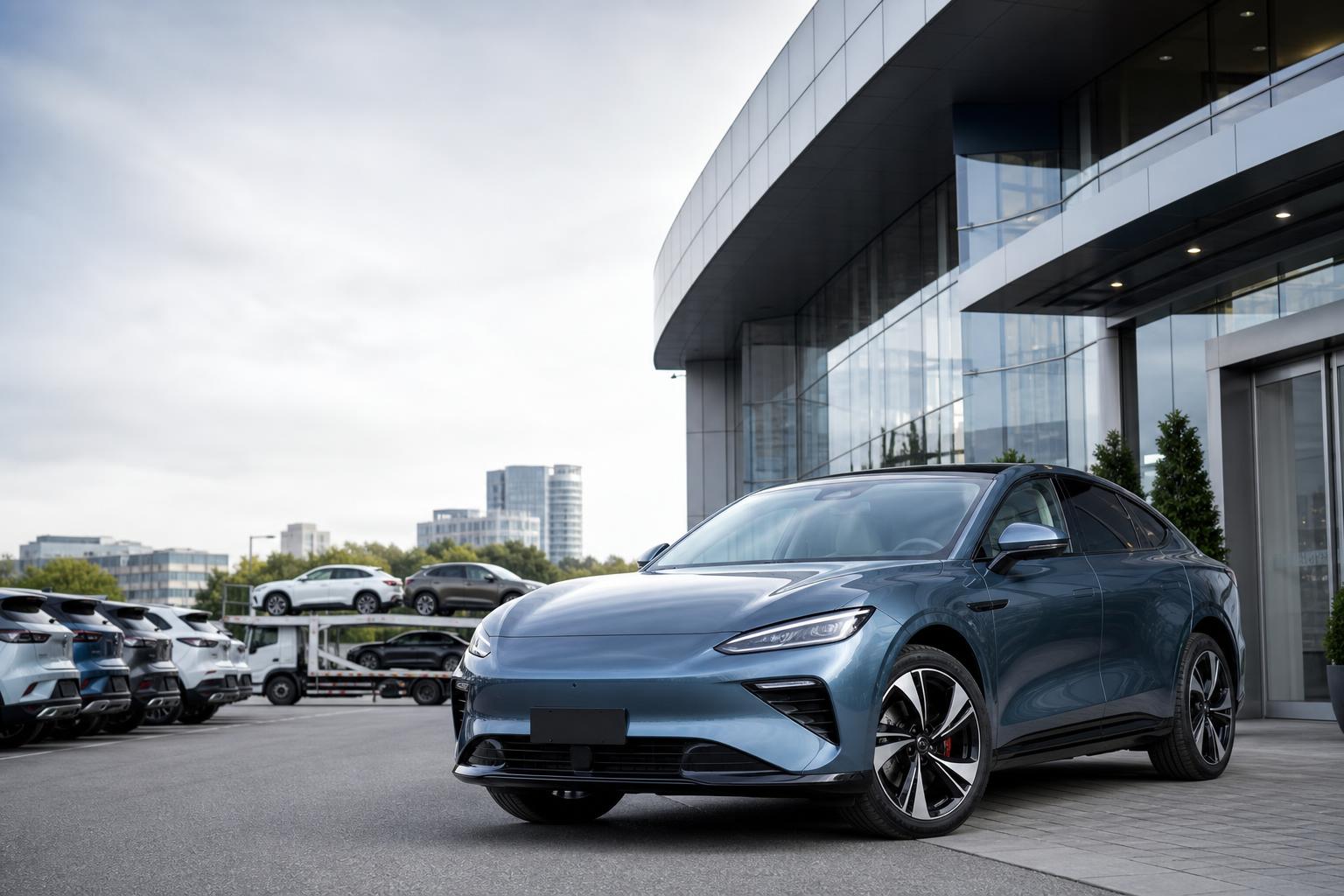
Chinese automakers overtake Japanese rivals in Europe
Sales by Chinese automakers in Europe have overtaken those of Japanese peers. China’s passenger car market share in Europe surpassed Japan’s for the first time in May. Led by BYD, overseas sales from January to June rose 70% from a year earlier, with the company maintaining price competitiveness even after additional European Union tariffs.
BYD leads the gains
According to May new car sales data from the European Automobile Manufacturers' Association (ACEA), BYD, SAIC Motor, Zhejiang Geely Holding Group, Chery Automobile and Zhejiang Leapmotor Technology sold a combined 138,410 vehicles across 31 major European countries, up 65% from a year earlier. The six Japanese makers Toyota Motor, Nissan Motor, Suzuki, Mazda, Honda and Mitsubishi Motors sold a combined 130,424 vehicles, down 3%, leaving Chinese automakers 6% ahead of Japanese rivals.
From April, ACEA began including three Chinese automakers, including Geely, in its statistics and changed the treatment of Volvo Cars to count it under its parent, Geely. Even so, as of April, Japanese automakers' 127,064 vehicles still exceeded the Chinese total of 125,864 by 1%. Over the past two years, the number of months in which monthly sales exceeded the same month a year earlier was limited to two for Nissan, five for Suzuki and seven for Mazda, while SAIC reached 17 and BYD, which was added to the statistics from July 2025, reached 11.
Price advantage holds despite tariffs
BYD said on July 1, 2026, that its overseas passenger vehicle sales, including pickup trucks, rose 70% from a year earlier to 789,367 units in the January-June period. In June, overseas sales accounted for 44% of its passenger vehicle sales, up 20 percentage points from a year earlier. Chairman Wang Chuanfu said at a shareholders' meeting in early June that overseas sales in 2026 were expected to exceed 1.6 million vehicles. Overseas passenger vehicle sales in 2025 are expected to reach 1.04 million, more than 1.5 times the level a year earlier.
The EU introduced additional tariffs in the autumn of 2024, saying Chinese-made EVs were being sold at unfairly low prices and threatening Europe's auto industry. It added up to 35.3% on top of the existing 10% duty, for a total tariff of 45.3%. Even so, Chinese automakers still have strong cost competitiveness. According to price comparison site Electric Vehicle Database, BYD's compact EV Dolphin Surf Boost starts at 26,990 euros, or about 5 million yen, in Germany, making it 3% cheaper than Renault's comparable model, the Renault 5 E-Tech.
European production and subsidies offer support
In addition to EVs, BYD plans to increase exports to Europe of plug-in hybrid vehicles (PHVs), which are exempt from the additional tariffs. Its May sales in 31 major European countries were 2.4 times higher than a year earlier.
A key reason for its focus on Europe is sluggish domestic demand in China. BYD sold 1,808,511 new vehicles in the January-June period of 2026, down 16% from a year earlier. The first-half decline, the first in six years, was largely due to intensifying price competition and weak domestic demand.
There is also a strong move in overseas markets to target Europe. Germany revived subsidies in January 2026 after abolishing them in December 2023, launching a scheme that offers up to 6,000 euros for purchases of new EVs and PHVs. Sweden also resumed subsidies for low-income households, while Italy expanded support.
Japanese automakers are highly regarded for fuel efficiency in hybrids, but their EV lineups are limited and they have not fully benefited from incentives in various countries. Beatrix Keim of the Center Automotive Research said European consumers do not consider Japanese cars as options when looking to buy an EV. Nissan also named Japan, the US and China as priority markets in its long-term vision released in April 2026, while its mention of Europe was limited.
To avoid the additional tariffs, Chinese automakers are also stepping up production within the EU. Leapmotor will begin assembling SUVs at a Stellantis plant in Spain. Chery opened a headquarters for its European operations in Barcelona in April. At Nissan's underused plant in Sunderland in northern England, the two companies are discussing a plan to merge the site's two production lines into one and use the freed-up line to build Chery vehicles. As the presence of Japanese cars fades, the influence of Chinese vehicles is likely to grow further in Europe.
Enjoyed this article? Share it with your network!