





Sony to halt new PS disc sales from January 2028
 2026-07-02
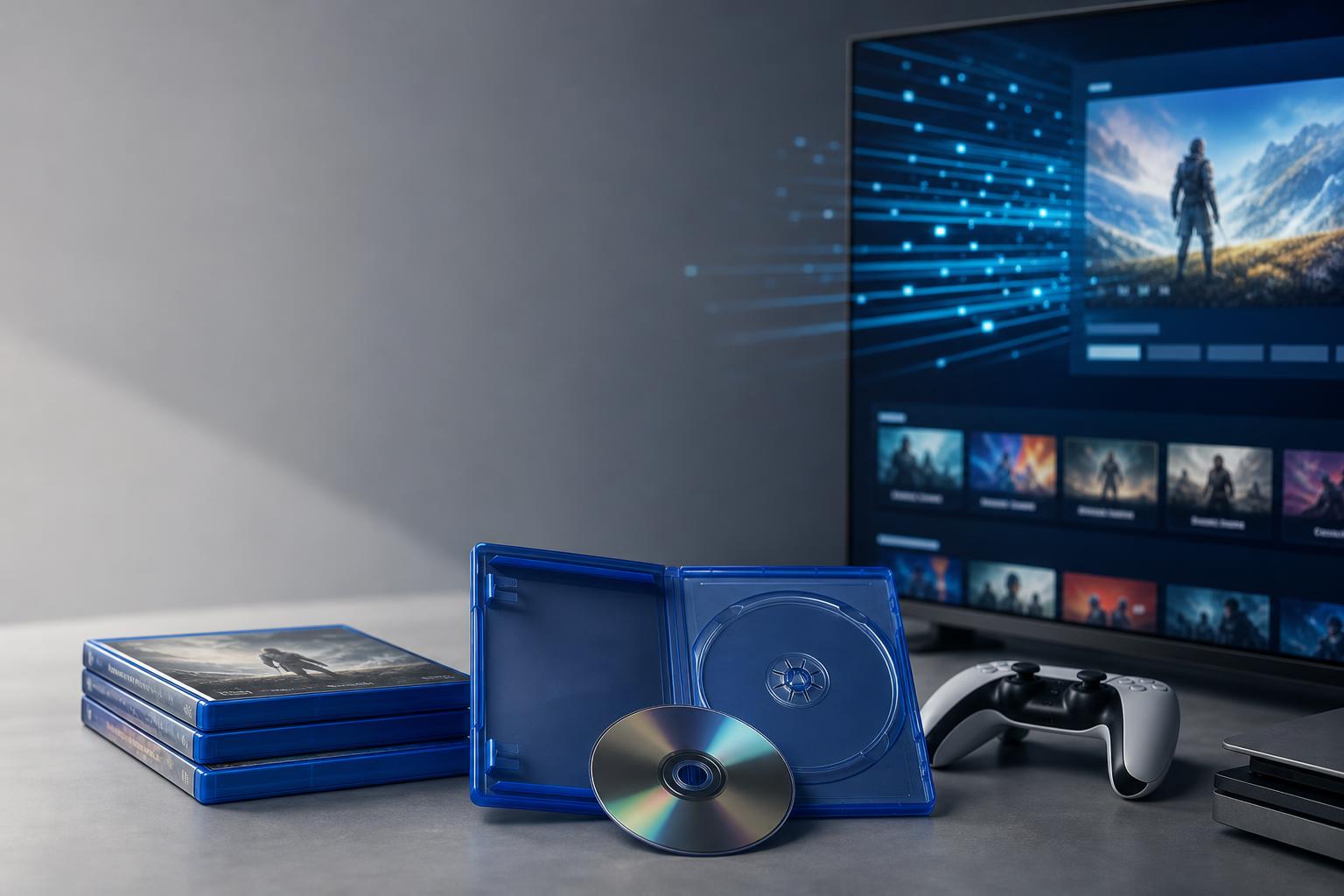
Sony Group will end disc sales for new software for its PlayStation (PS) home game console. Following music CDs and DVDs, games will also move to online transactions. The disc-based software that has supported Sony's growth since the PS launch in December 1994 will come to the end of its role.
Sales to be consolidated into downloads
Sony Interactive Entertainment (SIE), the game division, announced the move in a blog post on the 1st. Software released from January 2028 onward will no longer be sold on discs at retail stores and will be offered only in download form. SIE said it will 'respond to changing consumer preferences.'
Recently, discs accounted for just 5% of software sales of 2.64 trillion yen for the year ending March 2026. At present, online transactions, including add-on charges such as in-game item purchases, account for the majority, in addition to downloads.
Disc shrinkage and an industry shift
For software developers, download versions are easier to distribute at lower cost than disc versions. They also make it easier to avoid price erosion caused by piracy and secondhand circulation, and can help raise average revenue per customer more easily than one-time sales by steering users toward subscription and add-on billing.
Sony released a disc-free model of its PS5 console for Japan in 2025. Given the digital shift the company has been pursuing, ending discs can be seen as a natural transition.
Piers Harding-Rolls of British research firm Ampere Analysis posted on social media on the 1st that it was 'an industry turning point.' He also said that for the next-generation model of the PS5, 'disc-less will become the standard.'
US media outlet The Verge reported on the 1st that Microsoft also plans to end disc production for its Xbox game consoles soon. By contrast, Nintendo, which has many young users including elementary and junior high school students, has been slower to shift to digital, and digital sales remain just over 50% of total software sales.
From cartridges to discs
At the launch of the original PS in 1994, cartridge-based software such as Nintendo's Super Famicom dominated the industry. Sony, however, prioritised capacity and processing performance and chose the disc format widely used for music CDs. Development was also carried out under its music subsidiary, which had expertise in CD technology.
The adoption of discs made it possible to develop games with high resolution and smooth motion. It also had an advantage in manufacturing costs, with latecomer Sony turning the tables on Nintendo, which had stuck with faster-loading cartridges. By popularising discs, which were easier to distribute in large volumes, the PS grew into one of the world's leading game console makers.
In a later dispute over DVD standards, Sony led the Blu-ray format and helped drive its adoption by positioning the PS as a playback device.
Online sales are now mainstream
Sony began its disc-free software distribution 'Store' in 2006. In a speech in September 2025, SIE President and CEO Hideaki Nishino looked back on the period, saying, 'At first, there were few titles and it was niche. Even internally, people were wary that it would threaten our core disc distribution business.'
Since then, improved communications infrastructure and cooperation from developers have gradually expanded online revenue. Nishino stresses that, because no sales network is needed, even smaller developers have found it easier to deliver Japanese software directly overseas.
As games became playable on smartphones and PCs as well, the shift to online software distribution accelerated further. One casualty of these changes has been game stores that sold physical software. US major GameStop has 2,200 stores worldwide, down 70% over the past decade.
In Japan, Geo Holdings, which has focused on games and video rentals, is diversifying its business around secondhand goods other than software.
Sony once put strong effort into developing and producing media for recording video and music, in addition to televisions and music players. But today, the mainstream way to enjoy content is online without physical media, as with YouTube for video and Spotify for music.
In recent years, Sony Group has shifted its focus toward producing content such as music and anime, strengthening a model in which it earns money from intellectual property (IP). By parting with the disc legacy that supported its game business and deepening its contact with users, the company aims to further reinforce its earnings base.
Enjoyed this article? Share it with your network!