





Samsung, SK Expand Domestic Investment on Government Support
 2026-06-29
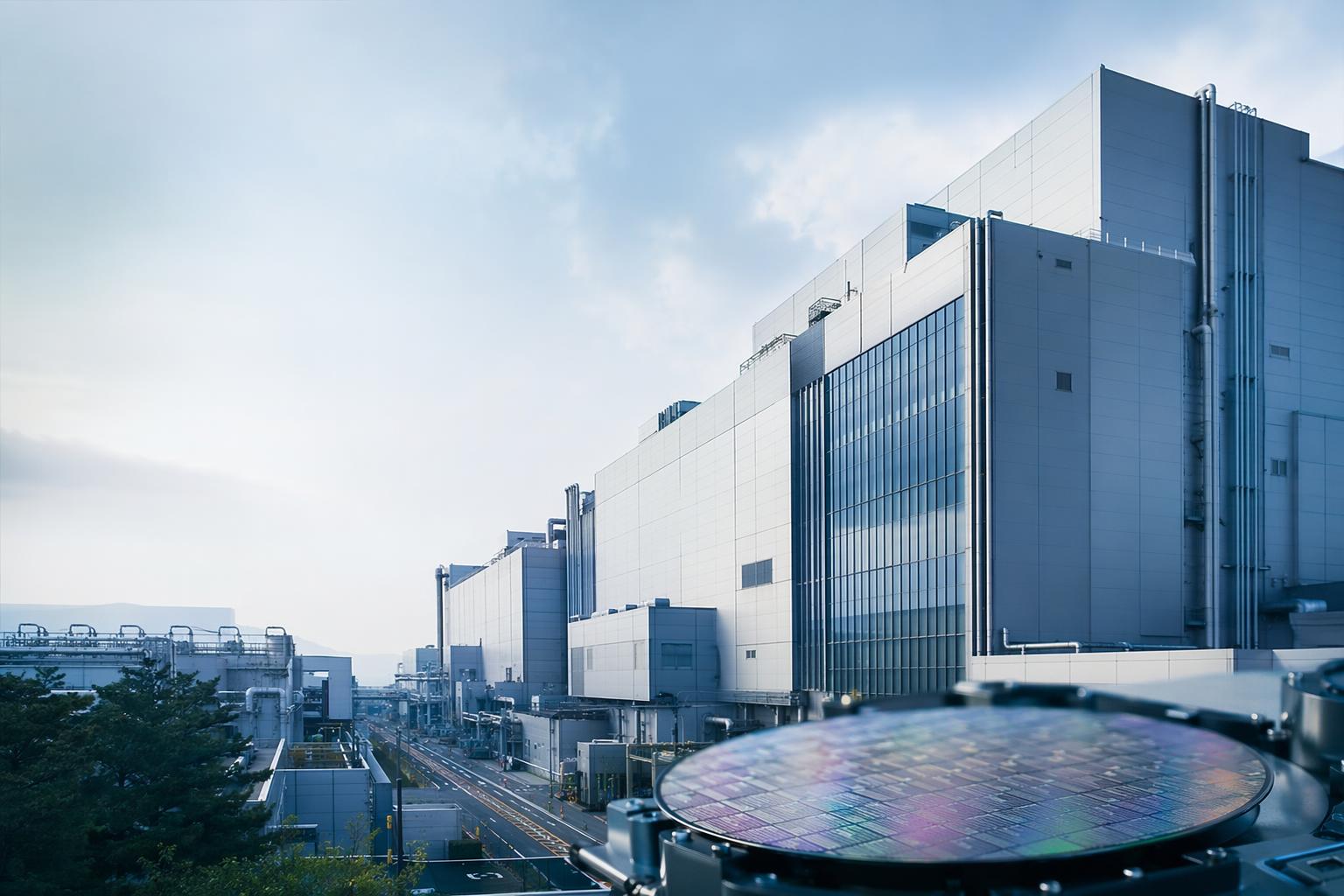
Large investment backed by government support
Samsung Electronics and SK Hynix said on the 29th that they will build a total of four semiconductor factories in South Korea. The combined investment will reach 800 trillion won, or about 83 trillion yen. The companies decided on the large-scale investment, supported by government infrastructure aid, against a backdrop of growing demand for artificial intelligence, or AI.
HBM demand drives investment
On the 29th, the South Korean government announced the plan as one of three major projects for a great leap forward for the Republic of Korea. The investment event was attended by President Lee Jae-myung, along with Samsung Electronics Chairman Jay Y. Lee and SK Group Chairman Chey Tae-won.
The government said it will promote private investment and state support in three areas: semiconductors, physical AI and AI data centers. It plans to double the domestic memory chip production capacity within the next five years.
Samsung and SK will build the factories in Gwangju in southwestern South Korea as a likely candidate site. Samsung Chairman Jay Y. Lee said, 'Production capacity is insufficient to meet explosive demand. This is a speed race.'
Behind the large investment is continued growth in demand for high-bandwidth memory, or HBM, used in AI data centers. Samsung and SK together account for roughly 80% of the global HBM market. Securities firms expect both companies to post operating profit of about 30 trillion yen in the year ending December 2026. Interest in the next investment plan had also risen.
Existing plans pulled forward
Both companies have already been expanding output at home. In addition to boosting capacity at existing plants, they are investing 600 trillion won through the 2040s to develop a semiconductor mega cluster centered on Yongin, near the capital region.
According to the government's announcement on the 29th, Samsung plans to bring forward completion of the cluster by seven years, while SK plans to do so by 12 years. SK will begin operating the first new plant in Yongin as early as 2027 and will gradually launch facilities with Samsung through the 2030s.
SK Group Chairman Chey Tae-won said 'The severe supply shortage will continue,' underscoring the need to secure sites for future factory construction.
Regional development policy also helps
The South Korean government's regional development policy also supported this investment. In South Korea, where population and industry are increasingly concentrated in Seoul, hollowing out of industry and population outflow in the regions have become issues. Revitalizing regional economies is one of the Lee Jae-myung administration's key policies.
Gwangju, a possible site for the factories, is a region with a weak industrial base and is sometimes called an industrial graveyard. At the investment event, President Lee said, 'These two men, who made difficult decisions for the future of the people, are national heroes,' and at one point bowed to the two chairmen.
As AI adoption spreads, the semiconductor supply-demand crunch is expected to continue beyond 2027. Kwon Seok-jun, a professor at Sungkyunkwan University, said, 'AI demand is growing, corporate earnings are strong, and political interests also aligned, so the investment announcement came at this timing.'
On the other hand, the memory market also faces risks such as the rise of Chinese companies and a slowdown in AI investment. Professor Kwon said, 'Rather than chasing speed alone, companies should move ahead with stable and flexible investment plans.'
Enjoyed this article? Share it with your network!