





U.S. Pacific carriers held to one ship for five months as China commissions third
 2026-06-24
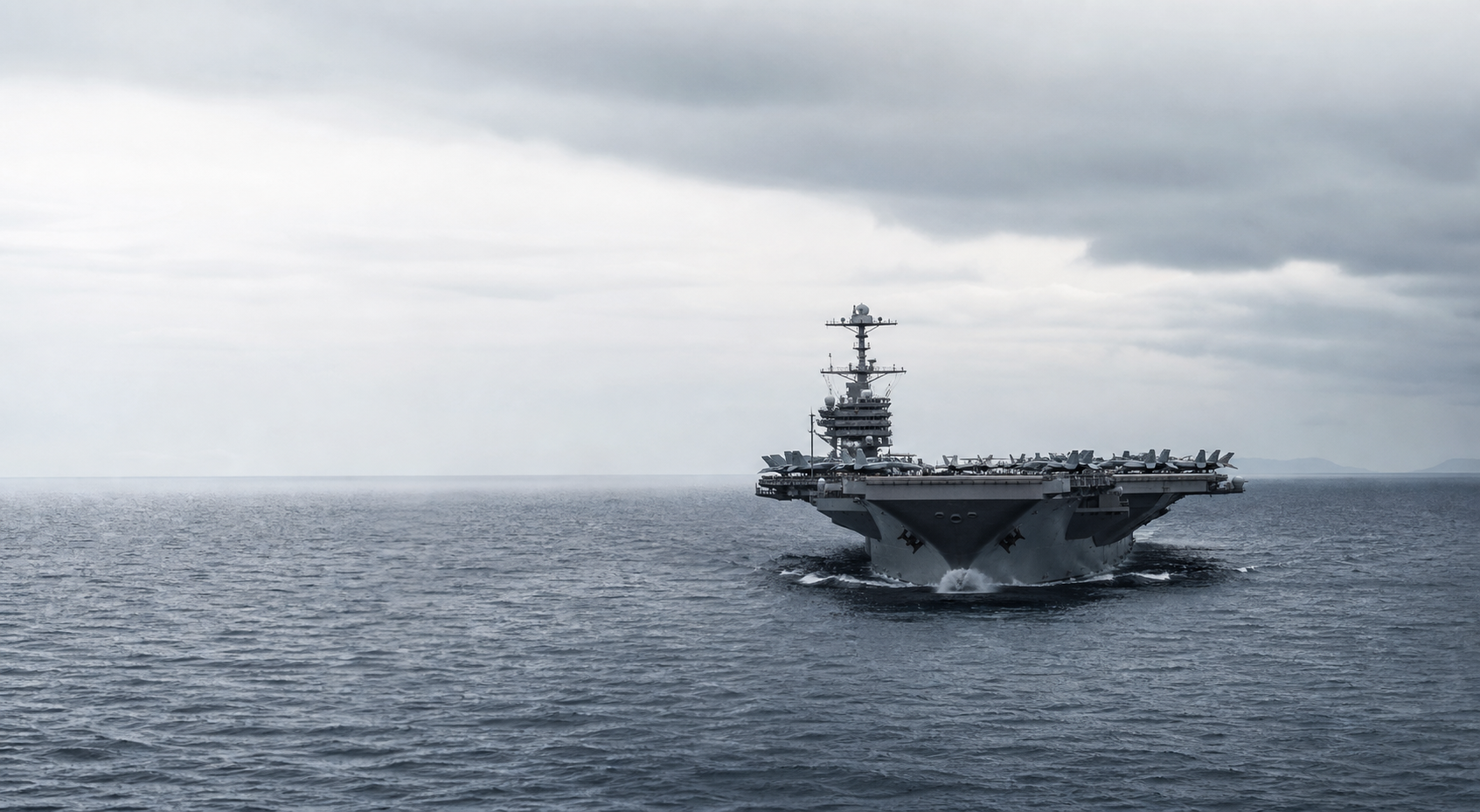
The U.S. Pacific Command's aircraft carrier deployment has declined. It had traditionally operated two carriers, but since the start of the year it has remained at one, deepening concerns over the military balance in the Pacific.
Shift in deployment
Based on location data released by the U.S. Naval Institute, there were only three weeks in January since the start of the year when two or more U.S. aircraft carriers were in the U.S. Pacific Command's area of responsibility. In the same period last year, the figure was 24 weeks. The only U.S. carrier in the Pacific has been the George Washington, homeported at the U.S. Navy's Yokosuka base in Japan, and that single-carrier posture has continued since January, entering its 21st week in late June. It has continued to set a new longest stretch in a little over five years since 2021.
Concentration of force in the Middle East
After the U.S. attack on Iran at the end of February, the U.S. military redirected three of its seven active carriers to the Middle East. The move highlighted the difficulty of balancing operations in other regions, including East Asia, while allocating forces to the Middle East.
Operations with an eye on China
The U.S. military has said it aims to maintain the capability to deal with two conflicts occurring in different regions at the same time. Aircraft carriers are central to that effort, able to deploy flexibly around the world with their onboard aircraft. The U.S. Navy operates 11 carriers, about half of the global total. In recent years, with China's military buildup and a possible Taiwan contingency in mind, it has dispatched carriers based on the U.S. West Coast to the Pacific in addition to the one stationed at Yokosuka. Since 2016, it has arranged for two or more carriers to operate in the same area almost every year.
In 2022, it conducted an exercise in the South China Sea involving two aircraft carriers. Martin, then commander of the carrier strike group, stressed that the U.S. military could deploy overwhelming naval power to defend the Indo-Pacific region and also emphasized the importance of protecting sea lanes. A two-carrier posture broadens the room to respond even if maintenance is needed on one of the carriers. Taking into account the time required to cross the Pacific, the force has maintained readiness on a rotating basis.
China has been strengthening its naval power and expanding its operating range in the Pacific. In June 2025, both of its carriers were confirmed to be operating on the Pacific side at the same time for the first time, and in November that year its third carrier, the Fujian, entered service.
Japan's response
In Japan, there is concern that the Pacific posture of the United States, its only ally, could become stretched thin. There is also growing momentum to expand defense cooperation with like-minded countries such as Australia, New Zealand and South Korea. Three national security documents are scheduled to be revised by year-end, and the Liberal Democratic Party has urged the government to achieve a transformation in defense capabilities within five years in terms of both equipment and structure, with an eye to increasing defense spending.
The proposal said there is a gap in Pacific defense and called for improvements in structure and equipment. It said that in the event of a prolonged war, an attack on Japan from the Pacific side would also be possible, expressing a strong sense of urgency.
Enjoyed this article? Share it with your network!