





Unmanned warfare surges as Ukraine war spreads military know-how
 2026-06-22
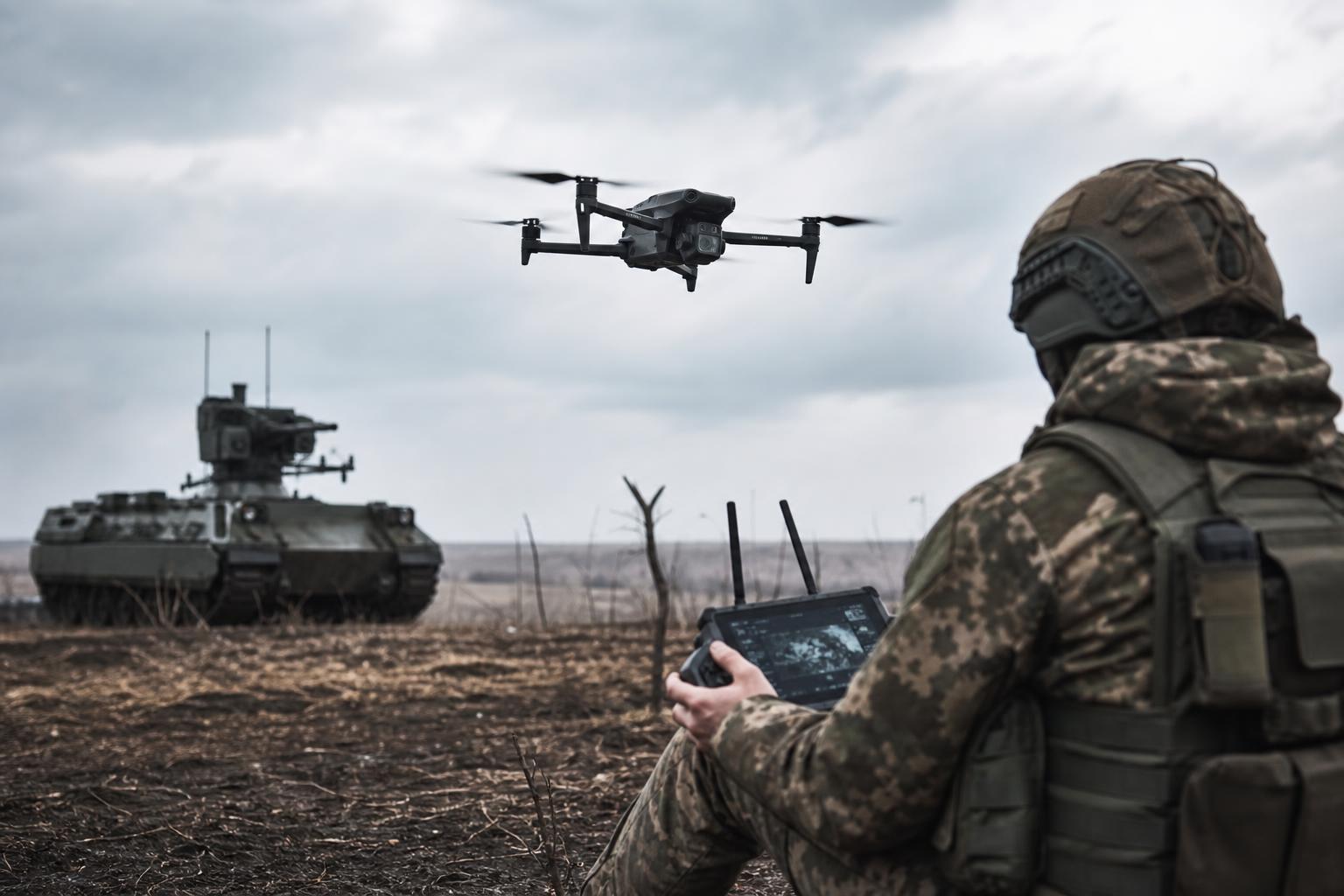
The Ukraine war is accelerating changes in weapons development and tactics. Unmanned warfare centered on drones and electronic warfare is spreading, and countries are seeking to incorporate lessons learned on the battlefield into efforts to strengthen their own defences.
Battlefields reshaped by Ukraine and Russia
In World War I, tanks shaped the course of the fighting, while in World War II, radar and codebreaking tipped the balance. In the current Ukraine war as well, cheap drones are being used to destroy tanks and ships, rewriting the rules of war. Russia is also deploying drones on a large scale, and the expansion of unmanned warfare is advancing at a pace close to a military revolution.
Latest lessons learned from exercises in Estonia
The three Baltic states, close to Russia, are a leading example of countries closely watching these changes. At Estonia's joint military exercise 'Spring Storm' on May 14, where Reuters reported from the ground, more than a dozen countries including the United States, Britain and France took part, and training was held in reconnaissance and attacks using drones. In anticipation of Russian attempts to access communications illegally, participants were asked to switch off their smartphones.
Ukraine's military was also invited to the exercise, sharing the latest unmanned warfare technology. Colonel Kalmus of the Estonian armed forces, who led the drill, said Estonia was lagging behind Russia and Ukraine in drones and electronic warfare and needed to catch up quickly. According to the Ukrainian think tank State Watch, the country's drone production rose from about 1,200 units in 2022 to about 1.7 million in 2024, an increase of roughly 1,400 times. Russia also raised its 2024 production target to 1.4 million drones.
Ripple effects extend to North Korea and China
The changes on the battlefield are also spreading to neighbouring countries. North Korea, the only third country to continue supporting Russia's deployment of troops, is said to have sent tens of thousands of soldiers so far, with some expectations it could send an additional 25,000 to 30,000. North Korea can directly learn the most advanced fighting methods on the Ukrainian battlefield and is also believed to be receiving support from Russia in drones, electronic warfare, reconnaissance satellites and missile technology.
Analyses by South Korean intelligence agencies and others suggest North Korea may improve its ability to operate multiple drones simultaneously and to attack enemy aircraft with electronic weapons. It is also said to have supplied the ballistic missile KN23 to Russia, and if live-fire data are shared, there is a risk this could help improve accuracy. Lee Shin-ae, a researcher at the Sasakawa Peace Foundation, said North Korea's military may be absorbing Russia's way of fighting ahead of other countries, posing a major threat to security in Asia.
Russian training also extends to China. Ukraine's Kyiv Post reported in June 2025 that the Russian military planned to accept and train about 600 Chinese military personnel by the end of the year. According to Reuters, the Chinese military also secretly invited Russian military personnel in the second half of last year and conducted training inside China. China has already been one of the world's largest drone producers, and in March this year it publicly demonstrated Atlas, an unmanned system that links nearly 100 drones.
Challenges remain for Japan and South Korea
Even as the nature of war changes in Ukraine, there is no clear outlook for when Russian aggression will end. Military innovation is likely to continue on the battlefield, and the framework in which the United States and Europe, as well as China and North Korea, learn from it is also unlikely to change for now.
Meanwhile, Japan and South Korea have not stepped up direct support for Ukraine's military, and security-related exchanges remain limited compared with those of the United States and Europe. Still, there is room to deepen cooperation in drone technology at the private sector level. Both countries are being asked to stop viewing Ukraine only as a recipient of support and instead treat it as a partner from which they can learn military expertise.
Enjoyed this article? Share it with your network!