





Europe seeks framework for trusted access to U.S. frontier AI
 2026-06-17
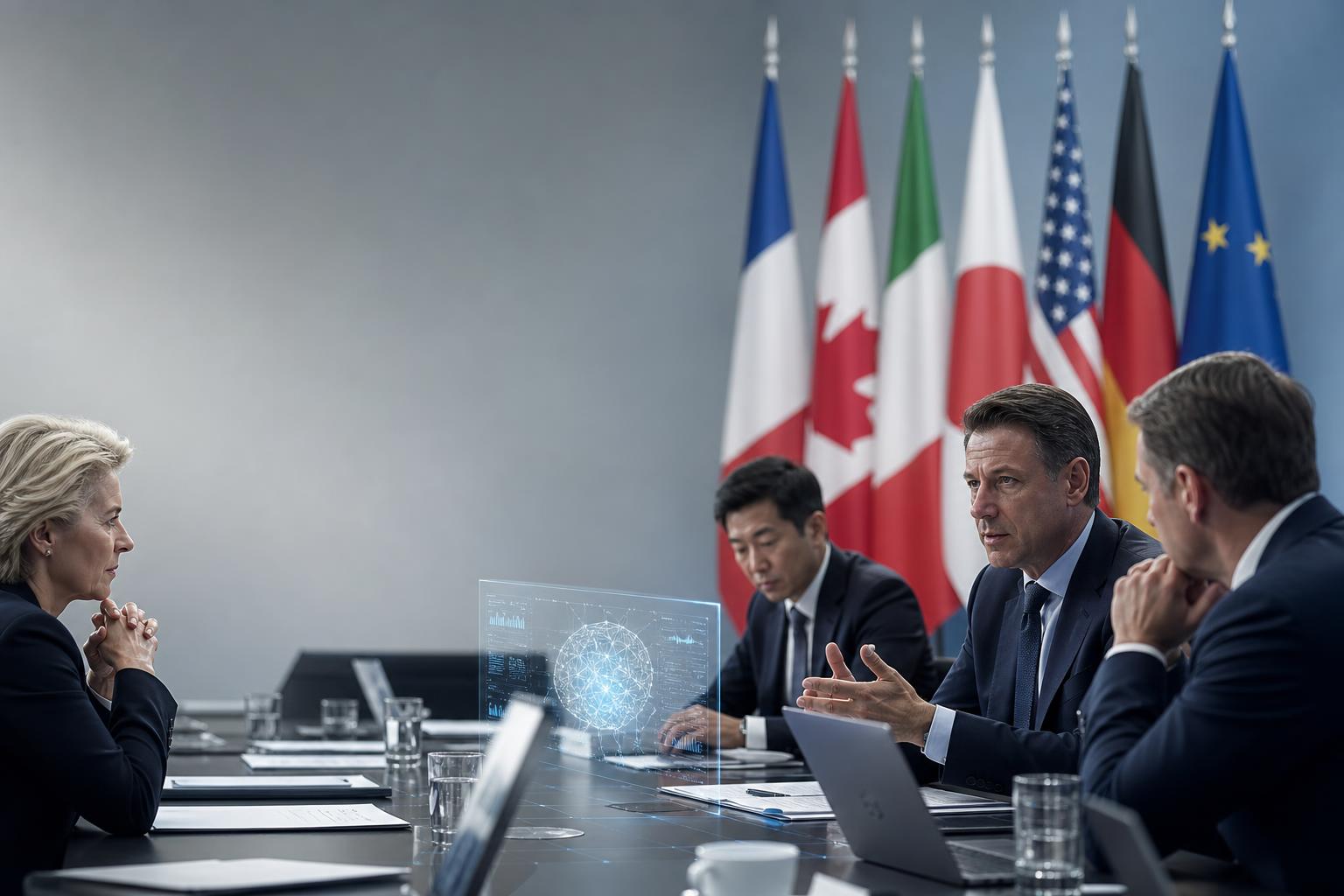
Europe presses U.S. ahead of G7
European countries called for a framework that would allow the United States' most advanced artificial intelligence (AI) to be offered to 'trusted foreign governments and companies' as the Group of Seven leaders' summit convened. Several U.S. and European media outlets reported the move.
FT report and U.S. Commerce Department action
According to the Financial Times and others, on the 15th, the opening day of the summit, officials from participating countries discussed with U.S. Commerce Secretary Howard Lutnick a mechanism for providing U.S. frontier AI to 'trusted partners.'
On the 12th, the U.S. Commerce Department instructed U.S. Anthropic, under the Export Control Reform Act (ECRA), not to provide its 'Claude Mutos' and 'Fable' to foreign nationals without permission. Anthropic halted the provision on the same day. It was not clear whether the U.S. government accepted the European proposal. As of the night of the 16th, morning of the 17th in Japan time, the White House had not responded to a request for comment from Nikkei.
Fight over AI regulation
G7 leaders will discuss AI safety at a lunch on the 17th attended by chief executives of major AI companies. Anthropic CEO Dario Amodei, OpenAI CEO Sam Altman and more than a dozen others are expected to take part, and the regulation and provision of frontier AI are likely to be on the agenda.
The United States has pursued AI policy under the Trump administration that emphasizes corporate autonomy, but the tide is starting to turn following the debut of Claude Mutos in April. On June 2, President Trump signed an executive order for the government to review frontier AI in advance, revising his deregulation approach.
Europe, which has emphasized regulation, also seeks a shift
Europe has put regulation ahead of its own competitiveness. In May 2024, the European Union enacted the world's first comprehensive AI law, classifying AI risks into four levels and imposing various obligations on companies.
Meanwhile, former European Central Bank President Mario Draghi in September 2024 published a report criticizing EU regulations. The EU has begun moving toward deregulation, but there is a view that the gap with the United States and China widened in the meantime.
Startups such as France's Mistral AI are competing with U.S. players by publishing AI technical specifications and increasing the number of companies using their models. In April 2026, Canadian AI company Cohere announced a merger with Germany's Aleph Alpha. There are also signs of a 'middle power' movement that brings together smaller players.
The Trump administration says openly that it aims for 'monopoly' in the AI industry. French President Emmanuel Macron, the G7 chair, has a strong interest in AI, and Japan and European countries want to avoid excessive dependence on U.S. technology. Regulation or competition promotion, unilateral leadership or multilateral cooperation — the race in AI is beginning to affect diplomatic and military power as well.
Enjoyed this article? Share it with your network!