





Kioxia briefly hits 50 trillion yen in market value, second in Japan
 2026-06-16
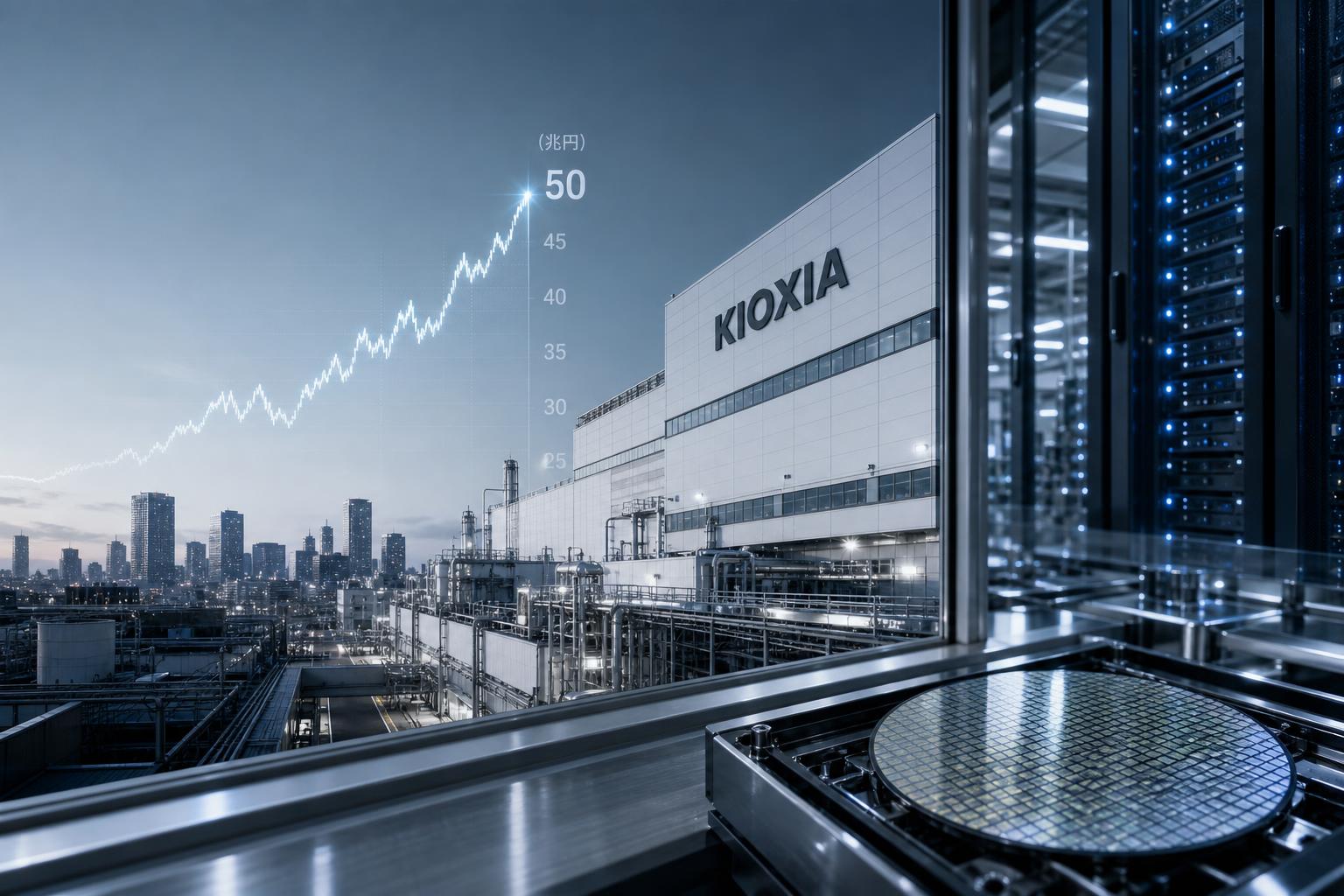
Kioxia's market capitalization briefly reached 50 trillion yen on the 16th, making it the second Japanese listed company to do so. Growing demand for semiconductor memory, driven by investment for artificial intelligence (AI), is drawing buyers on expectations for medium- to long-term earnings growth.
Stock price surges this year
On the Tokyo Stock Exchange on the 16th, Kioxia shares extended gains and at one point rose as much as 7% from the previous close. The stock has climbed roughly ninefold from the end of last year, rapidly inflating the company's market value.
Earnings outlook lifts shares
Until now, only Toyota Motor had ever seen its market capitalization exceed 50 trillion yen. NTT in 1987 and NTT DoCoMo in 2000 both remained in the 40 trillion yen range.
According to QUICK consensus, Kioxia's net profit for the year ending March 2027 is expected to rise ninefold from the previous fiscal year to 494.48 billion yen, and expand further to 634.01 billion yen for the year ending March 2028. Demand for the semiconductor memory the company makes is surging, driven by robust capital spending by US hyperscalers.
Longer contracts to stabilize profits
Memory supply has until now mainly been sold under one-year contracts, but the share of multi-year contracts is rising recently. 'Several hyperscaler customers want to sign long-term contracts not only for 2028 but also from 2029 onward,' President Hiroo Ota said.
The semiconductor market has repeatedly gone through boom and bust cycles. Kioxia posted a net loss for the year ended March 2024. If long-term contracts increase, price and volume fluctuations should be restrained, helping stabilize earnings.
There is also caution over the sharp rally in the shares. US SpaceX, which went public through an initial public offering (IPO) on the 12th, is said to have a price-to-sales ratio (PSR) of more than 100 times, drawing warnings of overheating. Kioxia could also enter a short-term correction phase if triggered by changes in global conditions or other factors.
Enjoyed this article? Share it with your network!