





Buyers rush in from students to Saudi prince as SpaceX soars on debut
 2026-06-16
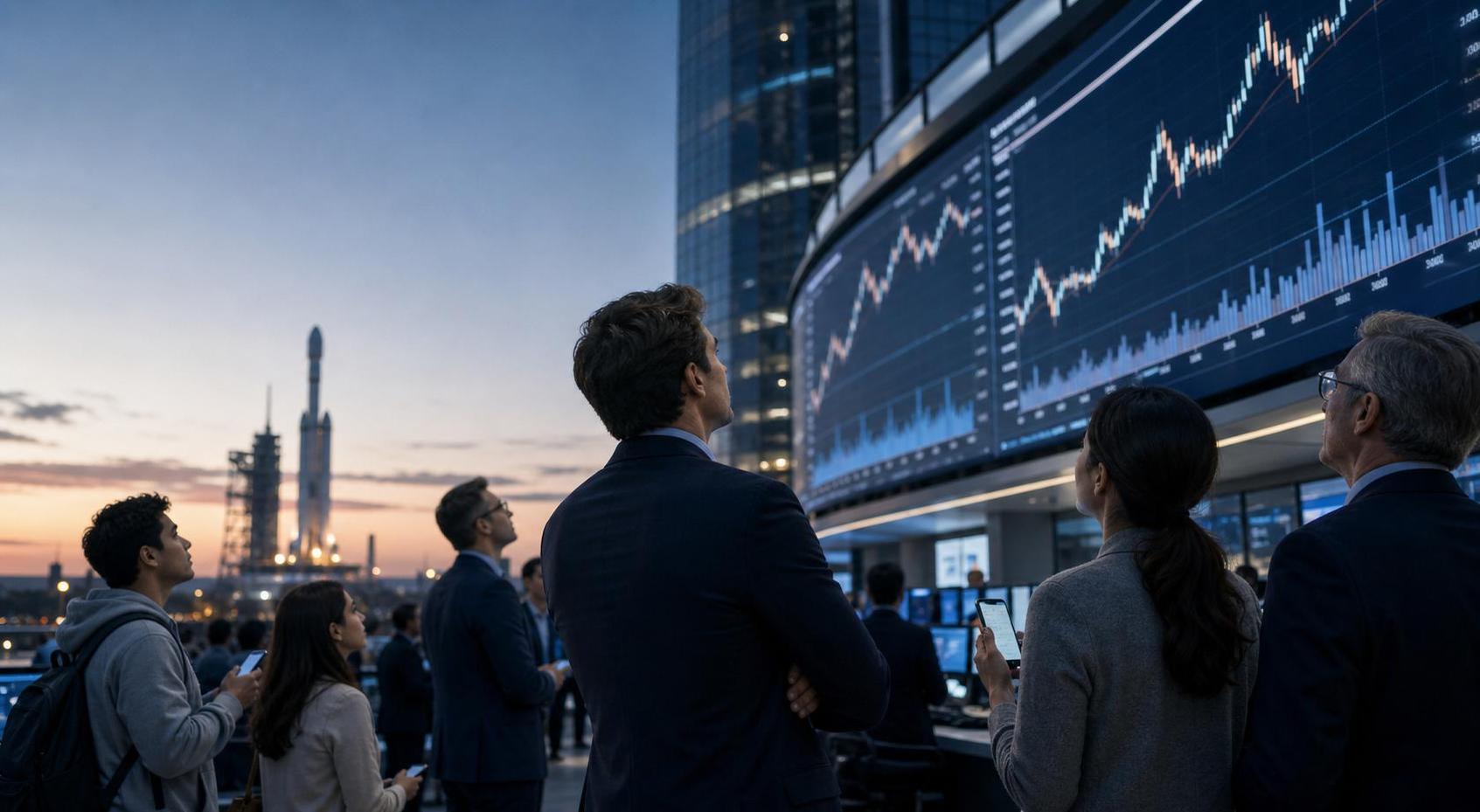
From students to tycoons, SpaceX's listing sparked global frenzy.
Student investors pile in
At Forward, a stock investment circle at Waseda University with more than 100 students, more than 20 students, including beginners, applied to buy shares in U.S. SpaceX. Representative Yuta Era said, 'If you do not apply for this initial public offering (IPO), you are not an investor.'
Saudi prince joins in
Saudi Prince Alwaleed bin Talal, who leads investment firm Kingdom Holding, also bet on SpaceX. On X, formerly Twitter, he posted that he was 'excited for a new chapter heading toward the stars.'
Market cap hits $2.1 trillion
SpaceX, which listed on the 12th, closed 19% above its offer price. Its market capitalization swelled from about $1.77 trillion, based on the offer price, to $2.1 trillion on its first day of trading.
Buying driven by one man's dream, Elon Musk's, created the largest IPO in history. Grand growth scenarios such as space data centers and migration to Mars were rewarded.
Launch success provides tailwind
On May 22, two days after the prospectus was published, the company attempted a test flight of the next-generation model of Starship, the world's largest rocket. In 2025, launches of the previous model had failed three times in a row.
Another failure could have turned expectations into disappointment and hurt the company's value. This time, however, the rocket rose high and, despite engine trouble, circled halfway around the Earth before splashing down. The successful launch became a tailwind that lifted the company's value, and the share offering is believed to have attracted subscriptions worth more than three times the amount raised worldwide.
Control structure draws concern
Still, doubts remain over whether Musk's ambitions are realistic. For space data center satellites, SpaceX has filed with the U.S. Federal Communications Commission (FCC) a plan to launch up to 1 million satellites. That would be 100 times the roughly 10,000 Starlink communications satellites it currently operates.
On June 8, just before the listing, Musk abruptly unveiled an outline of the space data center 'AI1' and said 'no magic is needed at all.' He emphasized that its structure is simpler than that of Starlink satellites. The prospectus said deployment could begin as early as 2028, but Musk said he aims to launch by the end of 2027, apparently seeking to make the plan seem less like fantasy.
Even so, some investors are steering clear of the giant IPO. AcademiA Pension, a Nordic Danish pension fund for teachers, decided not to buy SpaceX shares on the judgment of Chief Investment Officer Anas Sjelde, who oversees about 4 trillion yen. 'Impossible. It goes on the exclusion list,' he said.
What concerned it was the structure under which Musk holds 80% of voting rights. Even if management fails, he cannot be removed without his consent. For a pension fund focused on long-term investment, Sjelde judged the future risks to be greater.
Behind Musk's insistence on concentrating power lies bitter experience at electric vehicle giant Tesla. In 2018, Tesla shareholder Richard Tornetta sued, arguing that Musk's $56 billion compensation package was far too large, and in 2024 won an initial ruling to void it. At the time of the lawsuit, he held only nine shares. Having his plan disrupted by a shareholder with a small holding worth about 300,000 yen appears to have made Musk more conscious of the risk of outside interference, contributing to his move to strengthen control at SpaceX through multiple share classes and other measures.
Gwynne Shotwell, SpaceX president and chief operating officer, said in a March speech that the company had 'built the world's largest and most advanced satellite constellation and a communications network covering the Earth.' Starlink is already influencing battlefields around the world, and Musk's unilateral decisions are affecting national security as well.
In the prospectus, the company itself acknowledged that 'any change in Musk's role could significantly disrupt the management structure and adversely affect our ability to execute our strategy.' SpaceX itself has thus spelled out the presence of an absolute ruler.
Will the largest IPO in history, with one person holding immense power, become a new face of U.S. capitalism, or end in a spectacular failure?
Enjoyed this article? Share it with your network!