





Tokyo stocks get a lift from SpaceX IPO and easing US-Iran tensions
 2026-06-15
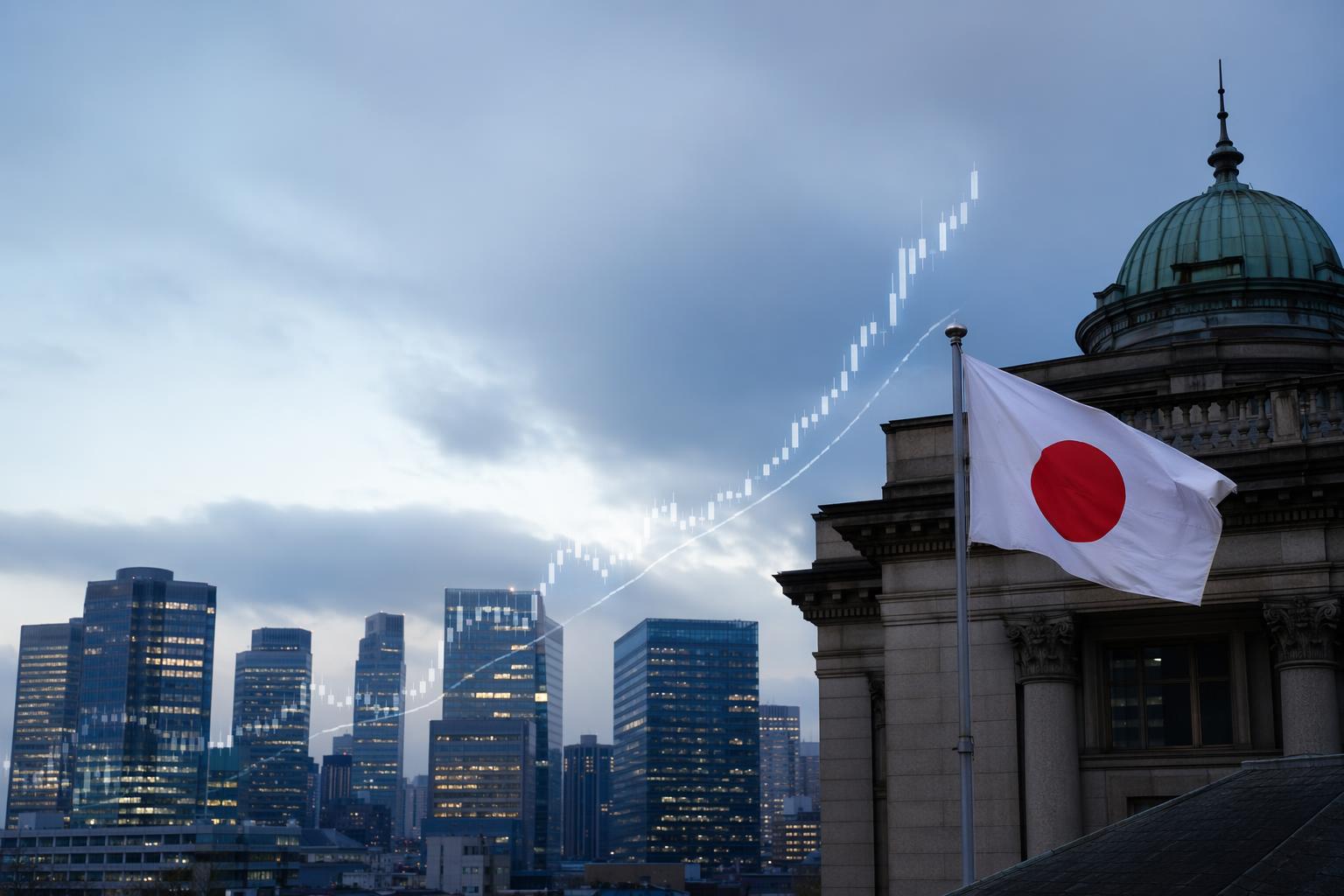
SpaceX's IPO was digested without turbulence, likely easing concerns in the Japanese stock market at the start of the week. Coupled with hopes that fighting between the US and Iran will end, the Nikkei average could once again come into view at the 70,000 level.
Investment sentiment after the IPO
Masanhiro Yamaguchi, head of investment research at SMBC Trust Bank, said of SpaceX's debut pricing: 'It confirmed strong investor appetite and ample investment funds. Buying is likely to continue across the stock market at the start of the week.'
The company's shares listed on the Nasdaq market and finished their first day at 160.95 dollars, 20% above the IPO price of 135 dollars. Market capitalization reached 2.1 trillion dollars, or about 360 trillion yen, ranking sixth in the world. The fundraising amount was the largest on record, and the deal had drawn attention as a giant IPO that raised about 350 billion yen in Japan as well.
In addition to its aerospace business, SpaceX is generating revenue by leasing computing resources essential for artificial intelligence and AI to Alphabet and Anthropic. Toshiyuki Ohyama, market analyst at Matsui Securities, said: 'While valuation metrics appear expensive, expectations for future profitability are high, and investors bought the dream,' describing the start as strong.
Focus on semiconductor stocks and central bank meetings
The US S&P 500 index extended gains on the 12th, and Nikkei futures also closed in overnight trading with the September contract 1,320 yen above the daytime settlement level at 67,440 yen. Support also came from US President Donald Trump signalling that he would soon sign an agreement aimed at ending the fighting with Iran, while crude oil futures fell further. The Tokyo stock market is likely to open higher at the start of the week.
Many also expect money to return to semiconductor-related shares, which have led the AI rally. The Nikkei Semiconductor Stock Index, composed of major related names, found support just ahead of its 25-day moving average even during last week's decline in Japanese stocks. The broader view is growing that the industry's uptrend has not been broken.
Expectations that the US and Iran will soon reach an agreement to end the fighting are also underpinning the market. A senior US government official said on the 12th that a draft agreement would clearly state that the US will process enriched uranium from Iran on site. If the reopening of the Strait of Hormuz proceeds and prospects for improved energy supply become clearer, buying could spread to names beyond AI and semiconductors, adding momentum to the rally.
70,000 in sight, but caution remains
Whether the Nikkei average can top its all-time high of 68,402 yen set on the 3rd and move closer to 70,000 this week will be the key focus. Market participants are watching monetary policy in Japan and the US.
The Bank of Japan will hold a policy meeting on the 15th and 16th. The market has priced in an interest rate hike to 1%, and Deputy Governor Shinichi Uchida will hold the news conference in place of Governor Kazuo Ueda, who is hospitalized. The Federal Reserve will then hold the Federal Open Market Committee, or FOMC, meeting on the 16th and 17th.
Market participants are closely watching remarks from the new Fed chair, Warsh, who will preside over his first FOMC. Yamaguchi said: 'When the speaker changes, the same message can be expressed differently. Caution is needed over the risk that the market may interpret it as overly hawkish.'
Foreign investors' buying of Japanese stocks has been rather sluggish. According to Tokyo Stock Exchange data on stock trading by investor category, combined with the Nagoya Stock Exchange, foreigners were net sellers of Japanese stocks for two straight weeks through the first week of June, from the 1st to the 5th. Kohei Okazaki, chief market economist at Nomura Securities, said: 'Many foreign investors visited Japan by May, and additional inquiries and buying of Japanese stocks have recently taken a breather.'
Some of the near-term positives have already been priced in, and some see 70,000 as both close and far away. In the long run, the Nikkei average has broadly advanced in increments of about 30%. Around 2018 to 2020, 24,000 yen became a de facto ceiling, after which it moved around 30% higher at about 31,000 yen. Since then, it has repeated 30%-higher milestones such as 40,000 yen and 52,000 yen, and in less than half a year after breaking through the 52,000 yen ceiling, it temporarily climbed to the 68,000 yen range.
Eiji Kinouchi, chief technical analyst at Daiwa Securities, focusing on the 30% rise cycle, said: 'On the chart, it has already become difficult to update highs, and time is needed to move to the next level.' With an eye on how far the central banks of Japan and the US will maintain a hawkish stance, the market is likely to seek upside room alongside interest-rate trends.
Enjoyed this article? Share it with your network!