





What Huang's Japan omission means for AI supply chains
 2026-06-14
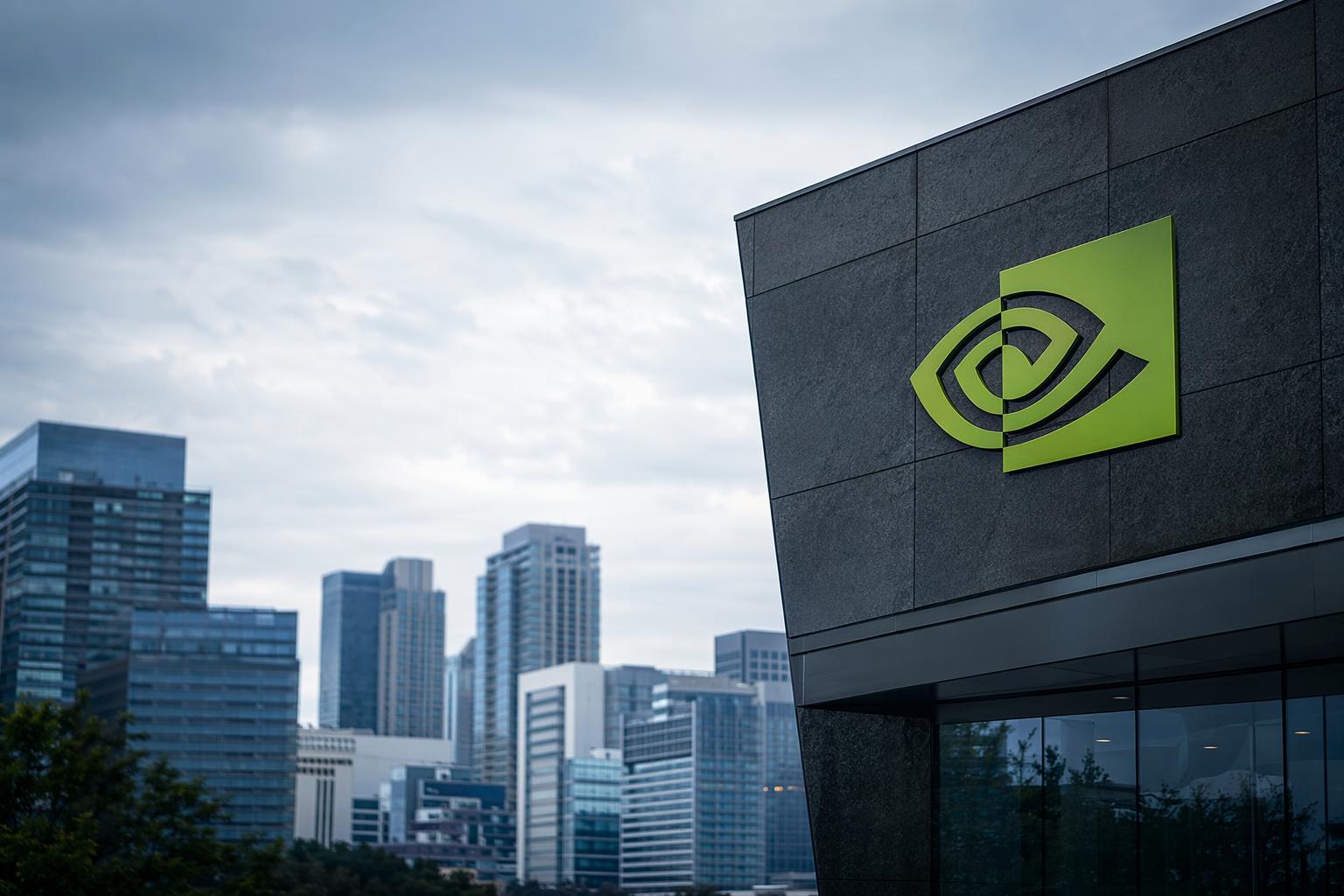
US Nvidia Chief Executive Jensen Huang visited China, Taiwan and South Korea in May and June, but not Japan. The omission highlighted not only Japan's fading presence in semiconductors, but also concerns that it could be left behind in the supply chain for the artificial intelligence revolution.
Strong focus on Taiwan and South Korea
During his visits to Taiwan and South Korea from late May to early June, Huang repeatedly praised the industrial communities in both countries. He said 'Taiwan is at the center of the AI revolution' and 'I came to express my gratitude to our partners in South Korea', positioning both as key hubs.
In Taiwan, after arriving on May 23, he had dinner with TSMC Chief Executive C.C. Wei and others, and also hosted a dinner gathering more than 40 corporate executives centered on Hon Hai Precision Industry. After moving to South Korea on June 5, he drank soju that night with SK Group Chairman Chey Tae-won and others over samgyeopsal. The next day, June 6, he took part in recording a popular variety show, and on June 7 he threw the ceremonial first pitch at a professional baseball game.
Keeping an eye on China
He also continued to court China. In mid-May, Huang visited Beijing as part of a business delegation accompanying US President Donald Trump, who was heading to a US-China summit. He attended a meeting at the Great Hall of the People, and was also seen tasting local cuisine on a street corner.
South Korea and Taiwan at the core of supply chains
South Korea and Taiwan are indispensable to Nvidia's AI chip supply chain. The fabless company relies on TSMC for most of its manufacturing. Its GPUs also depend on high-performance memory HBM from SK Hynix and Samsung Electronics to deliver their capabilities.
China, meanwhile, remains too large a market to ignore. The US government bans exports of cutting-edge semiconductors to China, but the next-generation H200 is allowed to be exported under certain conditions. However, it is believed the Chinese government will not allow local firms to use it, and no actual shipments have taken place. Even so, Nvidia's true intention is to avoid being shut out of the vast market.
Japan also has a semiconductor industry. It has strengths in manufacturing equipment such as Tokyo Electron and Advantest, and in materials such as Shin-Etsu Chemical, but there are not many companies directly linked to Nvidia. One executive at an equipment maker described the company as 'a trading partner for customers such as TSMC'.
Japan also lacks a China-style AI developer competing for global dominance. Big tech companies such as US Google and US Microsoft are pouring huge sums into data centers and buying Nvidia chips in large volumes, but Japanese companies cannot compete on that scale.
Can Japan join AI-era co-creation?
This Japan passing is not just a matter of short-term business. It also reflects Huang's intention to bring companies in Taiwan and South Korea in as partners in advancing the AI revolution, rather than as mere suppliers.
Nvidia's market capitalization at one point exceeded 5 trillion dollars, or about 800 trillion yen, but as investor attention shifts to memory-chip makers, its recent share performance has lagged even within the semiconductor sector. Huang is trying to maintain leadership in the AI revolution by writing a new growth story with companies in South Korea and Taiwan.
In a speech in Taiwan, he repeatedly described his company as an 'AI infrastructure company'. Through servers for AI data centers and AI PCs, it aims to be involved in a broad range of fields, from corporate activity to personal life. It is seeking to move beyond being merely a supplier of components such as GPUs and to get involved from the design stage of AI adoption.
That stance is also evident in collaborations across regions. For the semiconductor used in AI PCs unveiled at its event in Taiwan, it worked with MediaTek on the design. The chip is said to support AI agents that link GPUs and CPUs and autonomously handle a variety of tasks.
At Hon Hai's factory in Taiwan, Nvidia introduced numerous technologies to advance production. It said AI agents manage robot operations, sensors and machine signals to improve manufacturing efficiency. The facility Hon Hai is building is planned to house 10,000 GPUs.
In South Korea, Nvidia said it will launch a next-generation data center called an AI factory with SK Group in 2027. By combining GPUs and HBM, it aims to achieve highly efficient computing while reducing power consumption, helping user companies improve productivity. SK plans to market this AI factory in Asia, including Japan.
In addition to SK, it also announced joint development of physical AI, which autonomously controls robots, with major conglomerates including LG, Hyundai Motor and Doosan. In China, it is also advancing collaboration with humanoid robot developer Unitree Robotics and investment in autonomous driving startup WeRide.
Distance from Japanese companies
Huang visited Japan in 2025 and announced that Nvidia would jointly develop AI semiconductors with Fujitsu. Fanuc, a major industrial robot maker, is also collaborating with Nvidia to develop AI-equipped robots. Still, the scope of co-creation remains limited compared with South Korea and Taiwan.
Nvidia is seeking to bring companies involved in semiconductor manufacturing, optical components, servers and AI development into its ecosystem through partnerships and investment. The question is how much appeal Huang, who travels constantly from place to place, still sees in Japan today.
When Apple once triggered the smartphone revolution with the iPhone, Japanese companies were incorporated into that ecosystem. Electronics parts makers such as Murata Manufacturing and TDK, as well as semiconductor companies such as Sony Group and Kioxia, helped Japan, which had fallen behind in digital consumer electronics, latch onto the new wave.
Can Japan secure the same position in the next AI revolution? Leading AI companies such as US Anthropic and US Palantir Technologies have recently visited Japan in quick succession, but they appear more as companies selling systems than as co-creation partners for AI development.
The 'digital deficit' Japan pays for IT services from US companies is a challenge. In April 2025, the Ministry of Economy, Trade and Industry said in a projection that the digital deficit would swell to 18 trillion yen by 2035. Whether Japan can become a partner to the companies leading the AI revolution will shape its national wealth in the years ahead.
Enjoyed this article? Share it with your network!